
Trusted by teams in regulated industries















Rated higher than Polarion by the people using both
Independent buyer data from SoftwareReviews (Info-Tech Research Group) and G2. Not our numbers.
SoftwareReviews composite score
Modern Requirements · Polarion
SoftwareReviews capability satisfaction
Modern Requirements · Polarion
G2 ease of setup
Modern Requirements · Polarion
G2 star rating
Modern Requirements · Polarion
Compared to Polarion ALM, SoftwareReviews users rate Modern Requirements4DevOps better at training, more efficient and better at integrating.
SoftwareReviews head-to-head comparison dated 23 September 2026, based on 60 Modern Requirements4DevOps reviews and 38 Polarion ALM reviews. G2 ratings and sub-ratings from the G2 Modern Requirements4DevOps vs Polarion comparison, retrieved 23 September 2026, based on 51 and 98 reviews respectively; sub-rating response counts vary by metric.
Polarion vs Modern Requirements4DevOps
A straightforward comparison. No marketing language.
The requirements capabilities you looked at Polarion for. Without running a second ALM.
Extend the ALM you chose instead of replacing it.
Polarion is a complete ALM platform with its own repository, work items, workflows and test management. If your developers, testers and pipelines already live in Azure DevOps, adding Polarion means running two ALM systems side by side. They stay connected through the Polarion Connector for Microsoft Azure DevOps, which synchronises work items between them.
Modern Requirements4DevOps adds the requirements capabilities Azure DevOps is missing, directly inside Azure DevOps. Requirements are ADO work items, and traceability runs to the same test plans and commits your team already uses. There is no second repository and no field mapping to maintain.
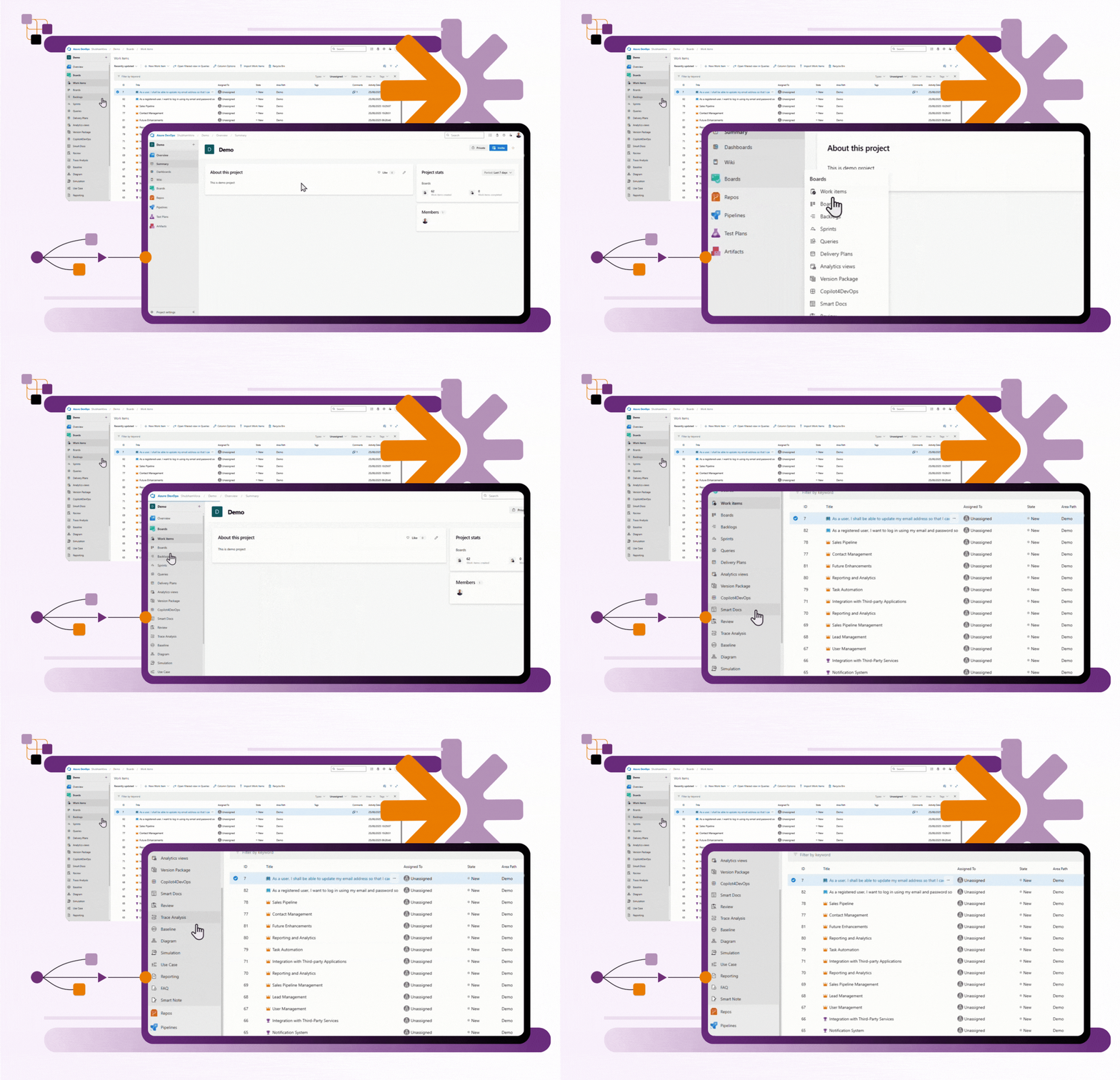
Document-based authoring, inside Azure DevOps.
Many teams choose Polarion for its document-centred way of working. Smart Docs brings that working style into Azure DevOps: structured, versioned requirement documents where every section is a traceable work item, with rich text, tables and version history.
Existing specifications come in three ways
Reviews, baselines and audit evidence from your own project.
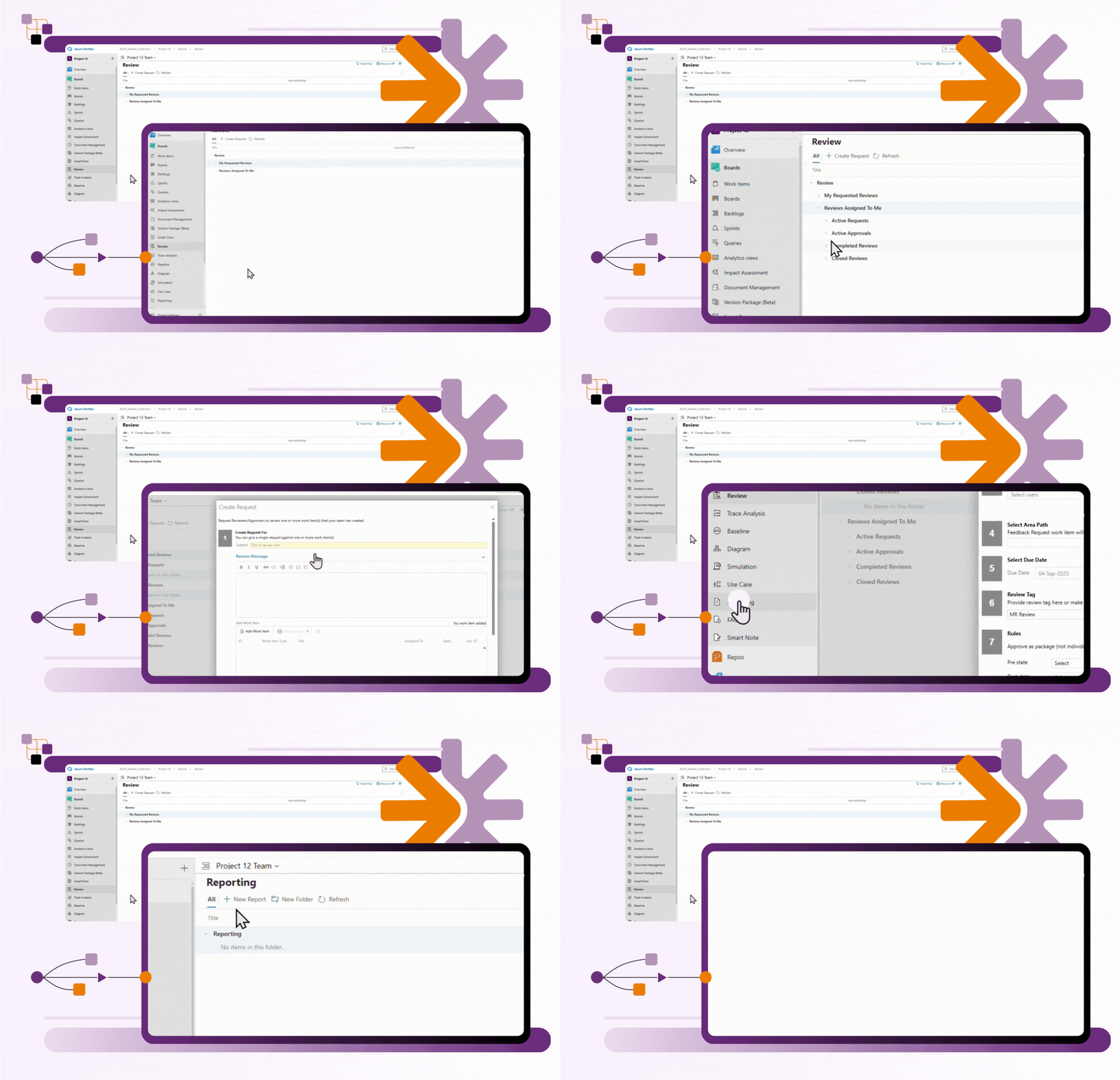
Part 11 compliant online reviews run with e-signatures and mandatory audit trails on rejection. Immutable baselines come with Word format difference reports. Trace Analysis generates bidirectional coverage matrices across any two work item types, with heatmap views.
Modern Requirements4DevOps is built for FDA 21 CFR Part 11, ISO 13485, IEC 62304, DO-178C, ISO 26262 and ASPICE programmes. For systems engineering teams, the Engineering and Engineering AI editions add Variant Management and Parameterized Requirements.
AI included, not bought on top.
Polarion Copilot, Siemens' requirements AI for Polarion, is sold as a paid add-on for Polarion X and for on-premise installations on Hybrid SaaS licences. It delivers three tools: Content Validation against INCOSE rules, Similarity Analysis and Consistency Check. Polarion 2606 added a Copilot API for building AI into custom Polarion workflows.
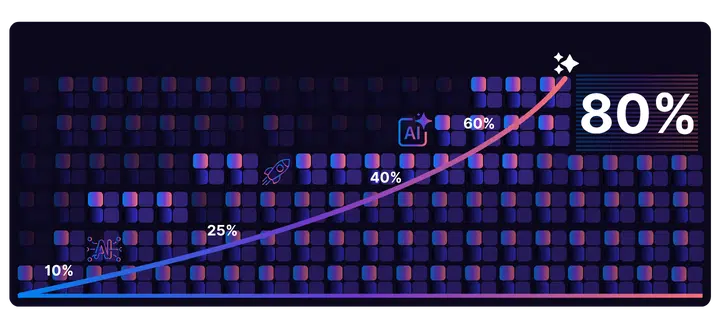
Modern Requirements4DevOps includes core AI (Elicitation, Analysis, Convert, Transform) in every package through Copilot4DevOps Lite. The full capability set comes with Frontier AI and Engineering AI. It includes:
The AI works against your ADO project, and Modern Requirements forbids third-party AI providers from training on or storing your data.
Polarion X runs on Azure. Isn't that the same thing?
No. Since November 2025, Siemens has offered Polarion X as a Siemens-hosted SaaS on Microsoft Azure, which means Polarion's servers can run in Azure data centres. Polarion itself is still a separate application with its own repository, and it exchanges data with Azure DevOps through a synchronisation connector. Modern Requirements4DevOps runs inside Azure DevOps.
Hosting on Azure changes where Polarion runs. It does not change the fact that your requirements and your delivery work live in two different systems.
Does Polarion integrate with Azure DevOps?
Yes. The Polarion Connector for Microsoft Azure DevOps, bundled with Polarion ALM and available for Polarion X, synchronises Polarion work items with Azure DevOps artifacts, bi-directionally or one way, for both Azure DevOps Services and Azure DevOps Server. Administrators configure which work item types sync, how fields map, the direction of sync and which system wins in a conflict.
When Polarion is the better fit
You run the Siemens Xcelerator stack.
If Teamcenter, Designcenter or Opcenter anchor your product lifecycle, Polarion's ties into that ecosystem are a real advantage.
You want to replace your ALM, not extend it.
If you are choosing one platform for requirements, work management, test and release, and Azure DevOps is not already your system of record, Polarion is built for that job.
Your product line engineering runs on 150% master specifications.
Polarion's Variant Configurator is purpose-built for large-scale variant resolution.
Your development teams are not on Azure DevOps.
Modern Requirements4DevOps is an Azure DevOps extension. If your engineers work in Jira or GitLab, we are not the right fit, and we will say so on the call.
If your developers, testers and pipelines already run in Azure DevOps, the rest of this page is for you.
Moving your requirements out of Polarion
We map your Polarion structure.
Work item types, custom fields, LiveDoc structure, link roles and workflow states are mapped to Azure DevOps work item types and Smart Docs before anything moves.
Requirements and links come across together.
Polarion has built-in ReqIF export. ReqIF4DevOps imports ReqIF files from ReqIF-supporting tools, including Polarion, into Azure DevOps with configurable mapping. Documents exported to Word come in through Smart Import. You review the result inside your own ADO project before sign-off.
Your team works as normal from day one.
Authoring continues in Smart Docs. Traceability matrices regenerate from the migrated links. We stay with the team through the first sprints.
We start with a free scoping call to map your specific Polarion setup.
Questions about switching from Polarion
What is the best alternative to Polarion?+
It depends on where your development work lives. For teams on Azure DevOps, Modern Requirements4DevOps is the closest fit, because it adds requirements management inside Azure DevOps instead of running a second ALM beside it. SoftwareReviews lists it first among Polarion ALM alternatives, with a composite score of 8.8 against Polarion's 7.5. Teams not on Azure DevOps often shortlist codebeamer, Jama Connect and IBM DOORS Next.
Does Polarion integrate with Azure DevOps?+
Yes. The Polarion Connector for Microsoft Azure DevOps synchronises Polarion work items with Azure DevOps artifacts, bi-directionally or one way, for both cloud and server editions of Azure DevOps. Both systems stay in operation, and administrators configure work item types, field mappings, sync direction and conflict rules. Modern Requirements4DevOps works differently: requirements are Azure DevOps work items, so there is nothing to synchronise.
Is Polarion X on Azure the same as being built into Azure DevOps?+
No. Polarion X on Azure means Siemens hosts Polarion in Microsoft's Azure data centres. Polarion remains a separate application with its own repository and login, and it exchanges data with Azure DevOps through a connector. Modern Requirements4DevOps runs inside the Azure DevOps interface, and its requirements are native Azure DevOps work items.
Does Polarion include AI?+
Partly. Polarion X includes a Help AI Chatbot for product documentation. Its requirements AI, Polarion Copilot, is a paid add-on, for Polarion X and for on-premise installations on Hybrid SaaS licences, offering content validation against INCOSE rules, similarity analysis and consistency checks. Modern Requirements4DevOps includes core AI in every package, with the full AI capability set in its Frontier AI and Engineering AI editions.
How much does Polarion cost?+
Siemens publishes "starting from" per-user monthly prices for its Polarion X SaaS plans, and Polarion X contracts are billed annually by default. On-premise Polarion ALM is licensed as named user or concurrent licences through Siemens sales. Polarion Copilot is purchased separately. Modern Requirements4DevOps offers four editions, with pricing provided on a short call.
Can you migrate requirements out of Polarion?+
Yes. Polarion has built-in ReqIF export, and ReqIF4DevOps imports ReqIF files from Polarion and other ReqIF-supporting tools into Azure DevOps with configurable field mapping. Documents exported to Word can be brought in through Smart Import. Our team maps your work item types, fields and links before anything moves.
Does Modern Requirements4DevOps support product variants?+
Yes. The Engineering and Engineering AI editions include Variant Management, for parallel product configurations from one requirement set, and Parameterized Requirements, which let you write a requirement once and reuse it across configurations with variable inputs.
Does Modern Requirements4DevOps run on-premise?+
Yes. It runs on Azure DevOps Server on-premise and on Azure DevOps Services in the cloud. It installs into whichever environment you already run and inherits your existing Azure DevOps permission model.
See Modern Requirements next to your Polarion setup
- ✓Requirements authored as native ADO work items in Smart Docs
- ✓A traceability matrix generated from your own data
- ✓A Part 11 compliant review with e-signatures
- ✓What a migration from Polarion would look like for your setup
Keep reading
Comparing Jama Connect too?
SoftwareReviews lists Modern Requirements4DevOps and Jama Connect as the top two Polarion alternatives.
See the Jama Connect comparison → ArticleNative Azure DevOps integration vs software connectors
What a sync layer costs you over the life of a programme.
Read the article → PackagingFour packages, compared side by side
Every capability across every edition, in public.
See the packages →Polarion, LiveDocs and Teamcenter are trademarks of Siemens. Modern Requirements is not affiliated with Siemens.