How to Achieve ARP4754A Development Assurance in Aerospace Programs
Check out the importance of ARP4754A, the ARP4754A development cycle,...
Safety failure in aerospace and defense is non-negotiable. A single issue can lead to loss of human lives, mission failures, and equipment loss. In June 1996, Ariane 5 Flight 501’s failure occurred due to a small error in software, which resulted in an approximately $370 million loss.
To avoid such system failures, organizations working in the aerospace and defense industry follow regulatory standards like MIL-STD-882E. It covers how to identify hazards and manage them.
However, following MIL-STD-882E requirements is not a problem, but many teams struggle to keep hazards, requirements, and verification activities connected. This gap creates hidden risks and weakens audit readiness. That’s why hazard-to-requirement traceability plays an important role in aerospace and defense system development.
Here, we have explained what MIL-STD-882E compliance is and how to keep hazards, requirements, test cases, etc., linked with end-to-end traceability.
MIL-STD-882E, also called “Military Standard,” is a set of standards defined by the U.S. Department of Defense (DoD), which covers rules and regulations to follow while building safety-critical software and hardware systems.
The standard covers a structured process for:
Furthermore, it evaluates safety risks based on Severity (impact) and Probability (likelihood). So, teams can identify hazards and risks, categorize them, and prioritize critical risks that need immediate action.
It is very important to follow MIL-STD-882E in aerospace, defense, or other regulatory industries where safety-critical systems are built. It helps teams make decisions based on structured analysis and documented evidence of hazards instead of assumptions. In high-risk systems, this directly affects mission success and human safety.
Also read: NIST RMF requirements traceability
ML-STD-882E treats safety as a continuous process that runs alongside system development. Here are the seven lifecycle phases of system safety:
MIL-STD-882E hazard tracking is not just a good practice; it should be followed from a compliance standpoint. It connects every stage of the safety lifecycle with each other and ensures that no hazard is treated in isolation and that each one leads to a clear action and outcome.
Furthermore, MIL-STD-882E compliance requires maintaining audit-ready records, as stakeholders may ask questions like the following during an audit:
If answers are not immediately available, teams can’t prove that MIL-STD-882E compliance is followed for hazard analysis and mitigation.
In practice, strong traceability supports three things:
In short, traceability gives teams visibility into how hazards are resolved by maintaining hazard logs and connecting each hazard with validation evidence.
Also, traceability is very important in change management. In defense systems, changes are continuous, and when requirements or design changes occur, teams must reassess related hazards. With a safety requirements traceability matrix, teams can quickly identify impacted areas instead of manually reviewing every requirement.
This is why traceability should be a continuous process while solving hazards to ensure system safety and prove MIL-STD-882E compliance.
Also read: NERC CIP compliance traceability for energy & utility organizations
We’ve seen that traceability is important for safety reasons and proving MIL-STD-882E compliance while building aerospace systems. However, teams fail in implementing hazard analysis traceability in day-to-day execution. This happens due to different causes, like fragmented tools, manual processes, and a few other challenges, like below:
Now, let’s look at how end-to-end traceability can be automated using requirements management tools.
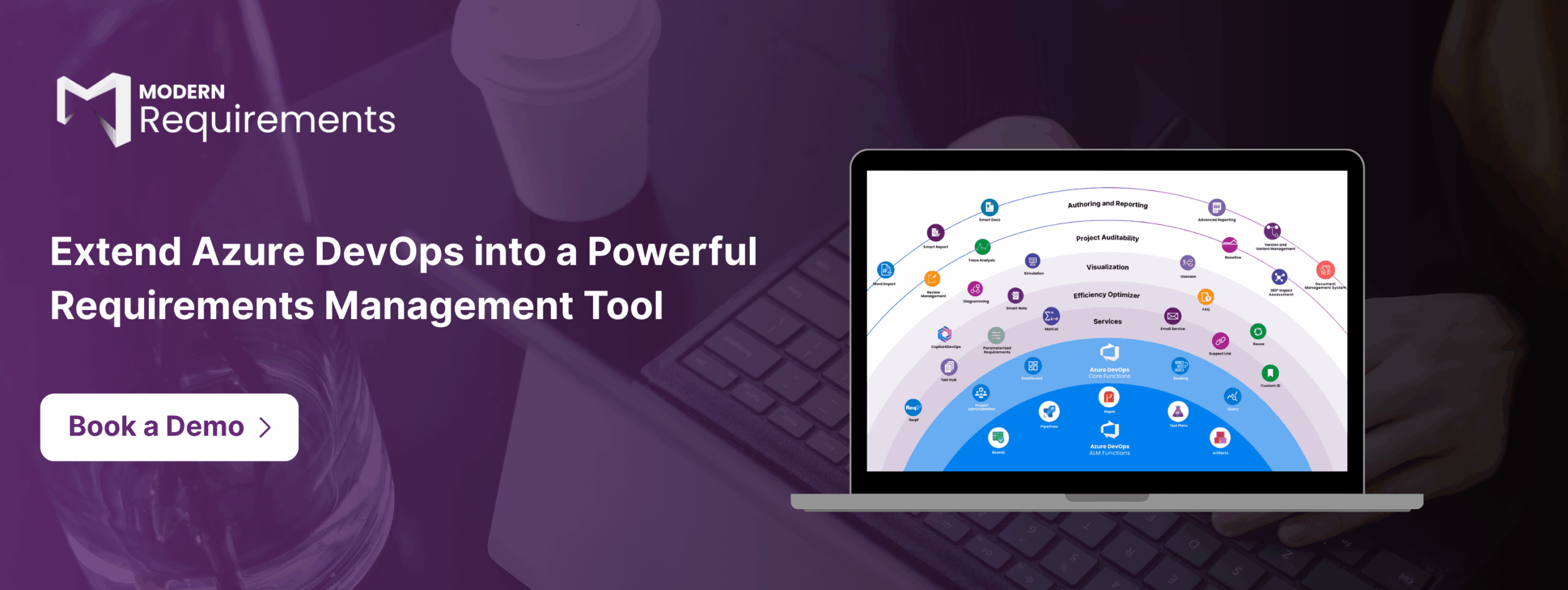
Azure DevOps (ADO) + Modern Requirements4DevOps is a perfect tool stack to manage end-to-end traceability between hazards, requirements, and validation. Aerospace and defense teams use ADO as a single source of truth and store everything for hazard management, including MIL-STD-882E-related requirements. Modern Requirements4DevOps can be used as an extension within Azure DevOps for automated traceability.
Furthermore, Modern Requirements4DevOps generates a horizontal traceability matrix. It shows how particular safety-related requirements are associated with hazards. With this, teams can quickly identify unaddressed hazards and failed implementations and prepare audit reports for compliance review.
With in-place version control, teams can see the full history of changes. It also supports MIL-STD-882E compliance reviews and risk acceptance decisions.
Moreover, with the AI capabilities of Copilot4DevOps, teams can perform change impact analysis and ensure MIL-STD-882E is not affected. This ensures that risk reassessment is not missed, which is a key expectation in evolving aerospace programs.
The main benefits for users are that when they update hazards, requirements, or any information in their ADO workspace and create a traceability matrix, Modern Requirements4DevOps automatically shows the updated connection. So, it totally removes human intervention and keeps traceability up to date.
In practice, this setup turns compliance into a continuous, system-driven activity and ensures MIL-STD-882E rules are followed, and the system remains compliant at any time.
✅ Définir, gérer et tracer les exigences dans Azure DevOps
✅ Collaborez sans effort entre les équipes réglementées
✅ Commencez GRATUITEMENT — pas besoin de carte de crédit
Check out the importance of ARP4754A, the ARP4754A development cycle,...
Learn more about the importance of NIST RMF, what the...
Learn more about the NERC IP compliance, which industries is...
End-to-end requirements management in Azure DevOps.

AI-powered assistance for DevOps workflows.

Autonomous AI agents for DevOps execution.

Real-time data sync across tools and systems.

Designed to work natively within Azure DevOps, Modern Requirements extends the platform with powerful capabilities that help teams capture, manage, and validate requirements more effectively.