Healthcare and Medical Compliance Managed by AI
Your engineers and quality leads stay accountable for the decisions...
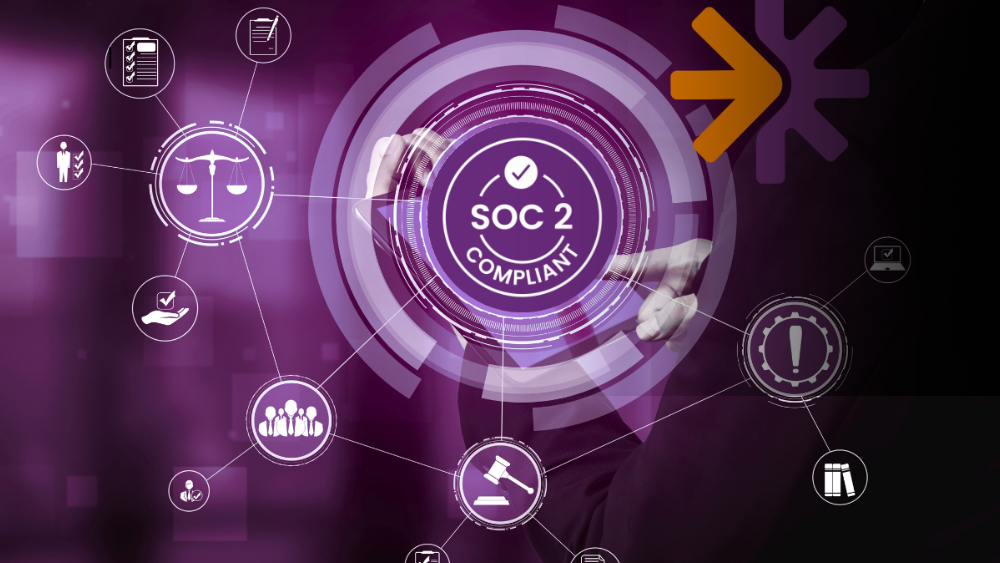
Companies that build and run cloud-based software must adhere to SOC 2 compliance. This helps in demonstrating that software and processes meet defined standards for protecting customers’ data, maintaining operational reliability, and building trust among customers.
However, DevOps pipelines move quickly with rapid deployments and constant infrastructure changes. The challenge for engineering teams is keeping security requirements and compliance aligned with that speed.
When security requirements are not managed properly, incidents of data breaches happen. IBM’s 2025 Cost of a Data Breach Report states that the average data breach now costs $4.4 million.
So, in this blog, we are going to explain how DevOps teams can stop treating SOC 2 as a once-a-quarter scramble and start treating it as something their pipelines handle automatically.
SOC 2, or System and Organization Controls 2, is a security compliance framework developed by the American Institute of Certified Public Accountants (AICPA). It defines rules and regulations that software development companies need to follow while handling sensitive customer information.
Basically, SOC 2 evaluates whether a company has defined policies, procedures, and operational controls to keep systems secure and reliable. An independent auditor reviews these controls and issues a report that customers and partners can review.
SOC 2 is built around 5 security principles known as the Trust Services Criteria:
So, each SOC 2 audit must include these security principles.
For years, software development and security testing worked like this: Plan -> Code -> Build -> Test -> and then, just before deployment, someone from the security team would review everything. It was bolt-on, last-minute, and reactive by design.
The real problem with this approach? In a modern DevOps environment, releases are made multiple times a day, and if security reviews happen only at the end of the process, they struggle to keep up with this pace. In this scenario, engineering teams move quickly through development, while compliance teams try to verify control after the fact. By the time compliance teams flag security issues during a late review, they may already be deeply embedded in the code.
To overcome these challenges, teams are adopting a DevSecOps (Shift-left security) approach, where security stops being the last gate and becomes part of every stage, from planning to deployment and continuous monitoring.
With this approach, teams follow security best practices during all stages of product development. For example:
With a shift-left security approach, every stage generates evidence of implemented security control, and that is exactly what SOC 2 auditors are looking for.
SOC 2 defines security control at a policy level, which engineering teams generally don’t understand. To implement them during software development, compliance or BA teams need to convert those requirements into actionable work items, such as user stories that developers, DevOps engineers, and security teams can understand.
Here is how that translation looks:
Only understanding SOC 2 requirements is not enough, but teams also need to maintain compliance within DevOps environments, which might introduce challenges below:
To overcome all these challenges, teams need to use a single system that allows them to manage all documents, security controls, requirements, etc., in one place and also offers features like traceability and change management.
It becomes easier to manage SOC 2 requirements when compliance activities can be handled directly in the development workflow. Modern Requirements4DevOps is built to exactly help with that. It is SOC 2 compliant cloud-based requirements management software that works directly within your Azure DevOps workspace as an extension, where teams can map security requirements to engineering work items and manage documents all in one place.
Here is how Modern Requirements4DevOps helps teams to align with SOC 2 requirements:
✅ Definieren, verwalten und verfolgen Sie Anforderungen innerhalb von Azure DevOps
✅ Arbeiten Sie nahtlos mit regulierten Teams zusammen
✅ Starten Sie KOSTENLOS – keine Kreditkarte erforderlich
Your engineers and quality leads stay accountable for the decisions...
Learn more about the challenges teams face while managing traceability...
Explore the Business Analysis Core Concept Model and all five...
End-to-end requirements management in Azure DevOps.
AI-powered assistance for DevOps workflows.

Autonomous AI agents for DevOps execution.

Real-time data sync across tools and systems.
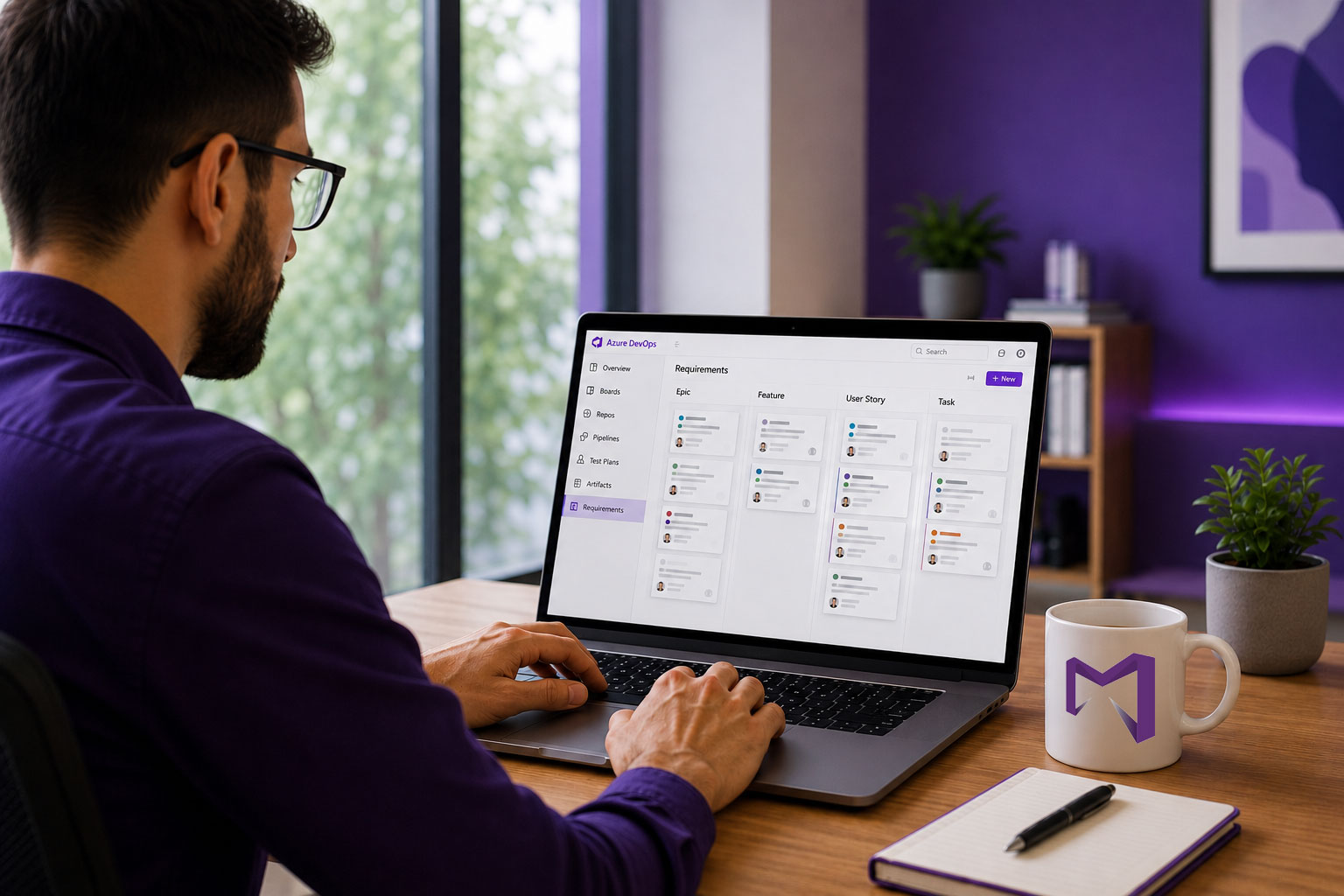
Designed to work natively within Azure DevOps, Modern Requirements extends the platform with powerful capabilities that help teams capture, manage, and validate requirements more effectively.
End-to-end requirements management in Azure DevOps.
AI-powered assistance for DevOps workflows.
Autonomous AI agents for DevOps execution.
Real-time data sync across tools and systems.