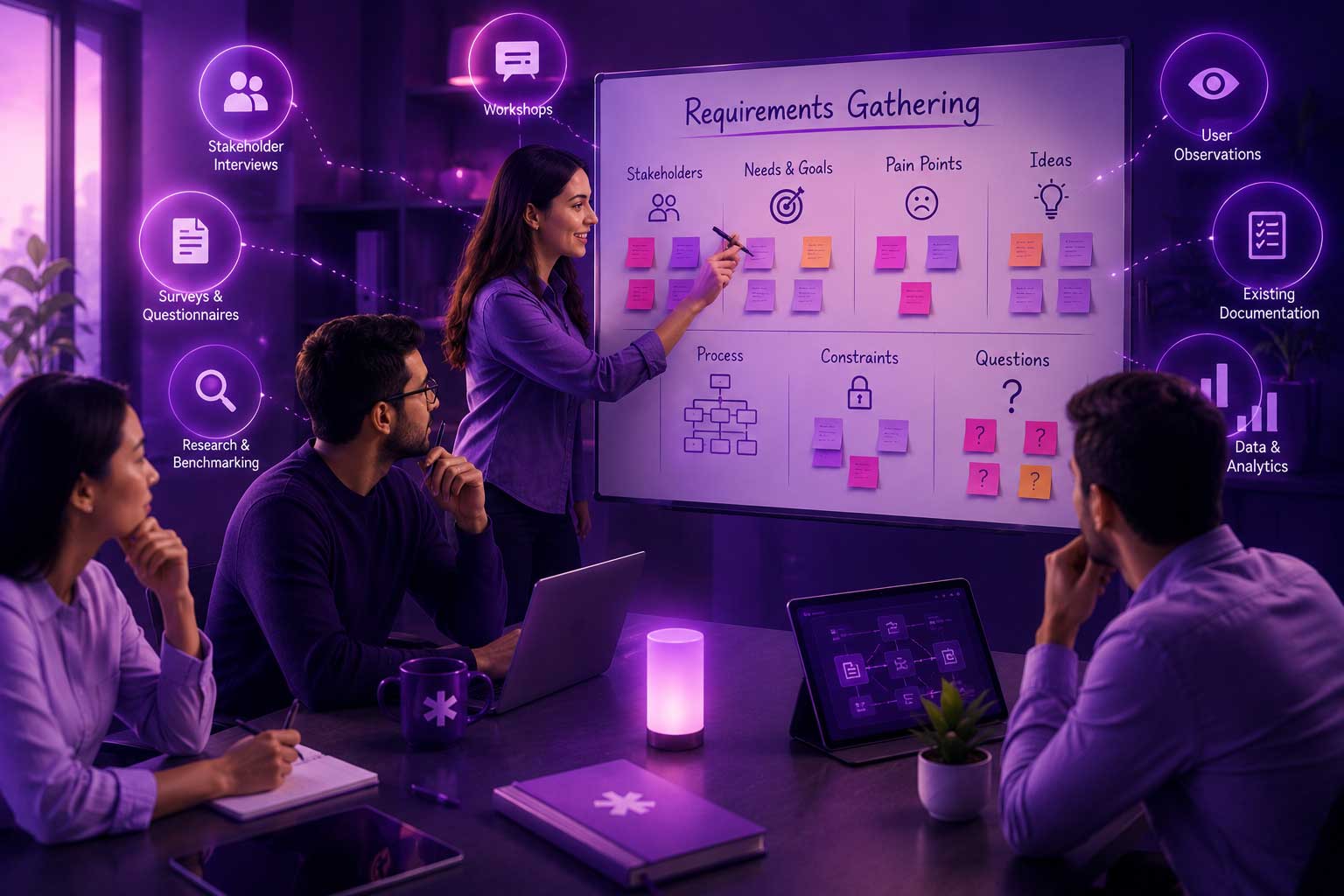
Requirements gathering is collecting stakeholder needs at the start of a project. The process, good sources, and how it relates to elicitation.
Continuar leyendo
Utiliza esta etiqueta para crear la sección «Blogs destacados» en la página principal del blog.
Requirements gathering is collecting stakeholder needs at the start of a project. The process, good sources, and how it relates to elicitation.
Continuar leyendo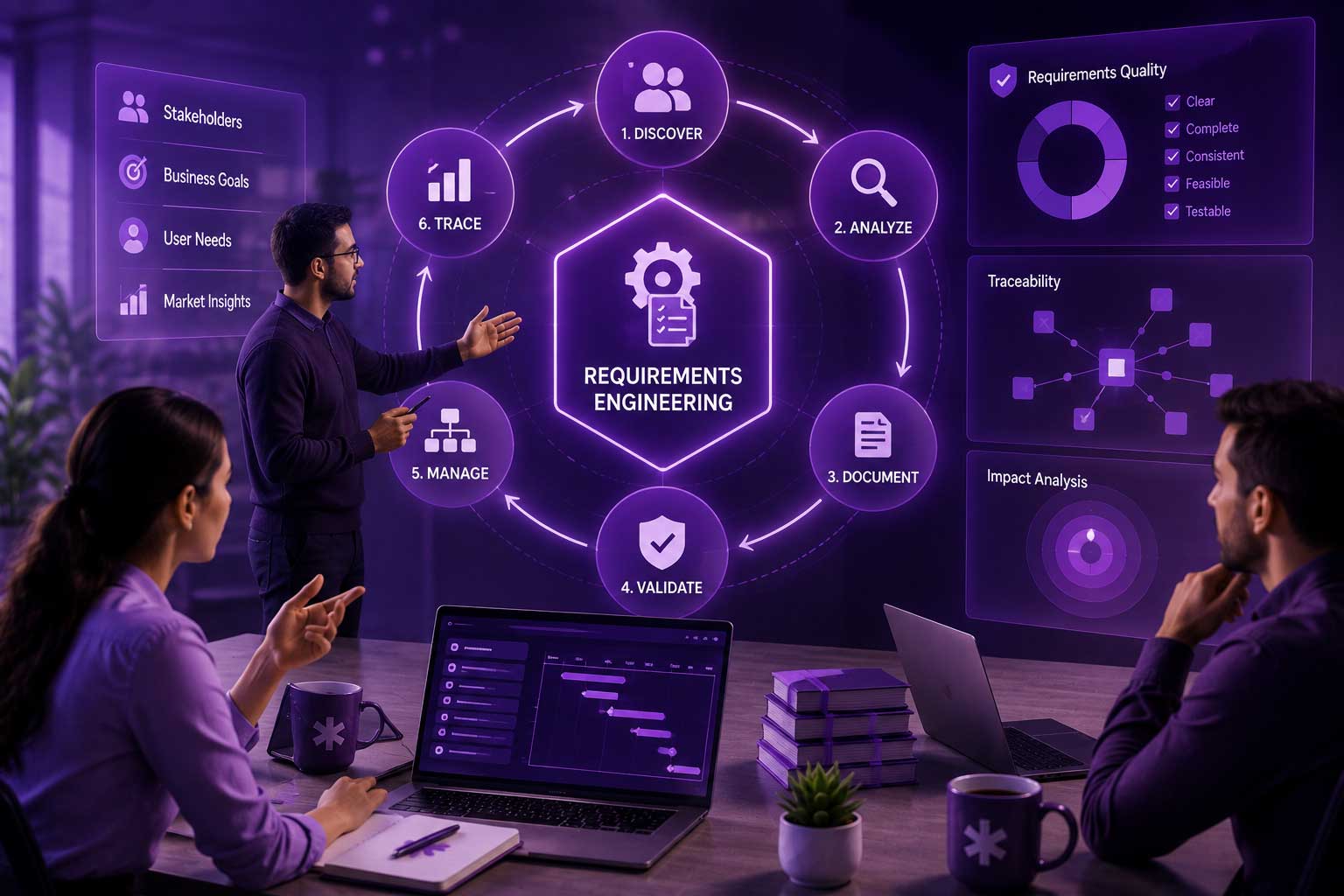
Requirements engineering is the discipline of eliciting, analyzing, writing, validating, and managing requirements. Its activities, process, and how it differs from management.
Continuar leyendo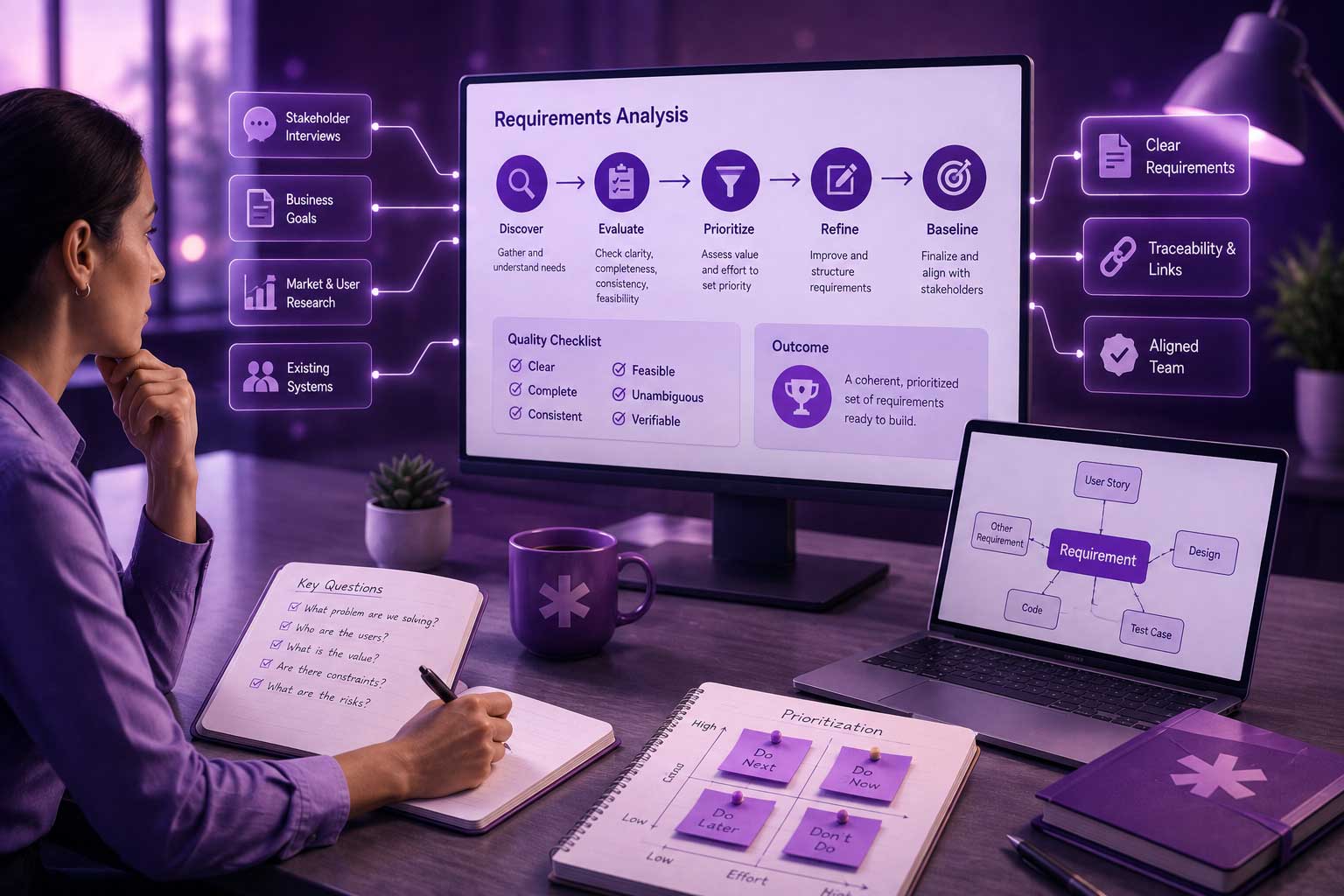
Requirements analysis checks requirements for clarity, consistency, and feasibility, then prioritizes them. What it involves and why it matters, with an example.
Continuar leyendo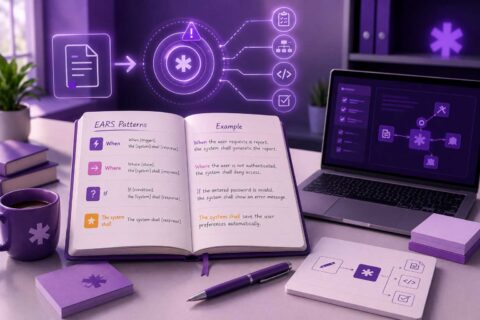
EARS (Easy Approach to Requirements Syntax) uses simple templates to write clear, testable requirements. The patterns explained with before-and-after examples.
Continuar leyendo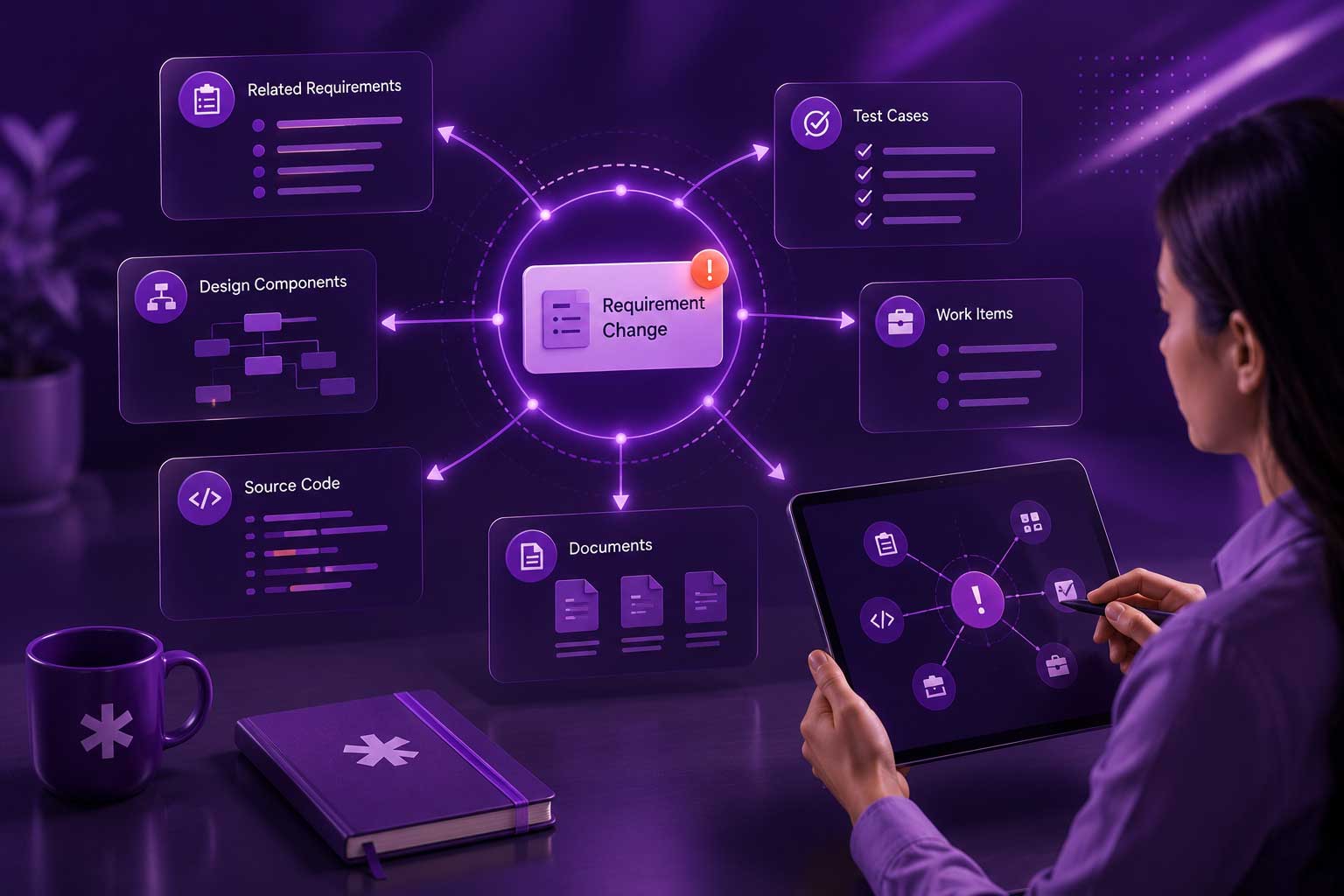
Change impact analysis traces what a requirement change will affect before it is made, using links to designs and tests. Definition, process, and an example.
Continuar leyendo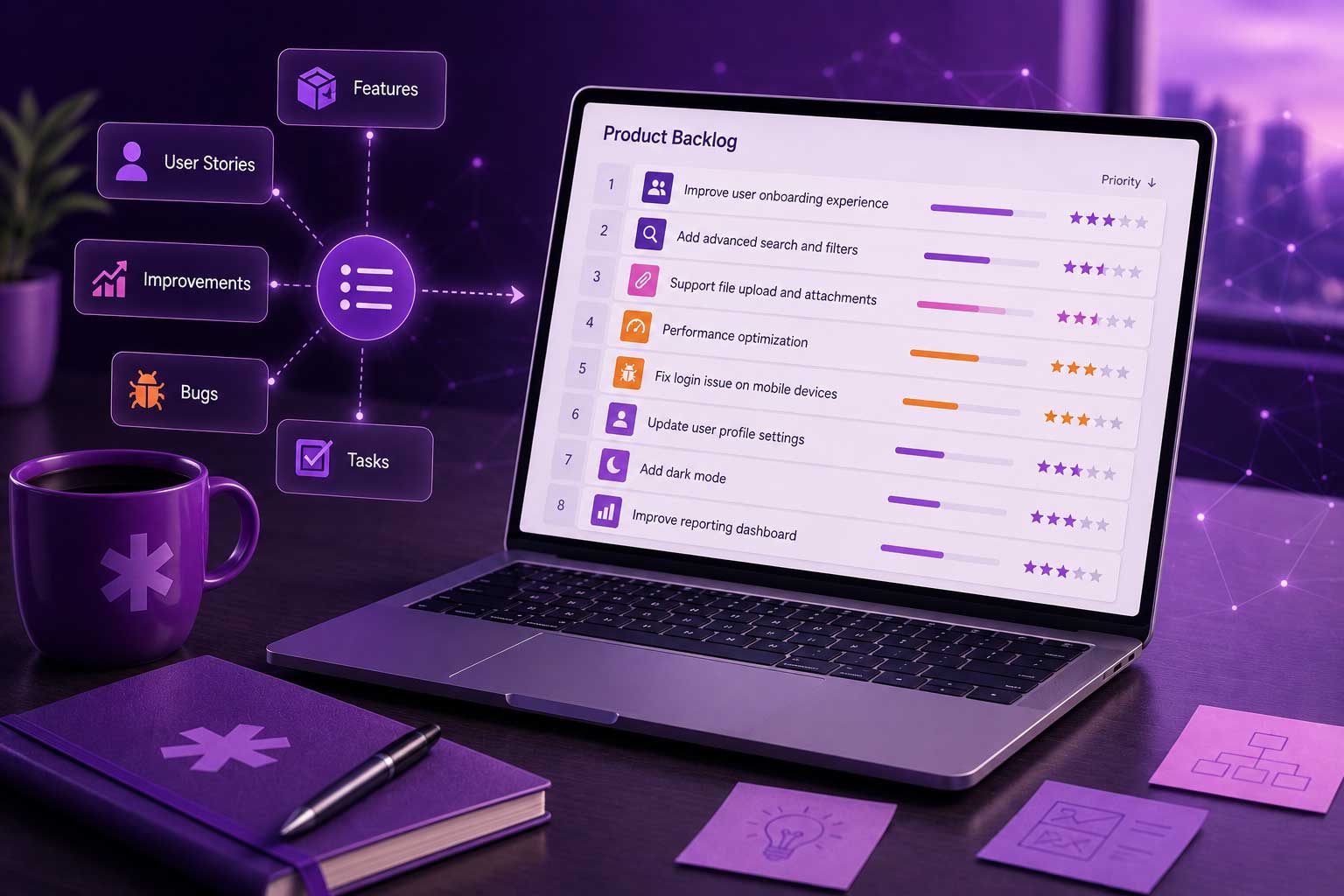
A product backlog is the prioritized list of everything a team might build for a product. Definition, how it is maintained, and how it differs from a sprint backlog.
Continuar leyendo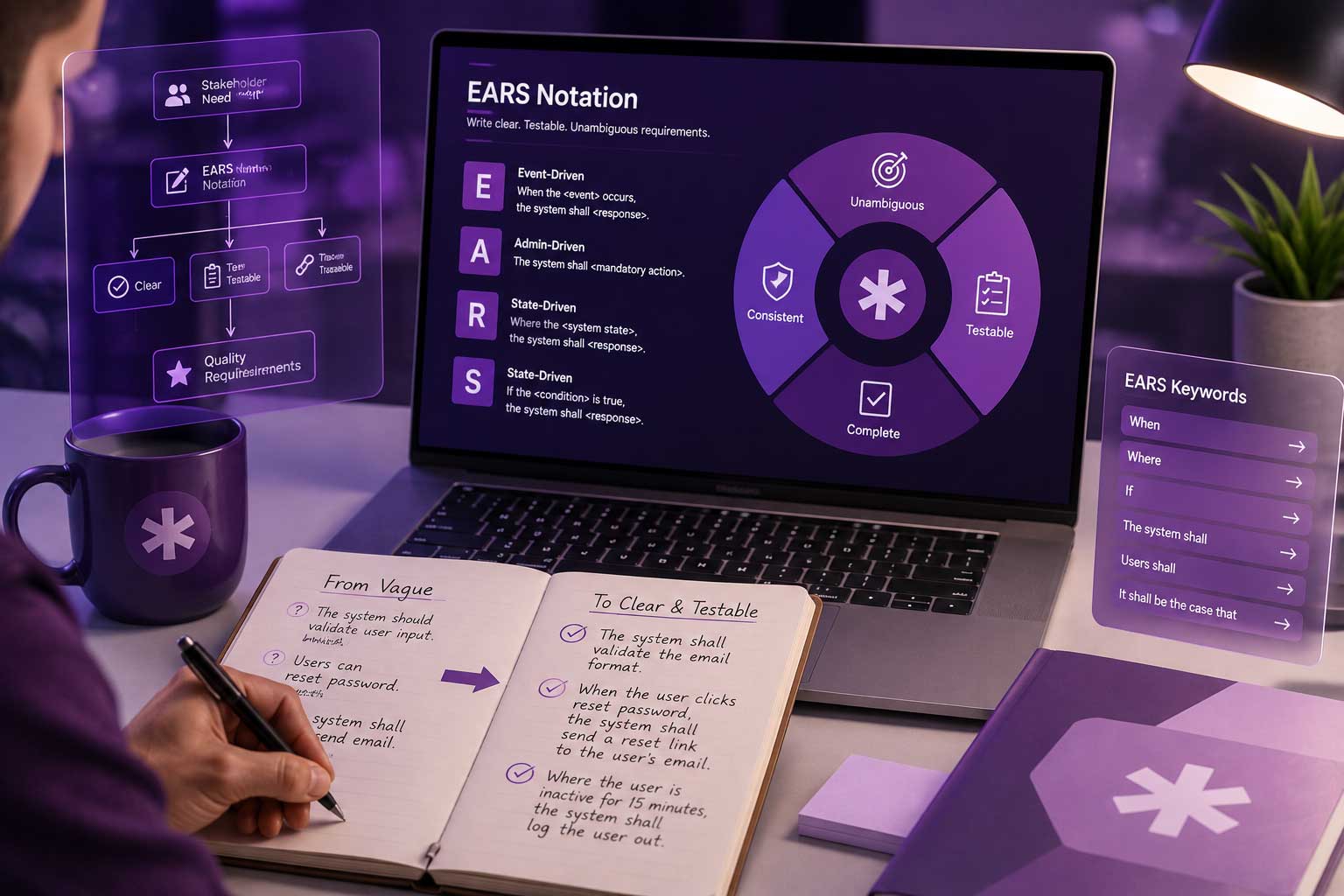
Learn EARS notation, its keyword patterns, and how to turn vague requirements into clear, testable ones, with examples and a guide to choosing the right pattern.
Continuar leyendo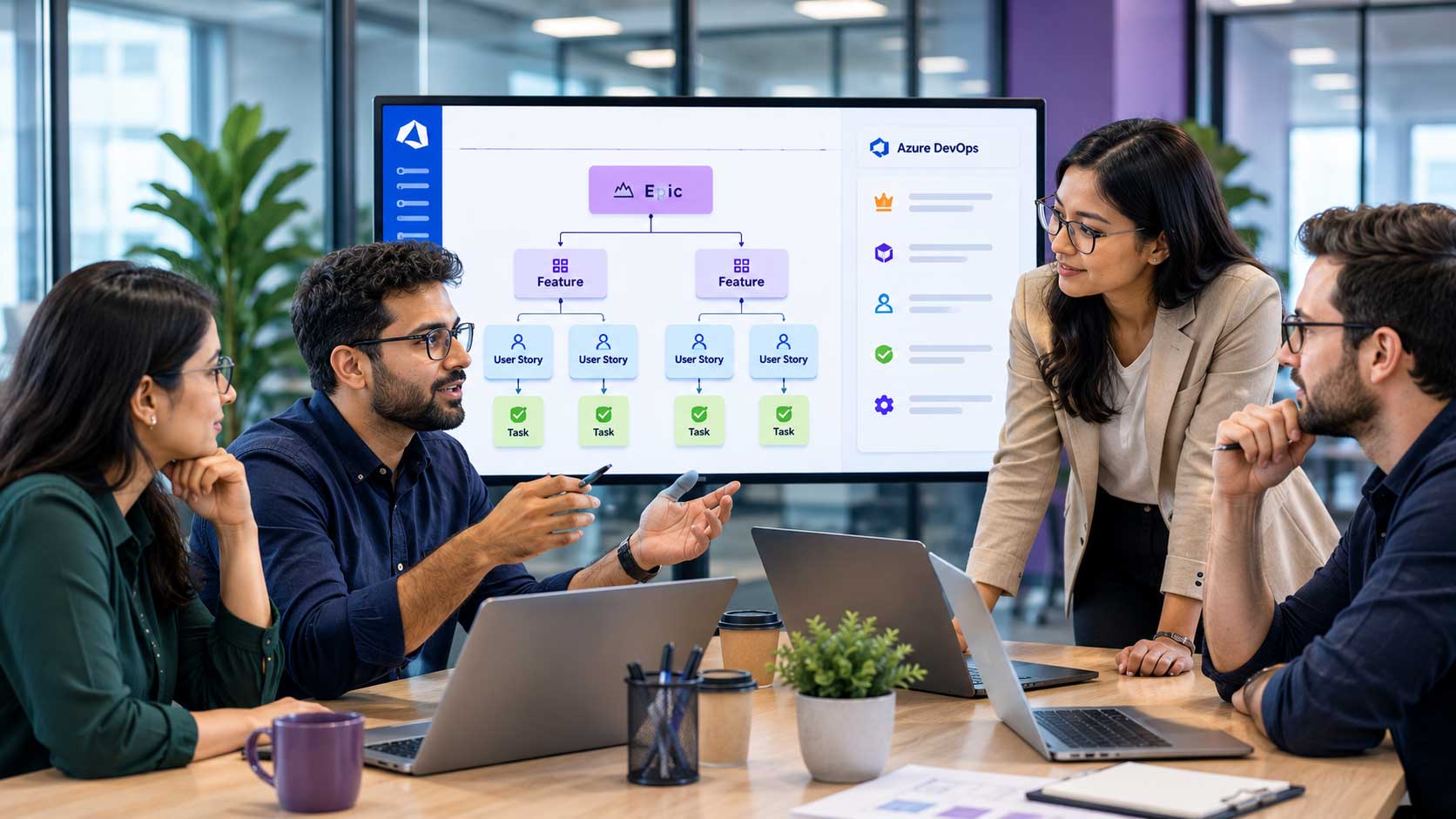
In Azure DevOps, a feature is a mid-level work item for a distinct capability, sitting between epics and user stories. Definition, example, and hierarchy.
Continuar leyendo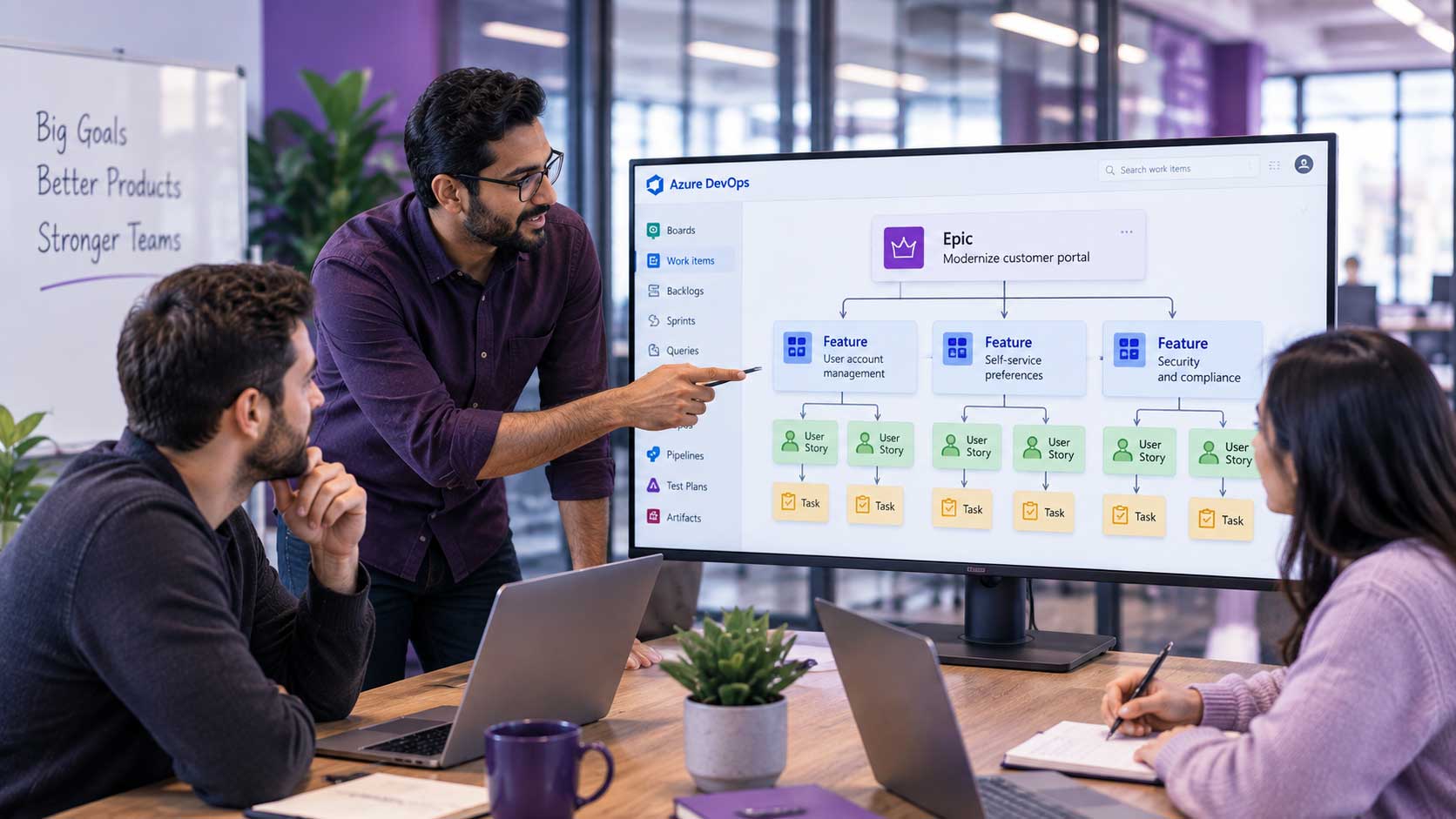
In Azure DevOps, an epic is the top-level work item for a large initiative that spans multiple features. Definition, an example, and how it differs from a feature.
Continuar leyendo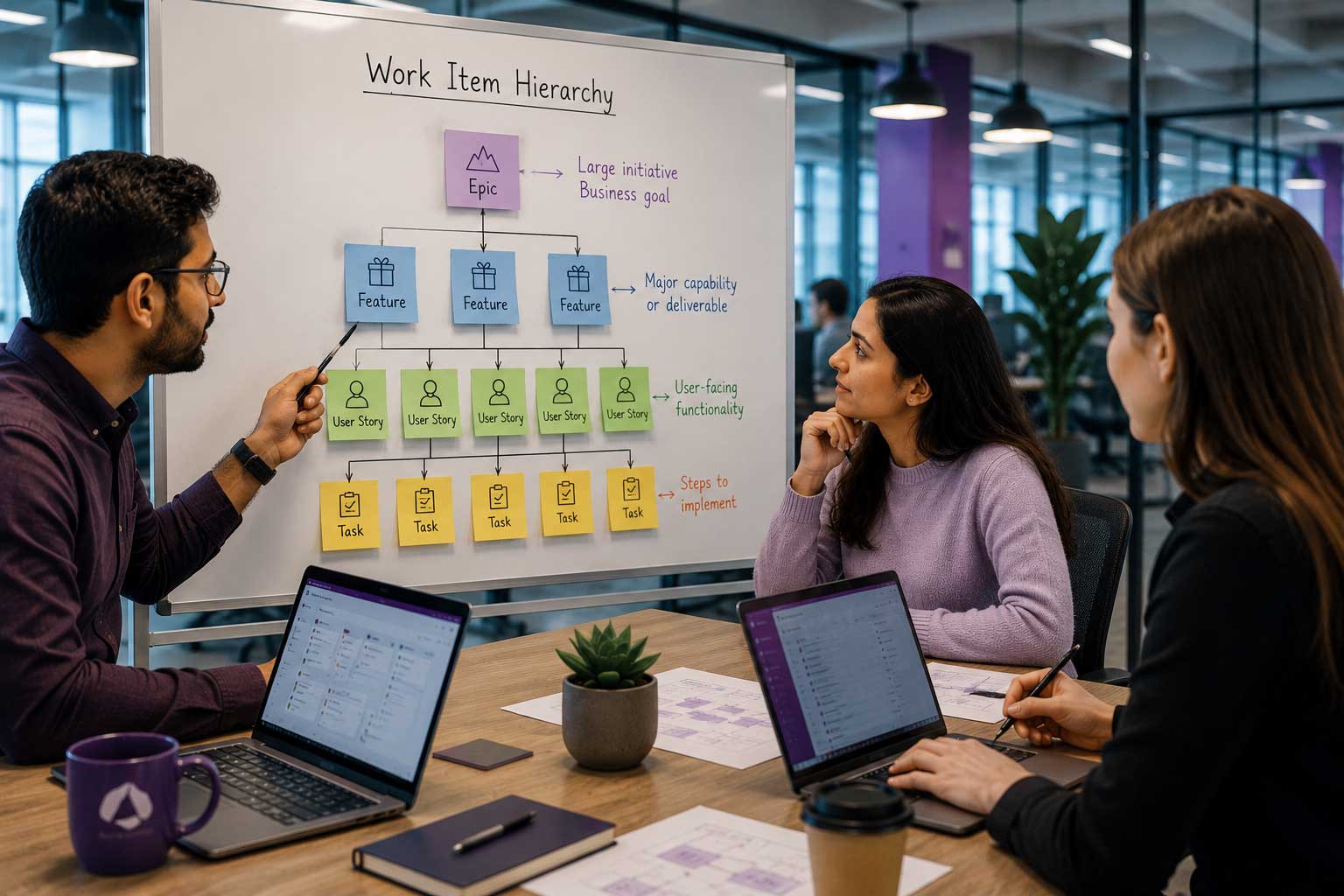
The Azure DevOps work item hierarchy runs Epic to Feature to Story to Task, linking daily work to big goals. Structure explained with an example.
Continuar leyendo
End-to-end requirements management in Azure DevOps.

AI-powered assistance for DevOps workflows.

Autonomous AI agents for DevOps execution.

Compliance management, built into Azure DevOps.
Real-time data sync across tools and systems.