

Trusted by teams in regulated industries
















Visure and Modern Requirements agree on the problem. Not on the fix.
Visure's own Azure DevOps page says Azure DevOps has the tools to manage requirements but not the interface and client-side functionality. We agree there is a gap. Visure closes it by managing requirements in its own platform and synchronizing them with Azure DevOps. Modern Requirements4DevOps closes it inside Azure DevOps, so your requirements, reviews, baselines and traceability work on the same work items your developers and testers already use.
The requirements depth regulated teams need, without leaving Azure DevOps.
Requirements stay where the work is.
Visure describes itself as a governance layer that syncs with the tools your team runs. For an Azure DevOps team, that means requirements are managed in Visure and synchronized with Azure DevOps, where development, testing and pipelines live. Modern Requirements4DevOps puts requirements in Azure DevOps itself. It uses Azure DevOps for data storage, inherits your process template and security, and has no separate URL or login.
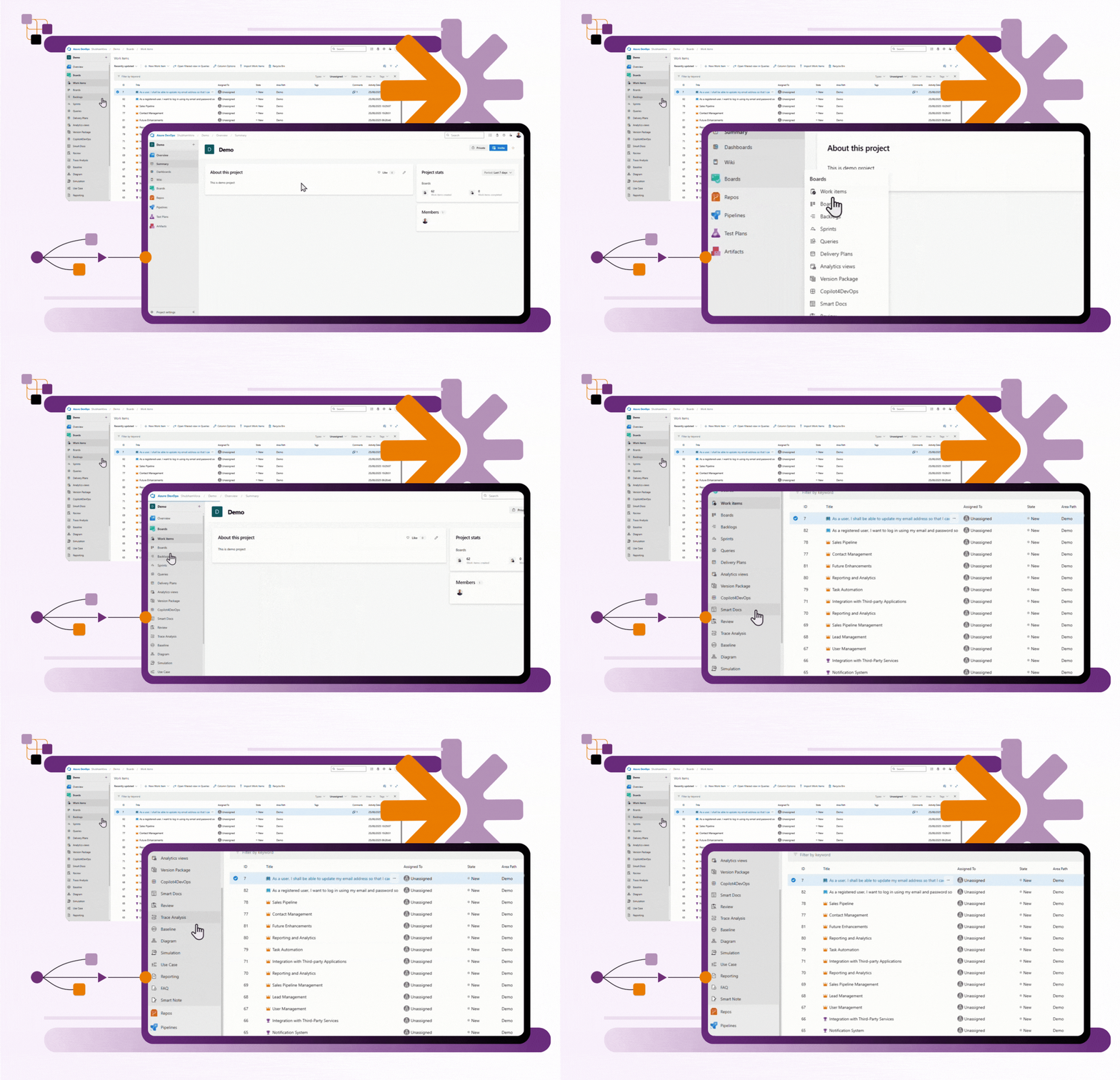
One data store, not two.
Running Visure on-premise means Windows Server with Visure Server, a License Server and a Microsoft SQL Server or PostgreSQL database, plus desktop client and web authoring components. Visure Cloud is hosted and managed by Visure. With Modern Requirements4DevOps, requirements live in the Azure DevOps Services organization or Azure DevOps Server you already run, with no separate requirements database to back up, secure and audit.
Visure on-premise, alongside Azure DevOps
Visure
Windows Server · Visure Server · License Server · SQL Server or PostgreSQL
Azure DevOps
Work items · tests · code · pipelines
Two data stores
Exigences modernes4DevOps
Azure DevOps Services or Azure DevOps Server
Requirements · work items · tests · code · pipelines
One data store
Authoring, reviews and baselines inside Azure DevOps.
Smart Docs gives teams Word-like living documents tied to Azure DevOps work items, and Smart Import converts existing Word and PDF specifications into work items. Review Management runs formal review and approval cycles; with the Ask User for Password on Approval rule enabled, approvers re-enter their credentials before a decision is recorded, which Modern Requirements describes as meeting the FDA 21 CFR Part 11 electronic signature requirement. Baselines are immutable snapshots with Word-format Difference Reports.
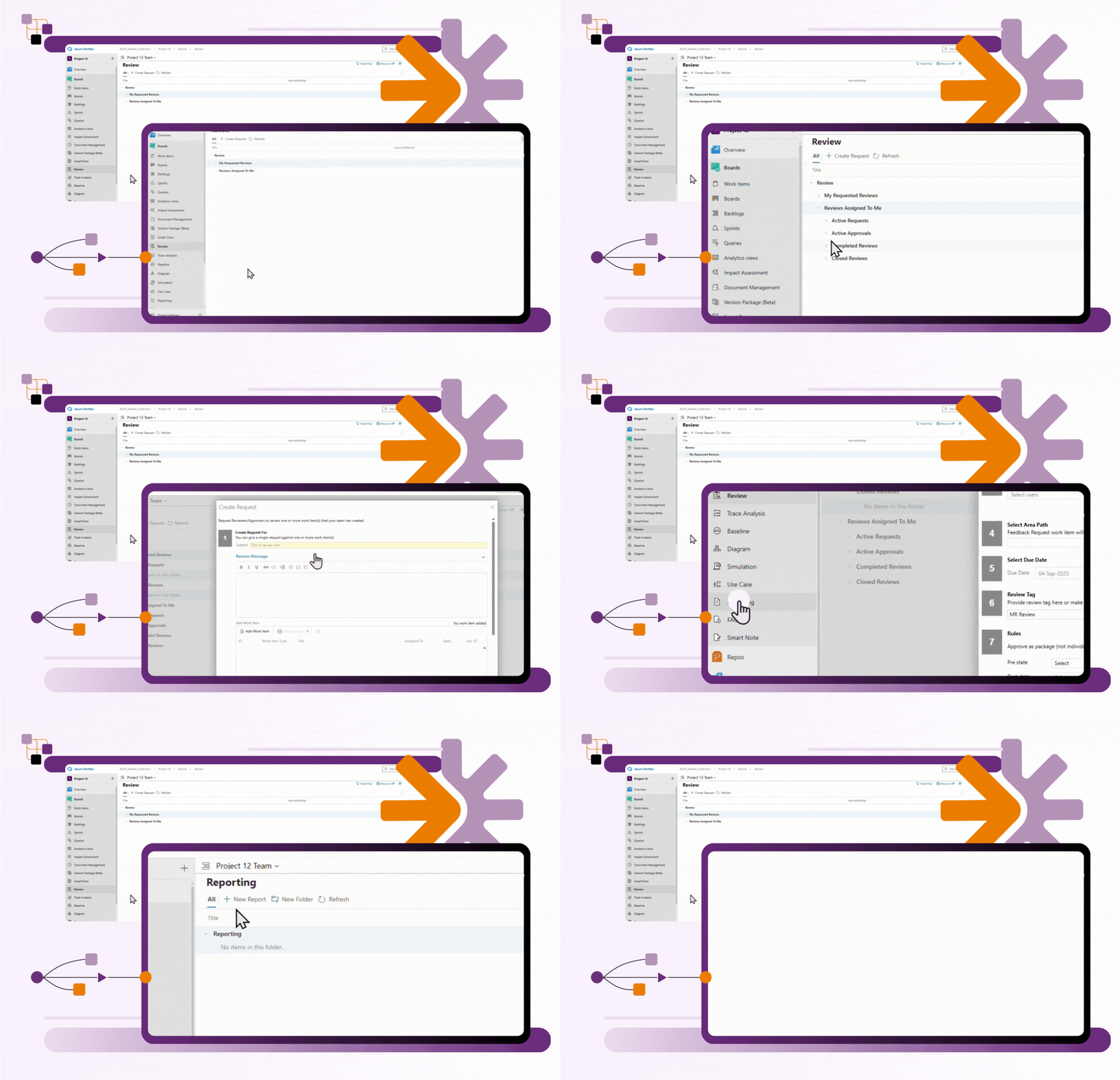
Traceability to the work developers already do.
Because requirements are Azure DevOps work items, they link natively to branches, commits, pull requests and builds, the same way any work item does. Test Hub Reporting links requirements to Azure Test Plans and reports on coverage. Trace Analysis builds bidirectional matrices across any two work item types, with coverage analytics and heatmap views, from requirement to test step.
Native links on a requirement work item
Does Visure integrate with Azure DevOps?
Yes. Visure's Azure DevOps integration synchronizes requirements bidirectionally and automatically between Visure Requirements ALM and Azure DevOps, so requirements are managed in Visure and kept in step with Azure DevOps. Modern Requirements4DevOps works differently: requirements are Azure DevOps work items, so there is no second system to keep in step.
Visure vs Modern Requirements4DevOps
A straightforward comparison. No marketing language.
What SoftwareReviews users say
Independent buyer data from SoftwareReviews (Info-Tech Research Group).
Composite score
Modern Requirements · Visure
Overall capability satisfaction
Modern Requirements · Visure
Cost is fair relative to value
Modern Requirements · Visure
Likeliness to recommend
Modern Requirements · Visure
Compared to Visure Requirements ALM, SoftwareReviews users rate Modern Requirements4DevOps easier to implement, easier to customize and better at training.
SoftwareReviews head-to-head comparison, date compared 1 October 2026, based on 60 Modern Requirements4DevOps reviews and 36 Visure Requirements ALM reviews.
When Visure is the better fit
Your developers don't work in Azure DevOps.
Modern Requirements4DevOps is an Azure DevOps extension. If your engineers live in Jira, GitLab or another toolchain, it isn't the right fit, and we'll say so on the call.
You want one requirements platform governing many tools at once.
If your program spans IBM DOORS, Jira, Enterprise Architect, Simulink and VectorCAST, Visure's sync-everything model is built for that.
You need AI inside an air-gapped environment.
Visure offers an on-premise LLM for air-gapped and classified deployments.
You want risk, FMEA and cybersecurity analysis in the requirements tool itself.
Visure includes FMEA and TARA-driven cybersecurity workflows alongside requirements.
If your developers, testers and pipelines already run in Azure DevOps, the rest of this page is for you.
Moving your requirements out of Visure
We map your Visure structure.
Item types, attributes, relationships and specification structure are mapped to Azure DevOps work item types, fields and Smart Docs before anything moves.
Requirements and documents come across.
Visure exports ReqIF, as well as Word and Excel. ReqIF4DevOps imports ReqIF files into Azure DevOps by mapping ReqIF objects and fields to work item types and fields. Smart Import converts Word and PDF specifications into work items, and Azure DevOps' native CSV import handles tabular data (up to 1,000 work items per file). You review everything in a pilot project in your own Azure DevOps before sign-off.
Your team works as normal from day one.
Authoring continues in Smart Docs, traceability is rebuilt and checked in Trace Analysis, and the migrated set is baselined before the old system is retired.
We start with a free scoping call to map your specific Visure setup.
Questions about switching from Visure
What is the best alternative to Visure?+
It depends on where your engineering work lives. For teams on Azure DevOps, Modern Requirements4DevOps is the closest fit, because it adds requirements management inside Azure DevOps instead of syncing a separate platform with it. SoftwareReviews lists it first among Visure Requirements ALM alternatives, with a composite score of 8.8 against Visure's 7.5.
Does Visure integrate with Azure DevOps?+
Yes. Visure's Azure DevOps integration synchronizes requirements bidirectionally and automatically between Visure Requirements ALM and Azure DevOps, so requirements are managed in Visure and kept in step with Azure DevOps. Modern Requirements4DevOps works differently: requirements are Azure DevOps work items, so there is no second system to keep in step.
How much does Visure cost?+
Visure doesn't publish prices; it quotes based on the license types and add-ons each company needs. It sells Read Only and Read & Write licenses and lists add-ons including a Contributor/Reviewer license, Report Manager, Quality Analyzer, Automated Checklists, Tool Qualification Package and integrations. Modern Requirements4DevOps offers four published editions, with pricing walked through on a call with a specialist.
Does Visure include AI?+
Yes. Visure's AI assistant, Vivia, generates requirements, detects ambiguity, scores quality against EARS, IREB and INCOSE rules and generates test cases with human review. Visure also offers an MCP Server and an on-premise LLM option. Modern Requirements includes core AI in every package through Copilot4DevOps Lite, with the full AI set in its Frontier AI and Engineering AI editions.
Can you migrate requirements out of Visure?+
Yes. Visure supports ReqIF export, along with Word and Excel export. ReqIF4DevOps imports ReqIF files into Azure DevOps by mapping ReqIF objects and fields to work item types and fields, and Smart Import converts Word and PDF specifications into work items. Run a pilot on one project and check fields, links and rich text before moving everything.
Does Modern Requirements4DevOps run on-premise?+
Yes. It runs on Azure DevOps Server on-premise and on Azure DevOps Services in the cloud. It stores its data in Azure DevOps and inherits your Azure DevOps permission model and process template, so there is no separate requirements database to run alongside Azure DevOps.
Does Modern Requirements4DevOps support regulated industry standards?+
Yes. It is built for FDA 21 CFR Part 11, ISO 13485, IEC 62304, DO-178C, ISO 26262 and ASPICE programs. Review Management can require approvers to re-enter their credentials before a decision is recorded, which Modern Requirements describes as meeting the Part 11 electronic signature requirement. Modern Requirements holds SOC 2 Type II and ISO 9001:2015 certification.
See Modern Requirements next to your Visure setup
- ✓Requirements authored as native ADO work items in Smart Docs
- ✓A traceability matrix generated from your own data
- ✓A Review Management cycle with credential-confirmed approvals
- ✓What a migration from Visure would look like for your setup
Keep reading
Native Azure DevOps integration vs software connectors
What a sync layer costs you over the life of a program.
Read the article → ComparisonComparing Jama Connect too?
SoftwareReviews lists Modern Requirements4DevOps and Jama Connect as the top two Visure alternatives.
See the Jama Connect comparison → ComparisonPolarion vs Modern Requirements4DevOps
A separate ALM synced to Azure DevOps, compared with requirements inside it.
See the Polarion comparison →Visure and Vivia are trademarks of their respective owner. Modern Requirements is not affiliated with Visure Solutions.