Zum Inhalt springen

FedRAMP SSP and POA&M Documentation Automation: Cutting the Manual Work Out of ATO Maintenance

Listen to this blog

FedRAMP (Federal Risk and Authorization Management Program) is a U.S. government security program that provides guidelines for assessing, authorizing, and continuously monitoring cloud products for security. If any SaaS company wants to sell a software product to U.S. federal agencies must comply with FedRAMP.

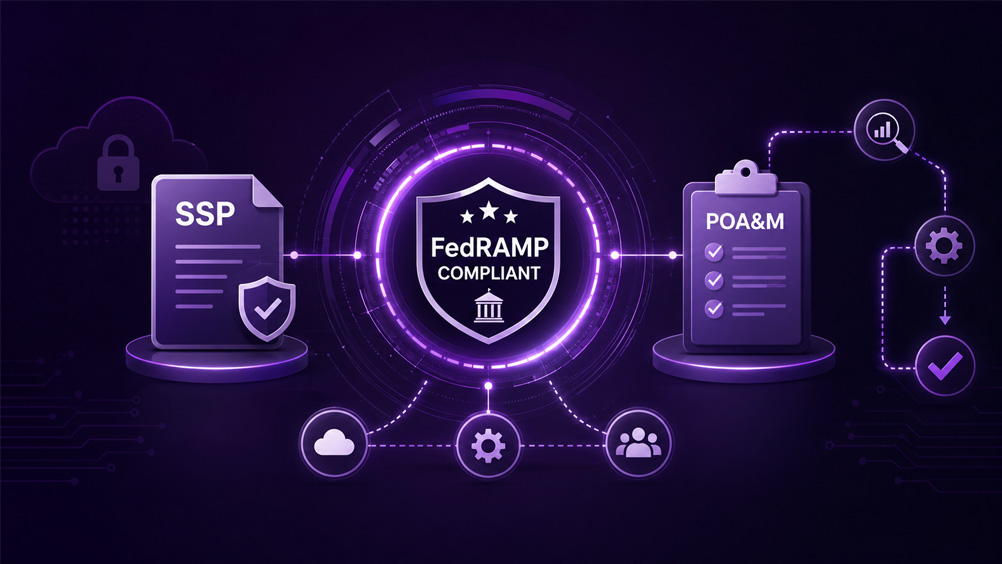
The SSP (System Security Plan) and POA&M (Plan of Actions and Milestones) are core artifacts within FEDRAMP. It tracks how security controls are implemented.

The critical concern for many cloud service providers is continuously updating these documents. When a new infrastructure component or configuration changes are introduced, teams need to update them across SSP control statements, POA&M records, remediation tasks, and supporting evidence. But when these updates are tracked manually through spreadsheets and disconnected compliance workflows, it creates audit preparation challenges.

However, by automating SSP updates, POA&M workflows, end-to-end evidence traceability, and change impact analysis, teams can reduce documentation overhead and be audit-ready during the entire authorization lifecycle.

So, let’s understand what SSP and POA&M documentation are and how to automate them.

What the SSP and POA&M Actually Are in the FedRAMP Authorization Process

The SSP (System Security Plan) is the primary security document for the cloud environment, which describes how the cloud system protects data. Generally, it implements security controls defined in NIST 800-53 Rev5. It defines:

  • System description (what the application does)
  • Architecture information with diagram (network and infrastructure)
  • Access control information (how user permissions are handled)
  • How log collection and retention are done
  • How the system is handling security incidents
  • What kind of encryption methods are used
  • How ongoing security activities are monitored
  • Supporting evidence tied to implemented controls
  • Dependencies across cloud and third-party services

It is generally 300 to 500 pages long and, in some cases, 800+ pages long.

On the other hand, the POA&M (Plan of Actions and Milestones) is a live remediation and risk-tracking record. It captures and tracks security gaps identified during 3PAO assessment and vulnerability scans and remediation activities with timelines. For example:

  • Weakness: Missing MFA on the admin portal
  • Severity: High
  • Fix plan: Enable MFA (Covers with a detailed description and work items)
  • Owner: Security team
  • Due date: 10 June
POA&M Live Remediation Process
From Detection to Resolution — Streamlining POA&M remediation with clear ownership, actionable fixes, and continuous progress tracking.

So, these are not static authorization documents that teams can create and leave behind. Instead, FEDRAMP is required to continuously update these documents when any new security controls are implemented, findings are remediated, and new risks are introduced.

Why SSP and POA&M Documentation Becomes a Manual Bottleneck

Most cloud providers achieve initial ATO authorization to operate from FedRAMP. However, the real struggle starts during ATO maintenance, where teams need to update SSPs and POA&Ms, track vulnerabilities, maintain evidence, perform assessments, and generate reports.

Here are some of the common challenges that teams face while managing SSP and POA&M:

  • SSP control statements drifting: At the time of ATO, SSP looks perfect and describes everything. However, as the system evolves and new services, configurations, or third-party integrations are added, SSPs become outdated if they are not updated with the engineering workflow.
  • Manual ConMon reporting overhead: FedRAMP continuous monitoring documentation requires teams to manually update POA&M with vulnerability scans, test findings, configuration assessments, and remediation updates every month. This eats up lots of time for the ISSO team every month.
  • Change management and SSP updates remain separate: Teams often handle changes in DevOps environments, which can affect multiple NIST SP 800-53 controls. But when SSP is managed separately, it remains unchanged until discrepancies are found in a 3PAO assessment.
  • Manual collection of audit evidence: When security evidence, scan results, test findings, and configuration audit outputs are managed in separate systems, such as spreadsheets, emails, Jira tickets, PDFs, etc., teams need to spend significant time collecting every piece of evidence in one place.
  • Poor traceability for deviation requests: Manually connecting NISP controls, security requirements, SSPs, and POA&M is a real challenge. To solve this, teams need automated end-to-end traceability, which also helps in impact assessment.
Manual Bottleneck in ATO Maintenance
Breaking the ATO Bottleneck — Eliminating manual SSP updates, evidence collection, and compliance tracking through smarter automation.

What Effective SSP and POA&M Automation Requires

Here is how teams can automate SSP and POA&M documentation automation and can reduce the burden of ATO maintenance:

  • Version-controlled SSP management: FedRAMP system security plan automation must maintain different versions of SSPs. When a team makes any change, it should automatically create a new version of the document. This helps compliance reviewers to understand how SSP has evolved.
  • Automated traceability between controls and evidence: Each NIST SP 800-53 security control must be automatically (without manual overhead) traceable to implementation, validation records, and operational procedures.
  • Connected POA&M remediation workflows: Every POA&M record must be connected with engineering tickets, remediation tasks, scan findings, and ownership records. This helps teams to know remediation status without digging through spreadsheets just before audit assessment.
  • Automated change impact identification: With end-to-end traceability, when new services, integrations, or configuration updates are introduced, teams must be able to identify how SSPs and compliance records will be affected. It should automatically flag affected work items for review.
  • Live continuous monitoring reporting: Teams must be able to generate continuous monitoring reporting documentation directly from the security scanning results and remediation work items instead of manually fetching every work item and preparing the report every month.
  • Integrated security and engineering collaboration: FEDRAMP compliance operations work more effectively when SSP management and POA&M workflows are integrated into existing DevOps and engineering workflows instead of separate compliance-only processes.

You don’t need to build this automation system from scratch, but you can use already available FedRAMP POA&M management tools. Let’s see how it works in the next section.

How Modern Requirements Supports FedRAMP SSP and POA&M Documentation Automation

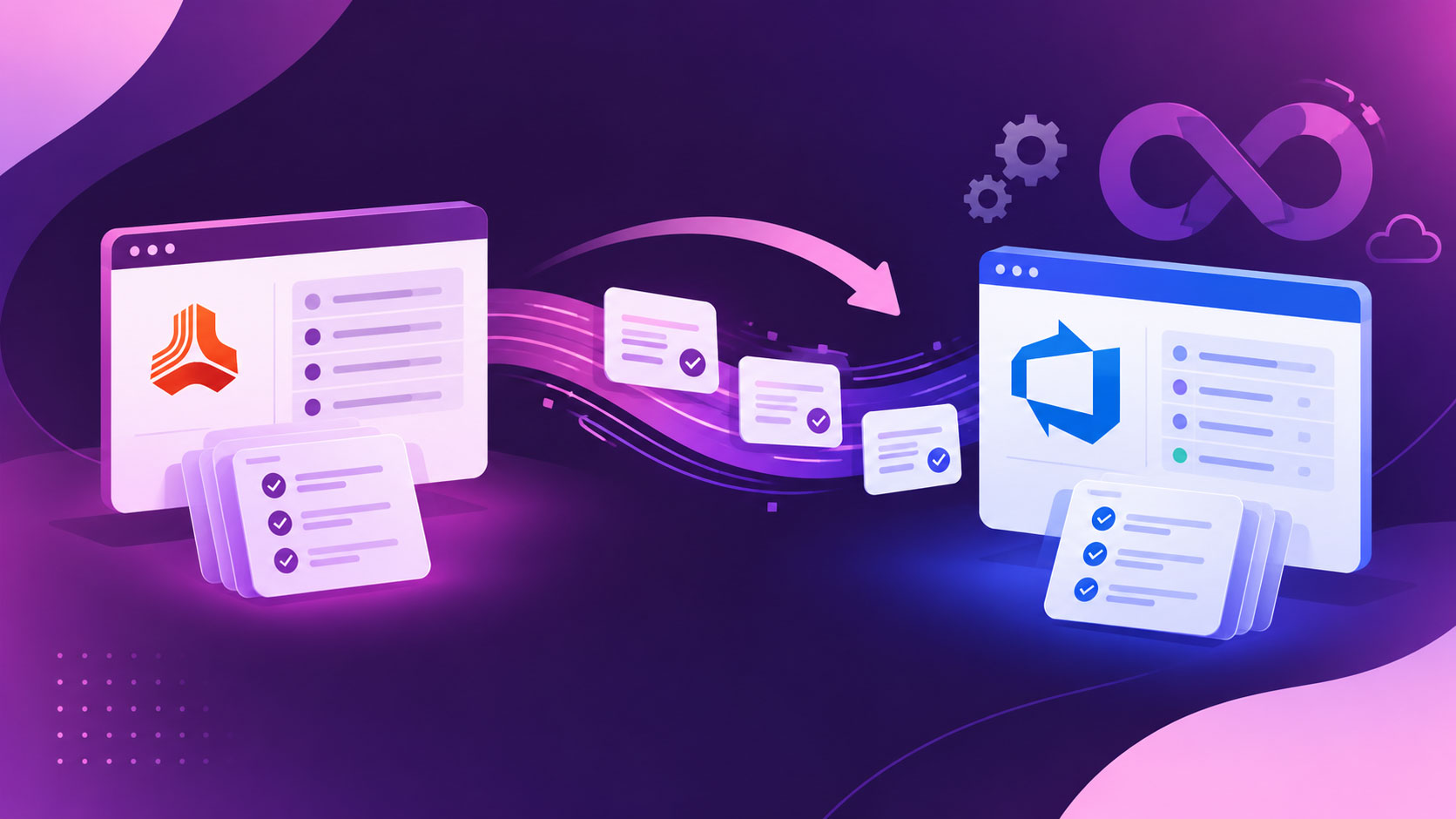
If you are a cloud service provider and struggling to automate FedRAMP SSP and POA&M documentation, Modern Requirements4DevOps can be a one-stop solution for you. It works within Azure DevOps, where you can manage all FedRAMP controls and SSP documentation and use Modern Requirements4DevOps to automate document updation, traceability in the POA&M workflow, change impact, and audit report preparation.

  • Automated version control for SSP documentation: It offers automated version control, so whenever you update any security control or document, it automatically creates a new version. Teams can create the version history and use it during the audit report preparation.
  • Create living SSPs: The Smart Docs module of the Modern Requirements4DevOps helps teams to create living SSPs that are directly connected with existing security controls. Whenever any change occurs in security controls, it also automatically updates SSP.
  • Trace everything in the POA&M workflow: It offers automated end-to-end traceability, which allows teams to visualize how security vulnerabilities are connected with engineering tasks, remediation owners, and supporting evidence. This helps compliance teams track remediation progress from a single operational workload.
  • AI-driven change impact assessment for POA&M: Copilot4DevOps allows for performing AI-driven change impact analysis that tells how FEDRAMP compliance is affected when any security controls are changed.
  • Automate continuous monitoring with Agent4DevOps: Create agents that can monitor changes in security controls, remediation status, inventories, and assessment updates. When anything goes wrong or updates, they can notify teams or update SSPs with human approval.
  • Simplifying audit and assessment preparation: Assessors and authorizing Officials can review connected evidence, remediation history, and control implementation details without requiring teams to manually assemble documentation from multiple systems.


Inhaltsverzeichnis

Beginnen Sie noch heute mit der Nutzung von Modern Requirements.

✅ Definieren, verwalten und verfolgen Sie Anforderungen innerhalb von Azure DevOps
✅ Arbeiten Sie nahtlos mit regulierten Teams zusammen
✅ Starten Sie KOSTENLOS – keine Kreditkarte erforderlich

Aktuelle Artikel

New MR Logo cropped
Products
New MR Logo cropped

Moderne Anforderungen für DevOps

End-to-end requirements management in Azure DevOps.

Copilot für DevOps

AI-powered assistance for DevOps workflows.

Agents4DevOps

Autonomous AI agents for DevOps execution.

KI-Synchronisierungsbrücke

Real-time data sync across tools and systems.
Warum moderne Anforderungen?

Designed to work natively within Azure DevOps, Modern Requirements extends the platform with powerful capabilities that help teams capture, manage, and validate requirements more effectively.