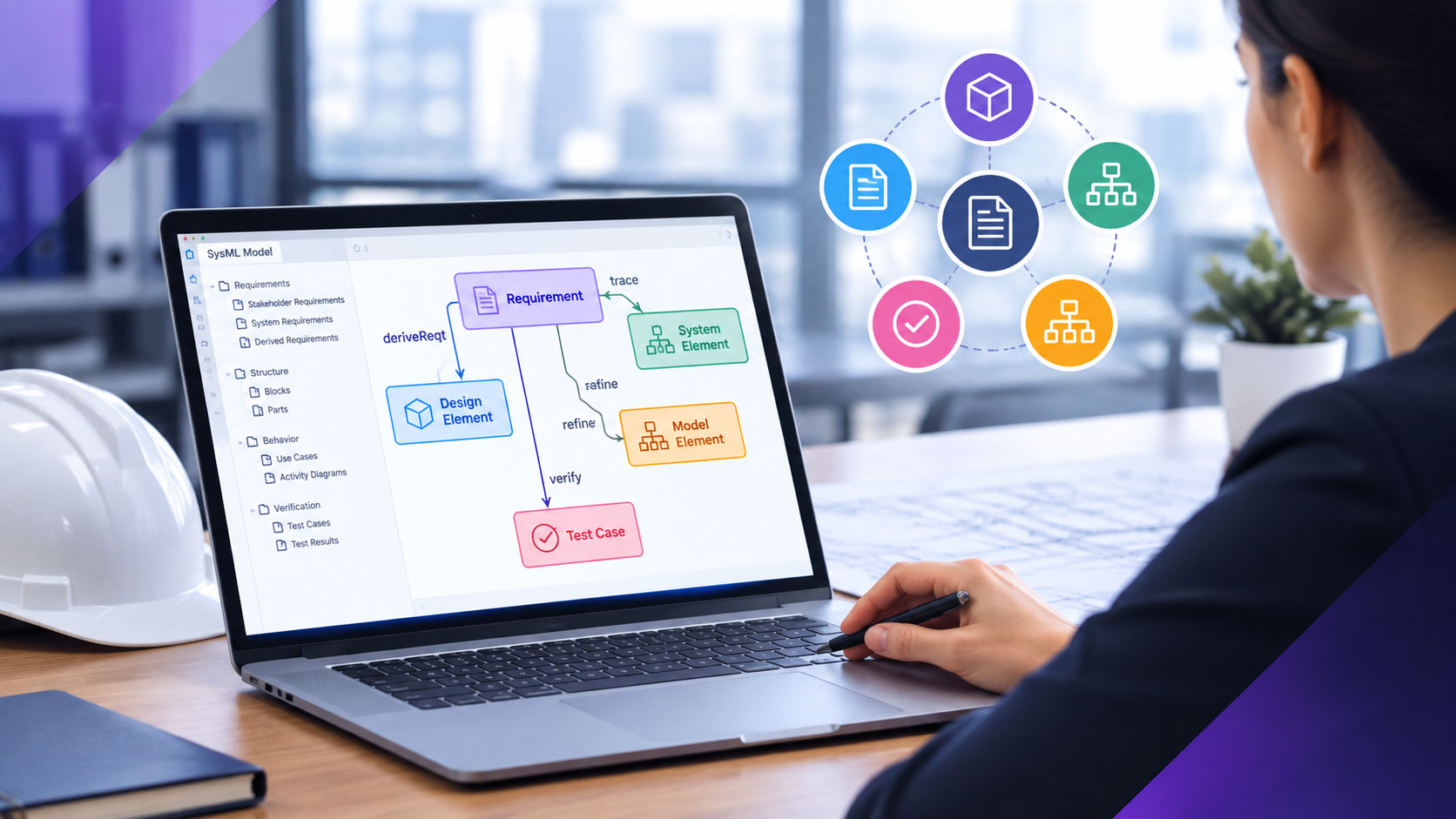
Furthermore, traceability matters for change impact analysis. Let’s understand it with an example of the pipeline pressure trip function. When teams need to change the shutdown threshold, they need to perform trace analysis to know which logic, alarms, and tests will be affected.
So, strong IEC 61508 traceability and requirements management give energy & utility teams a record of implementation and help in continuously maintaining requirements and keeping them updated.
What Must an IEC 61508 Safety Requirements Specification Contain and How Traceability Works
Based on IEC 61508, Safety Requirements Specifications (SRS) define the safety functions needed to reduce identified risk to an acceptable level. A strong SRS generally includes:
- Safety functions: It defines what the system should do.
- Safety integrity level (SIL): It defines the risk level of hazards.
- Inputs and outputs: Defines what conditions should trigger the safety function.
- Response time: How much time it takes for failovers.
- Failure handling: How the hazards are handled.
- Assumptions and constraints: This defines operating limits, and any assumptions are made on constraints.
Other than that, it also contains verification methods and reset or restart conditions.
To implement end-to-end traceability, each SRS must be linked to its source hazard, risk assessment output, design allocation, verification activity, and operational controls. In practice, that means one requirement should be traceable to the logic solver configuration, sensing elements, shutdown devices, test procedures, and proof test records associated with it.
When all these requirements are connected, the traceability model looks like something:
- Hazard -> Risk -> System safety requirement -> Design -> Test -> Operation
Furthermore, teams should implement traceability in both directions:
- Forward traceability: It connects hazards to risks, SRS, test, and operations, which helps in ensuring every safety requirement is implemented in a correct way.
- Backward traceability: It looks like Test -> Code -> Requirement. Helps in ensuring that everything the team has built aligns with IEC 61508 and nothing is built without reason.
Without these links, teams may have requirements on paper but no clear proof that the original risk is still controlled.
IEC 61508, IEC 61511, and Functional Safety Traceability: How They Fit Together for Energy Teams
Now, as you know, IEC 61508 is a generic functional safety standard that provides guidelines and a framework to design and validate safety-related electrical, electronic, and programmable systems. On the other hand, the IEC 61511 regulatory standard defines how to implement IEC 61508 in the process industry, like oil & gas, petrochemicals, and power generation.
So, in the energy sector, teams need to operate IEC 61508 and IEC 61511 as a single piece of a chain. So, the real task for the engineering team is to connect the requirement evidence across both standards.
In practice, traceability should connect where both standards rely on each other:
- IEC 61511 safety functions should be linked to IEC 61508 compliant sensors, logic solvers, and final elements.
- IEC 61511 SRS requirements linked to IEC 61508 device capability and integrity data.
- Site proof tests and demand rates linked to equipment assumptions used during selection.
- Plant changes, such as setpoints, bypasses, or logic edits, are linked to revalidation needs.
IEC 61511 manages performance in live operations, while IEC 61508 supports confidence in the equipment used. When both stay connected, teams can show that safety functions remain valid after testing, maintenance, or change.
How Modern Requirements4DevOps Supports IEC 61508 Traceability for Energy and Utility Teams
The main problem of teams working in the energy sector is that they need to use one tool for storing requirements records and another tool to prepare a functional safety traceability matrix. So, every day they need to do lots of context switching.
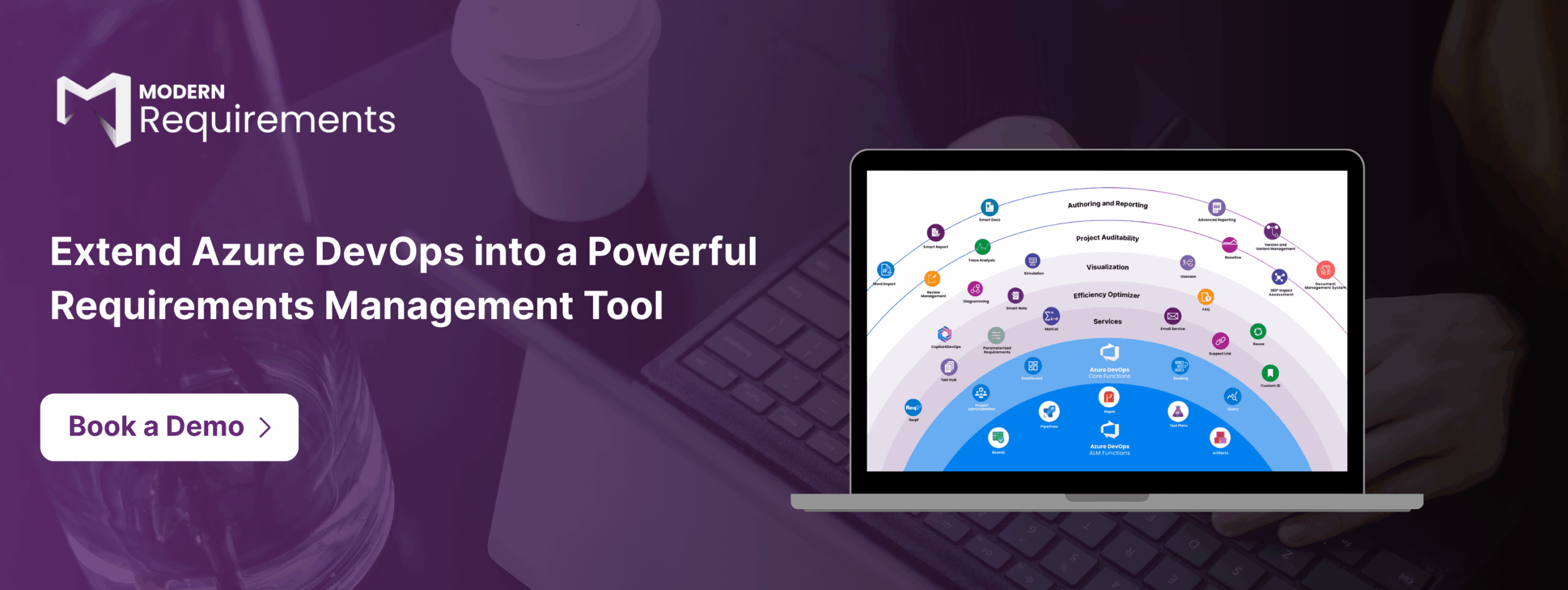
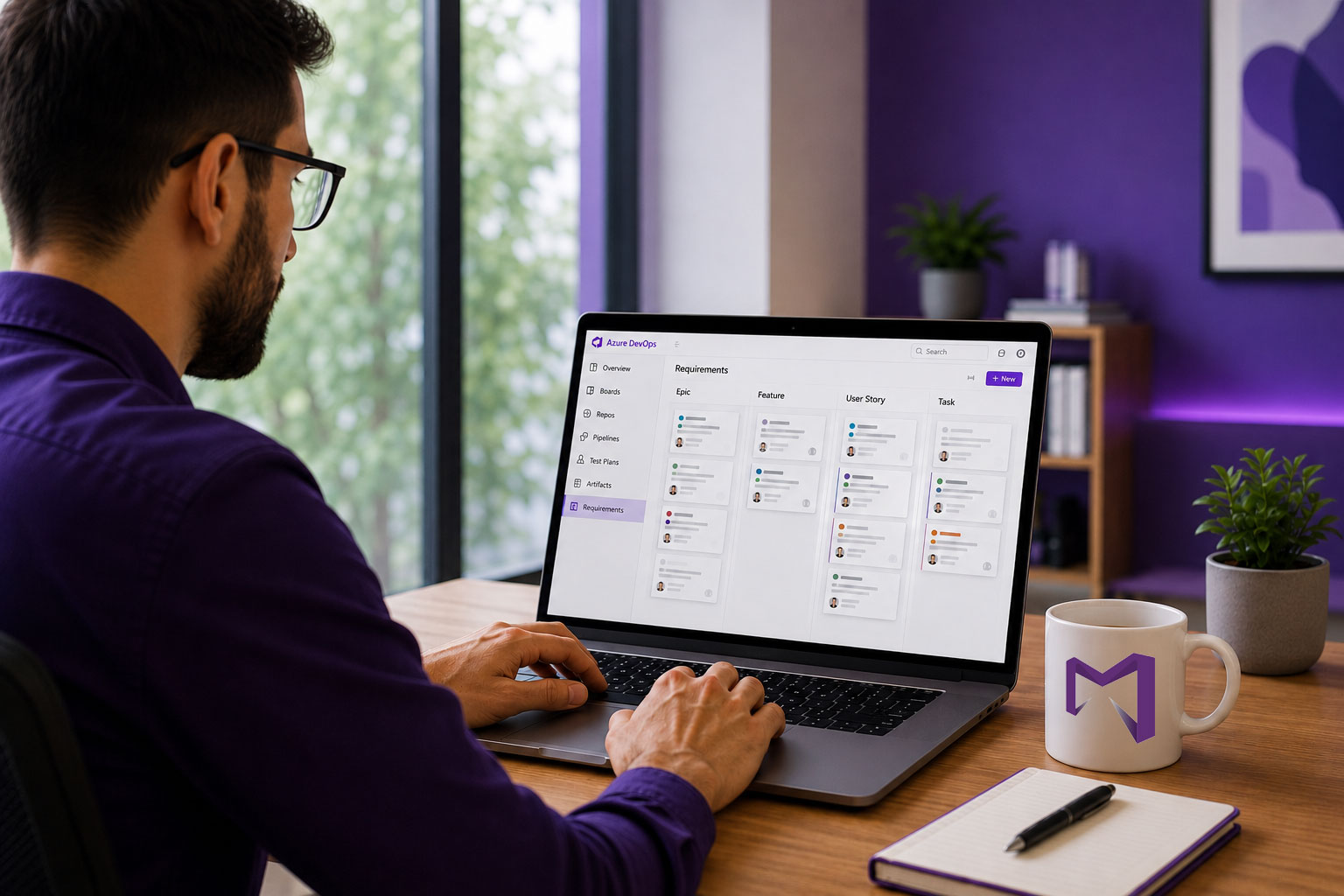
Modern Requirements4DevOps that works within Azure DevOps solves this challenge for energy teams. They can store all requirements related to functional safety, IEC 61508, and IEC 61511 within Azure DevOps, and teams can use Modern Requirements4DevOps’s trace analysis feature to create traceability matrices in the same environment.
Energy & utility teams can create horizontal traceability matrices and visualize how HAZOP actions, SIL-related SRS requirements, design tasks, and verification records are connected. If required, they can connect requirements within the traceability matrix only. Also, when requirements change, the functional safety traceability matrix also updates automatically. This helps in staying in sync with IEC 61508 requirements, even if changes.