Microsoft, GitHub, and Azure DevOps: What the Shift Really Means – and Why Modern Requirements is Built for What’s Next
Explore how GitHub and Azure DevOps work together in a...
For years, medical device makers and sellers in the USA followed 21 CFR Part 820, known as the Quality System Regulation (QSR). Along with them, they were also required to follow ISO 13485, which is the main global standard for quality management systems for medical device companies. So, the real challenge was managing both separately.
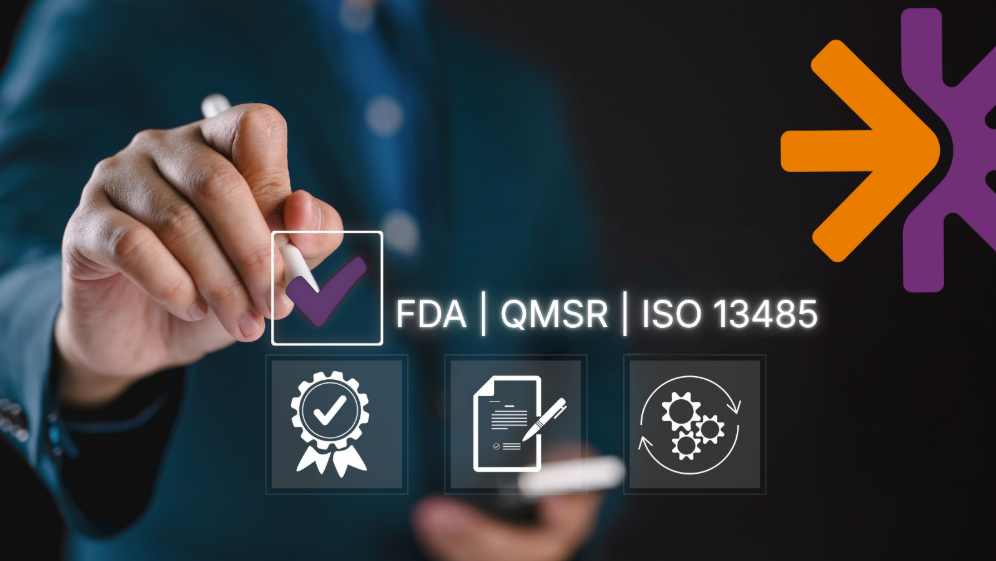
To overcome those challenges, the U.S. Food and Drug Administration (FDA) has introduced QMSR (Quality Management System Regulation) in February 2024 to align FDA rules more closely with ISO 13485.
This change affects how requirements for medical device development are created, updated, documented, approved, traced, and maintained throughout the whole lifecycle. So, medical device developers need to understand how QMSR aligns with ISO 13485 and what next steps they should take.
As mentioned in the introduction, the FDA QMSR is an updated framework to manage the quality of medical devices, a replacement for the FDA QSR to align them with ISO 13485. It became effective on 2 February 2026.
Here is what is updated in QMSR:
This framework is designed to:
It’s true that QMRS and ISO 13485 are 85-90% aligned, but QMRS is not a replacement for ISO 13485. The FDA covers extra rules related to medical device inspection, labeling, and reporting rules that ISO 13485 doesn’t define explicitly. So, it is important to understand where both overlap and where it doesn’t.
There are a few FDA-specific obligations that are not covered in ISO 13485. So, companies still selling in the USA market need to adhere to the following obligations:
So, with this, teams can have a single framework to implement QMSR and ISO 13485 together.
It is very important to showcase how requirements for medical device development are maintained throughout the product lifecycle in an audit report to achieve FDA QMSR and ISO 13485 compliance certification, but most teams struggle with that and generally face the following challenges:
In the next section, let’s look at how to overcome these challenges while developing medical devices.
Modern Requirements4DevOps is a medical device requirements management tool that helps organizations to maintain FDA QMSR and ISO 13485-related requirements device development requirements directly within Azure DevOps. So, teams can have a single source of truth to manage compliance and development.
Furthermore, QMSR enforces teams to implement end-to-end bi-directional traceability, and Modern Requirements4DevOps automates that within Azure DevOps. By creating traceability matrices, teams can visualize how compliance is connected with user stories, tests, evidence, etc., and visualize what is implemented and what is missing.
Also, QMSR expects medical device teams to make risk-based decision-making. For that, Modern Requirements4DevOps offers Agent4DevOps, which allows creating agents that analyze the risk score of requirements when they are created or updated and instantly notify teams about critical situations.
With AI impact assessment, teams can analyze how changes in any device requirement can affect compliance. Also, the built-in review management workflow allows teams to approve requirements with e-signature, which is most important to stay compliant with QMSR.
Copilot4DevOps AI can be used to draft medical device development requirements based on QMSR and ISO 13485 obligations. So, teams can cover all requirements without any compliance gaps.
Moreover, instead of preparing for audits through manual document assembly, it allows teams to prepare audit reports with a single click and maintain readiness as part of normal development work.
✅ Defina, gestione y realice un seguimiento de los requisitos en Azure DevOps
✅ Colabore sin problemas entre equipos regulados
✅ Empiece GRATIS, sin necesidad de tarjeta de crédito
Explore how GitHub and Azure DevOps work together in a...
Design controls, validation, and audit readiness – solved. How Copilot4DevOps...
Discover how AI enhances traceability, speeds analysis, and reduces risk...
End-to-end requirements management in Azure DevOps.

AI-powered assistance for DevOps workflows.

Autonomous AI agents for DevOps execution.

Real-time data sync across tools and systems.

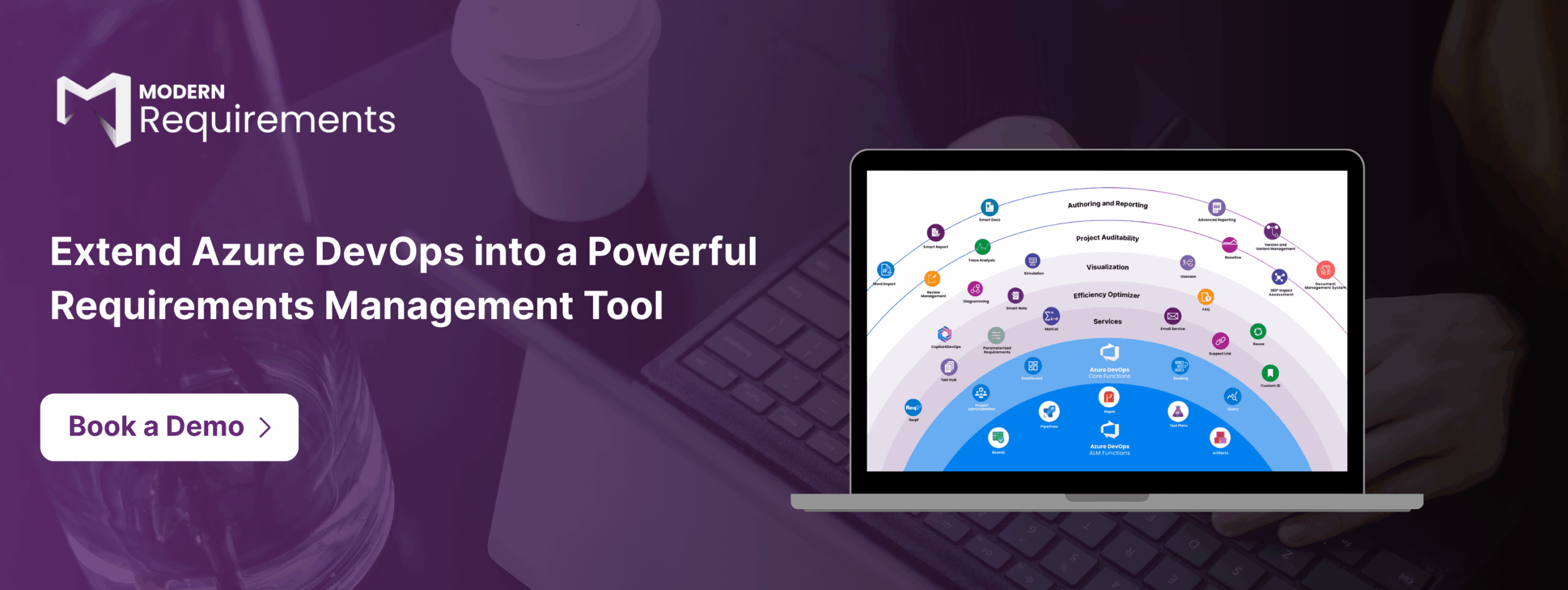
Designed to work natively within Azure DevOps, Modern Requirements extends the platform with powerful capabilities that help teams capture, manage, and validate requirements more effectively.