The Future of AI in Enterprise: How Agentic Systems Are Transforming Work
Artificial Intelligence (AI) is no longer a distant dream; it's...
Even with all the advancements made in DevOps, a familiar frustration keeps popping up for teams: things still feel too manual.
People put big money into Azure DevOps, they build out CI/CD pipelines, and they adopt agile methods. Still, delivering software with true confidence often stumbles right when it matters most. Getting releases ready becomes a frantic, last-minute dash.
Keeping track of work gets fuzzy as it passes between different groups. Gathering compliance proof happens too late, often under intense pressure. Executives end up with scattered bits of information, never seeing the full, clear picture of how things are really progressing.
The tools themselves are modern, sure, but the process for validating and governing the actual work hasn’t caught up.
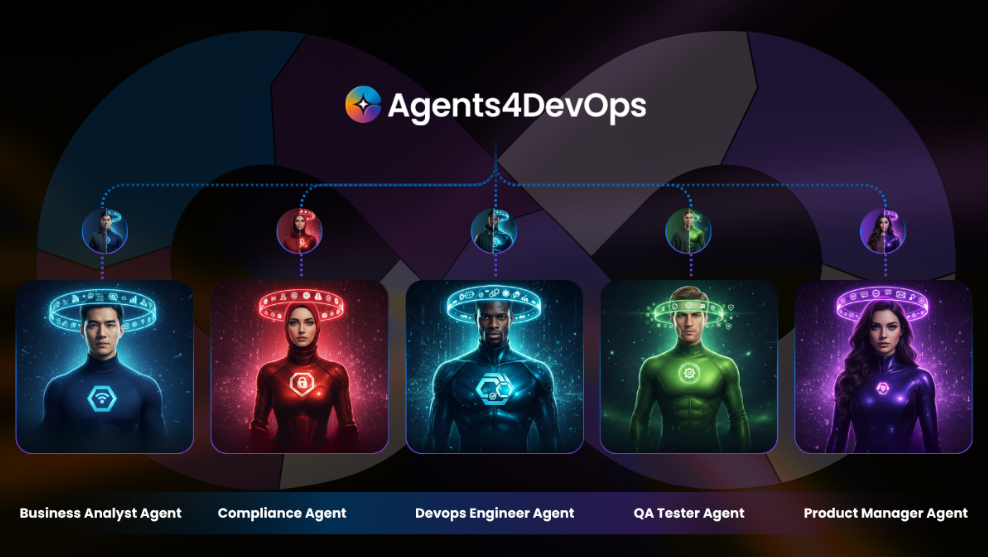
This is exactly where a new way of doing things is showing up, one that goes past simple automation and moves into smart, controlled execution. Agents4DevOps was built specifically for this change.
Most DevOps setups today are heavily automated. Pipelines kick off builds, tests run themselves, and deployments can happen with barely any human touch. From a distance, this makes everything look like a smooth, efficient system.
Yet, automation by itself won’t promise that a delivery is truly finished, compliant, or ready for prime time.
There’s a basic disconnect between what the systems actually do and what companies really need to verify. All requirements must be thoroughly met. Tests need to hit specific targets. We have to confirm operational readiness. Proof for compliance needs to be there and accurate. These aren’t just separate chores. They’re all tied together, conditions that truly decide if a release is prepared.
With many teams, these important checks are still done by hand or through poorly linked processes. That leads to uneven results, higher risks, and piles extra work onto engineering and release teams.
Agents4DevOps fills this void by putting intelligence right into Azure DevOps’s execution layer.
Agents4DevOps puts smart AI agents right into Azure DevOps, letting them work directly with current delivery information. These aren’t just outside tools or passive analytics; they actively check, apply rules, and direct delivery following set policies.
Because they run natively inside Azure DevOps, they can talk to all the same things teams already use every single day. That means everything: requirements, work items, pipelines, builds, test plans, results, code repositories, and documentation.
This built-in method is vital. It guarantees that all actions, choices, and outcomes stay exactly where they belong, inside the main system of record. No confusion arises between where the work gets done and where it’s managed. Because of this, teams get constant oversight and command without adding more complicated layers.
A big shift Agents4DevOps brings is moving away from checking things only when something happens, and instead doing it all the time. In older ways of working, you’d only validate at certain points. Teams would get ready for release meetings, pull together reports, and then manually confirm if everything was done. This takes a lot of time and often misses things, leading to inconsistencies.
Agents4DevOps flips that by constantly watching delivery signals and checking them against your established rules. Instead of wondering if a release is good to go, teams work in an environment where they always know its status.
The system checks if requirements are properly tied together and finished, if test coverage is what you expect, if pipelines run without a hitch, and if things like runbooks and rollback plans are ready for operations. It also makes sure compliance and security rules are met as outlined.
This constant validation cuts down on guesswork and gets rid of those frantic, last-minute checks.
At its heart, Agents4DevOps uses a policy-driven way to manage things. Companies set down exactly what “good” looks like, and the agents make sure those rules are followed evenly across every team and project.
These policies can cover a lot of different situations: how things are traced, what quality levels are needed, the criteria for a release to be ready, and what’s expected for compliance. Once you set them up, they get applied automatically, all the time. This makes sure that delivery doesn’t rely on one person’s opinion or someone manually double-checking everything. Every team operates against the same standards, and every release is evaluated in a consistent way.
For big companies, this kind of consistent standard is absolutely vital. It lets them grow how much software they deliver without losing control or letting quality slip.
Automation and intelligence are mighty tools, but keeping control matters, especially in places with lots of rules or where risks are high. Agents4DevOps builds in clear ways for people to stay involved, making sure teams hold the reins on crucial choices. Companies can decide when agents can act on their own and when a person’s say-so is needed.
For instance, agents might suggest things with proof to back them up, demand approval for certain steps, or just do tasks automatically if the risk is low. This adaptable approach helps companies weigh speed against good governance.
Everything an agent does is clear and can be tracked. Their suggestions make sense, and all decisions are logged with their full background. That builds confidence in the system while maintaining accountability.
One of the toughest parts of enterprise DevOps is always being ready for an audit. Proof is often gathered by hand, scattered across too many systems, and a real headache to piece together.
Agents4DevOps tackles this by creating that evidence just by doing its job.
As agents check policies and take action, they automatically build a neat record: what was validated, what choices were made, and which conditions got met. This covers traceability links, test results, pipeline outcomes, and records of approvals.
The outcome is a constantly updated collection of evidence, ready for an audit at any moment. Companies won’t need to get ready for audits as a special chore anymore. Being audit-ready just becomes part of daily delivery.
A big chunk of the effort in DevOps doesn’t go into actually building software. It goes into checking, organizing, and reporting on the work.
Agents4DevOps lightens this load by handling those repeat validation tasks and making sure standards are automatically kept. Teams don’t have to hunt down information, sort out differences, or manually check if things are ready.
This change frees up engineers, product owners, and release managers. They can then spend their time on more important activities: sharpening requirements, making quality better, and getting deliveries out faster.
Agents4DevOps signals a bigger change in how companies think about DevOps.
Instead of leaning on people to coordinate things by hand and only checking periodically, teams are moving to a setup where everything is constantly guided and managed. System signals lead to smart actions. Policies keep things consistent. Proof appears on its own. People still oversee the really important choices.
This isn’t some small, step-by-step upgrade. It’s a complete rethinking of how delivery works.
DevOps has done a great job changing how teams build and put out software. The next big hurdle is making sure deliveries are steady, compliant, and can grow, all without making things more complicated.
Agents4DevOps tackles this by putting managed AI agents straight into Azure DevOps. It lets teams ditch manual checks and instead adopt execution that’s always on, guided by policies.
For companies wanting to feel more sure about their releases, make tracking better, and cut down on extra work, this method is a significant leap. The tools might already be sitting there. What’s different now is how smartly we use them.

✅ Define, manage, and trace requirements within Azure DevOps
✅ Collaborate seamlessly across regulated teams
✅ Get started for FREE—no credit card required
Artificial Intelligence (AI) is no longer a distant dream; it's...
Check out this detailed guide to know about virtual prototyping,...
Learn more about the importance of SOC 2 compliance, its...