Aller au contenu

DevSecOps Compliance Automation for Mission Systems: A Practical Guide for Government Programs

DevSecOps Compliance Automation for Mission Systems A Practical Guide for Government Programs
Listen to this blog

In most government programs, DevSecOps is already standard practice. Development, security, and operations teams work together rather than in silos, with security integrated into every stage of the development lifecycle. For mission-critical systems, this shift-left approach is not optional. It is foundational.

But meeting security requirements is only half the work.

Teams in government programs must also prove that security controls and regulatory standards like NIST and DISS/JTIG are being followed consistently. Every release requires documented evidence that controls remain in place, not just at launch, but throughout the entire development cycle.

This is where most teams start falling behind. When compliance depends on spreadsheets, email approvals, and separate review meetings, gaps are inevitable. Traceability gets lost. Audit prep becomes a last-minute scramble. Reviews happen outside the tools where actual development work is done.

DevSecOps compliance automation solves this by bringing compliance management into the same environment where development happens. Traceability, change impact analysis, review workflows, baseline management, and evidence package preparation all happen in one place, connected directly to the work.

This blog covers what DevSecOps compliance means in practice and how automation changes the way government software teams manage it.

What DevSecOps Compliance Means for Mission-Critical Government Systems

DevSecOps compliance covers rules and regulations that need to be followed while developing, securing, and deploying mission-critical software. There are multiple regulations that teams need to follow based on the industries they are working in:

  • NIST SP 800-53: It contains rules about how to manage core security controls related to access control, logging, and incident management. This must be followed by all US federal systems.
  • RMF (Risk Management Framework): It defines obligations related to how mission-critical systems must be authorized and continuously monitored for risk.
  • CMMC: This must be followed by defense contractors handling control data. It covers rules about access management, incident response management, and access control.
  • DISA STIGs: Provide system-level hardening rules that must be enforced and validated during system development in DOD (Department of Defense).
What DevSecOps Compliance Means for Mission-Critical Government Systems
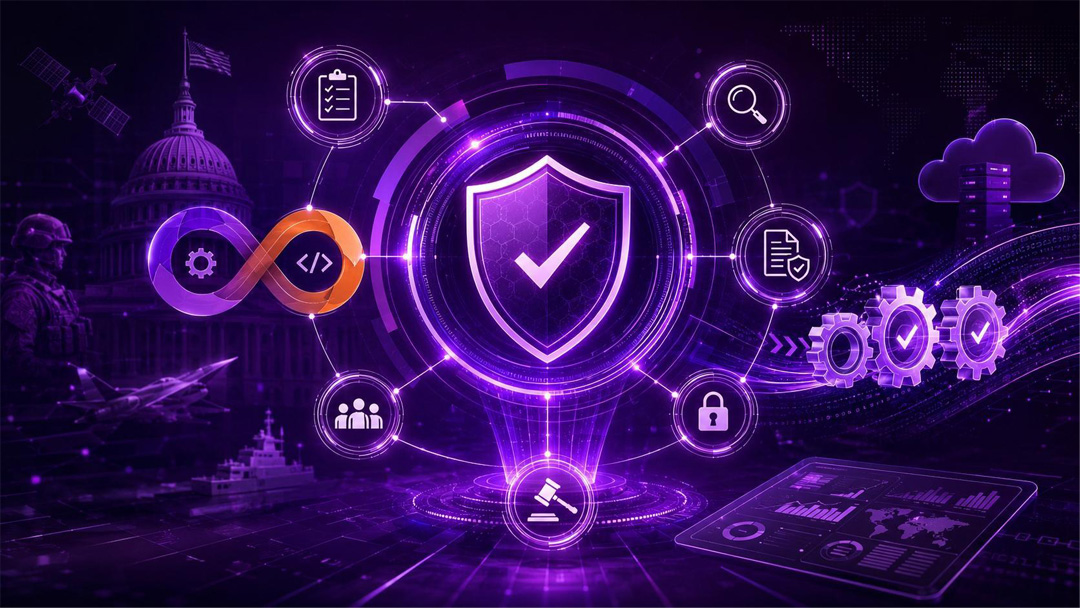
DevSecOps Compliance: Security Isn't a Final Checkpoint — It's Every Step of the Journey.

These are just a few examples of DevSecOps compliance. Teams might need to follow other compliance standards such as FISMA and FEDRAMP.

To follow these compliances in the DevSecOps setup:

  • Security controls and compliance must be implemented continuously and with development.
  • Each system requirement must be connected with compliance obligations.
  • Continuous evidence must be generated that can show compliance is followed at any point.

Following compliance helps to achieve regulatory certifications that can increase public trust and strengthen the security of systems.

The Compliance Gaps That Slow Down Mission System Delivery

The DevSecOps team is working on government programs that have knowledge about compliance, but when they start with the wrong workflows or tools, it becomes challenging for them to manage compliance. Here are some of them:

  • Control–requirement traceability gap: Regulatory standards such as NIST SP 800-53 and RMF expect to implement end-to-end traceability. When security controls are defined but not connected to backlog items, code commits, test cases, and evidence, it breaks the chains. So, no one can validate what is implemented and what is missing.
  • Review management outside DevSecOps: When teams manage requirements and document reviews using spreadsheets, emails, and outside DevSecOps, they don’t have visibility on what is implemented and what is missing. This plays the biggest role in introducing compliance gaps.
  • Change control outside engineering flow: When the team manages change requests outside of engineering flow, they can’t figure out which requirements are affected and what risks this change can introduce.
  • Continuous monitoring gaps: FEDRAMP expects ongoing visibility into system security while implementing missing critical systems in DevSecOps. However, many teams still perform periodic reviews manually, and issues remain undetected until the next review.
  • Weak review accountability: CMMC requires documented practices and accountability. Reviews often happen, but without structured records or verifiable approval trails tied to specific controls.
The Compliance Gaps That Slow Down Mission System Delivery
Compliance gaps don't just create risk — they create delays. Every disconnected process is a bottleneck your mission can't afford.

That’s not all. Teams also face challenges like managing documents and keeping them in sync with requirements and preparing audit reports within the DevSecOps workflow to prove compliance is followed.

What DevSecOps Compliance Automation Actually Requires

For compliance automation in DevSecOps, teams don’t need multiple tools, but they need a single ecosystem that integrates compliance into the development workflow itself. Here is how teams can do that:

  • Treat compliance obligations as a first-class work item: The security requirements from NIST or RMF and other compliance obligations should be added to the same backlog where product requirements are added. So, there should be a single source of truth. This helps ensure all obligations are planned, created, and delivered during the development of features themselves.
  • Automated mission system requirements traceability in DevSecOps: Traceability matrix creation must be automated. Every control and obligation must map directly to user stories, code, test cases, and deployment tasks so that different teams in DevSecOps can have visibility into which controls are followed and what is pending. This way, compliance is handled in a DevSecOps environment instead of separately.
  • Continuous ATO (cATO) readiness built into DevSecOps pipelines: The DoD model expects real-time authorization based on continuous monitoring, not periodic reviews. Systems must generate evidence as part of delivery, not as a separate audit activity.
  • Documents must be living: Compliance documents, requirements documents, audit reports, etc., must be prepared within DevSecOps environments and connected to DevSecOps government compliance requirements. So, whenever any change occurs in requirements, documents must be updated. It helps in keeping the document updated and adhering to compliance.
  • Impact analysis integrated into DevSecOps: Compliance, such as NIST CM-3, expects a controlled change management process with automated impact analysis integrated into the development workflow. This helps to identify how changes in product features can affect compliance before actual changes happen.
  • Integrated risk and POA&M tracking: There is a continuous monitoring pipeline for risk finding and remediation tasks in the DevSecOps. This creates full visibility if anything breaks, and it affects compliance.

Now, let’s understand how this ecosystem can be created to automate compliance management within DevSecOps.

How Modern Requirements4DevOps Supports DevSecOps Compliance Automation for Mission Systems

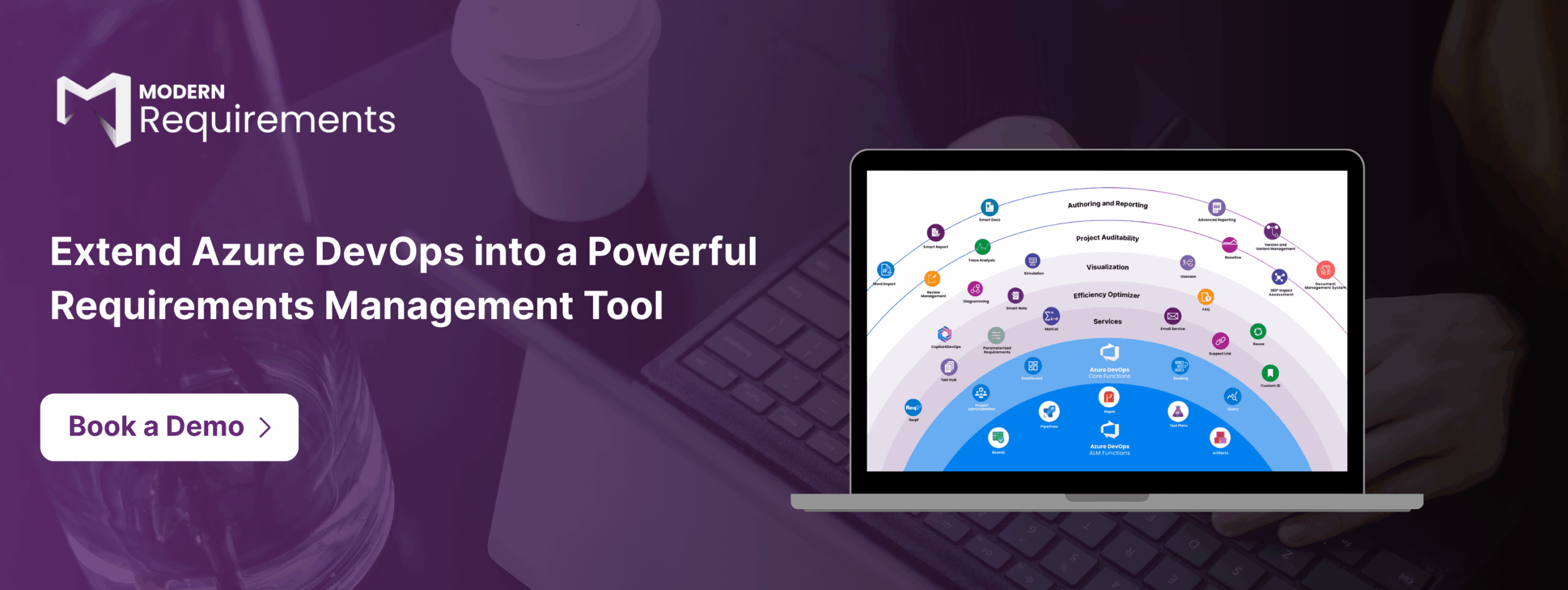
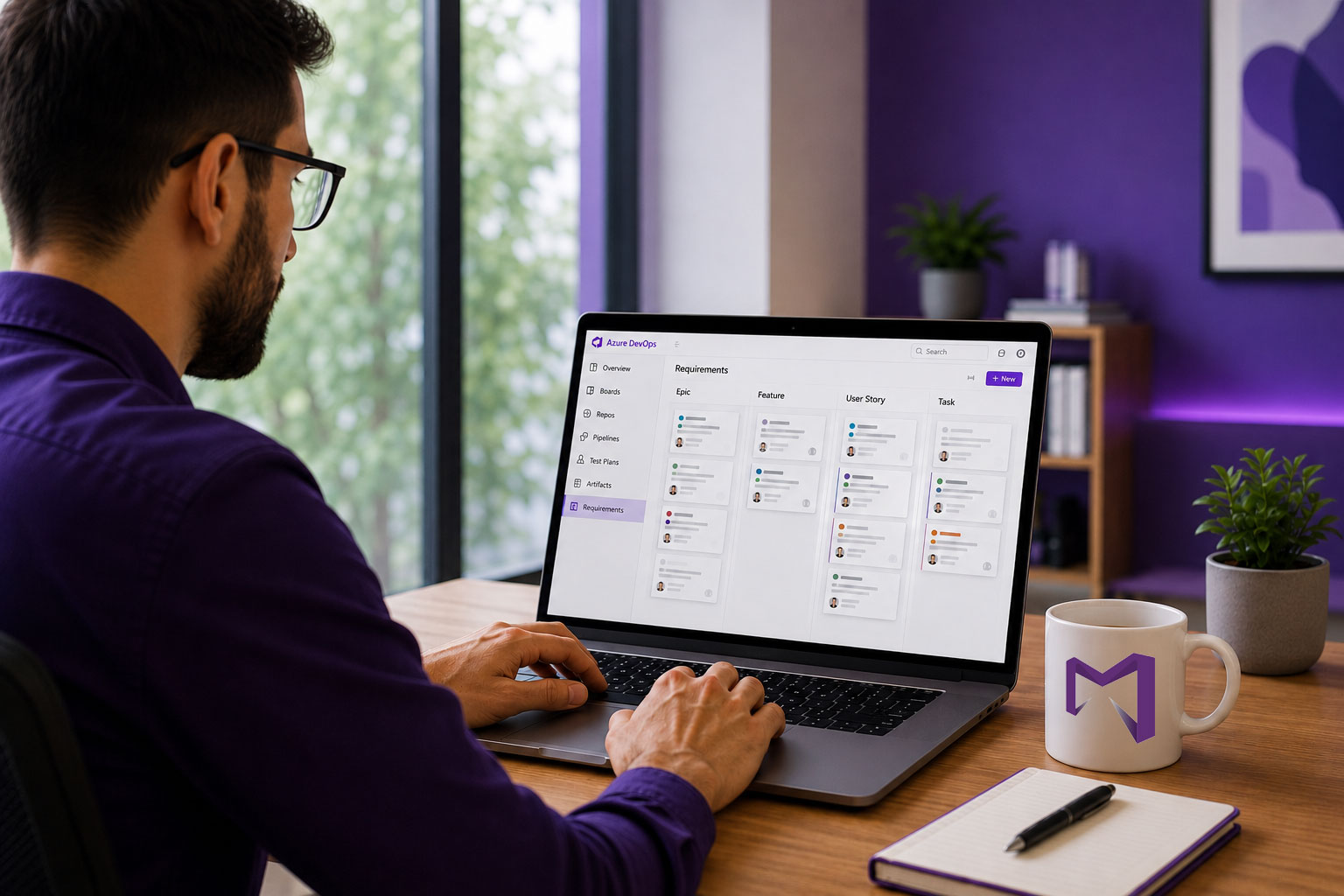
Modern Requirements4DevOps, specifically built for teams working in government programs. It works directly within Azure DevOps, your DevSecOps platform, where planning, development, and testing are managed. With this, government teams can store compliance obligations like NIST 800 in the form of work items in the backlog, where features and user stories also stay, and then use Modern Requirements4DevOps for change management, traceability, and many more compliance automation processes.

The traceability feature of Modern Requirements4DevOps allows teams to create traceability links between compliance obligations, such as NIST and FedRAMP security controls, and user stories, test cases, and any work items they select, with a single click directly within the DevSecOps environment. This traceability matrix can be used to prepare the evidence package to show that compliance is followed in the system during development.

Similarly, AI-based impact analysis allows it to identify which compliances are affected when changes are requested within the Azure DevOps environment. The traceable baseline helps teams in DOD programs to authorize and keep track of requirements.

Agent4DevOps, which allows creating autonomous agents within DevSecOps to continuously monitor compliance. Whenever any ADO work item updates, it automatically analyzes them for compliance risks and notifies the team if anything goes wrong.

It also offers a 21 CFR Part 11-compliant review management workflow where every review is completed with proper approval controls, e-signatures, logs, and clear audit trails, all within a DevSecOps environment without switching between multiple tools.

Table des matières

Commencez dès aujourd'hui à utiliser Modern Requirements

✅ Définissez, gérez et suivez les exigences dans Azure DevOps
✅ Collaborez en toute fluidité entre équipes soumises à des réglementations
✅ Commencez GRATUITEMENT — aucune carte de crédit requise

Articles récents