Does this also happen with you? A regulatory mandate arrives on Monday. By Wednesday, your underwriting team needs a system update. Thursday brings a compliance flag that nobody saw coming. Meanwhile, a customer request buried in an email from last month sits forgotten.
This is how changes generally show up in insurance product development. Most of the time, multiple change requests arrive together, each from different owners, with different risks, priorities, and deadlines. When teams handle these inputs across emails, spreadsheets, or support tickets, they often miss important ones and introduce new risks, such as compliance gaps.
Real problem? It’s not the change that is happening, but it’s how the change request is processed.
Smart requirements management brings that structure, giving insurance teams a clear, shared view of what must change, why it matters, and how it moves forward safely.
Let’s understand more about it in this blog.
What Makes Change Requests Risky in Insurance Environments
During insurance software development, IT teams often get change requests, and 90% of them are risky due to one of the following reasons:
- One requirement often affects several others: When a change is introduced to one requirement, it might affect other existing requirements. For example, updating a solvency or capital calculation related requirements also impacts data validation rules, reports, and approval controls.
- Regulatory and compliance exposure: Every change request in insurance must align with compliance, such as local insurance regulator rules, DORA, solvency and capital regulations, etc., from the start. If intent, implementation, and evidence do not line up, teams face compliance gaps and audit pressure.
- Lack of clear traceability: When change requests are raised through emails, documents, spreadsheets, and scattered across multiple places, teams lose the ability to explain what was approved and implemented.
- Weak change governance: If changes are not prioritized properly or have unclear ownership, it can lead to rushed approvals, scope creep, misaligned outcomes, and financial impact to the organization.
That’s not all, but it’s enough to know that change management in the insurance industry is risky if not done properly. Every change request is not just work to be done, but it’s a risk record, which should be handled with a structured process to avoid issues.
What Smart Requirements Change Management Really Means for the Insurance Industry
Smart requirements change management is a process that treats changes as governed decisions instead of just an informal task. It brings discipline to how change is defined, managed, tracked, and reviewed before any development starts.
Basically, instead of scattered requests, changes are captured as structured requirements that clearly define intent, scope, boundaries, and regulatory context. This helps in preventing any errors and issues while processing change requests.
The core part of the smart requirements change management is impact visibility. It allows teams to understand which requirements, system features, data, and reports are affected by a change before it is approved. This helps in avoiding late surprises and rework.
Another important aspect is traceability. It keeps every change work item linked to its justification, reviews, test cases, and other validation steps. During audits, teams can observe how changes are processed and document them.
This insurance requirements management approach reduces overall risk while keeping delivery practical and controlled.
Also read: Why requirements management is the backbone of insurance product innovation
The Insurance Change Management Process
Insurance product development teams can follow the workflow below to manage change requests in a structured way:
1. Change Request Intake
In this stage, teams focus on capturing all change requests, whether from compliance, audit, customer support, or other internal teams, in one place.
It is a must to define scope boundaries. What is included and what is not must be stated early to avoid confusion later. Other than that, defining clear ownership of change requests is also important, as someone should be accountable for the outcome, not just the delivery task.
2. Impact and Dependency Review
Once change requests are captured, teams should start assessing how the change will affect products, coverages, pricing rules, or any other features of the system. This is especially important in insurance, where one rule change can influence pricing, claims, and financial reporting.
This helps teams identify risks that might arise due to changes.
3. Requirement Definition
This is where clarity replaces assumptions. In this stage, business intent should be written in clear language with proper rules, conditions, acceptance criteria, edge cases, etc. So, IT teams can implement it.
4. Review and Approval
Before development starts, insurance changes require disciplined oversight. This process involves business owners, technical leads, and compliance stakeholders. Everyone collaboratively evaluates the same requirements record, but not separate documents.
Furthermore, approvals are recorded with dates, comments, and version history. This helps in ensuring accountability and protects teams during audits.
5. Build and Test Alignment
The next step is to start implementing the change based on what is approved and the defined requirements. Then, changes are tested based on approved test cases.
Also, keep in mind that if you need any deviation in the change request, trigger the review again, but don’t fix it silently. This keeps change controlled.
6. Release and Evidence Retention
Remember that change does not end at deployment. Teams need to ensure that:
- Release confirmation tied to requirements
- Test and approval records retained
- Evidence available for audits and reviews
- History preserved for future change cycles
With this structured process, teams can manage changes confidently, even when they have regulatory pressure and tight timelines.
Why Traditional Tools Fall Short for Insurance Change Management
Traditional project management tools were built to track project progress, but not to manage insurance product changes based on the regulatory guidelines. In the insurance sector, this gap becomes visible very quickly.
Due to limited change impact visibility and traceability in traditional tools, traditional tools fall short when teams need to assess how a change in a particular work item will affect other work items. With this, teams need to put in lots of manual effort and rely on copy-paste, follow-ups, and meetings to move the change forward.
Furthermore, traditional tools don’t offer any AI feature to analyze impact automatically, highlight missing details, or guide quality checks. That’s the biggest drawback.
Moreover, regulatory context, approvals, and evidence are often stored outside the tool, which makes reviews slow and risky.
For insurance teams, these limits turn everyday change into avoidable exposure.
How Modern Requirements4DevOps Brings Clarity to Change Requests
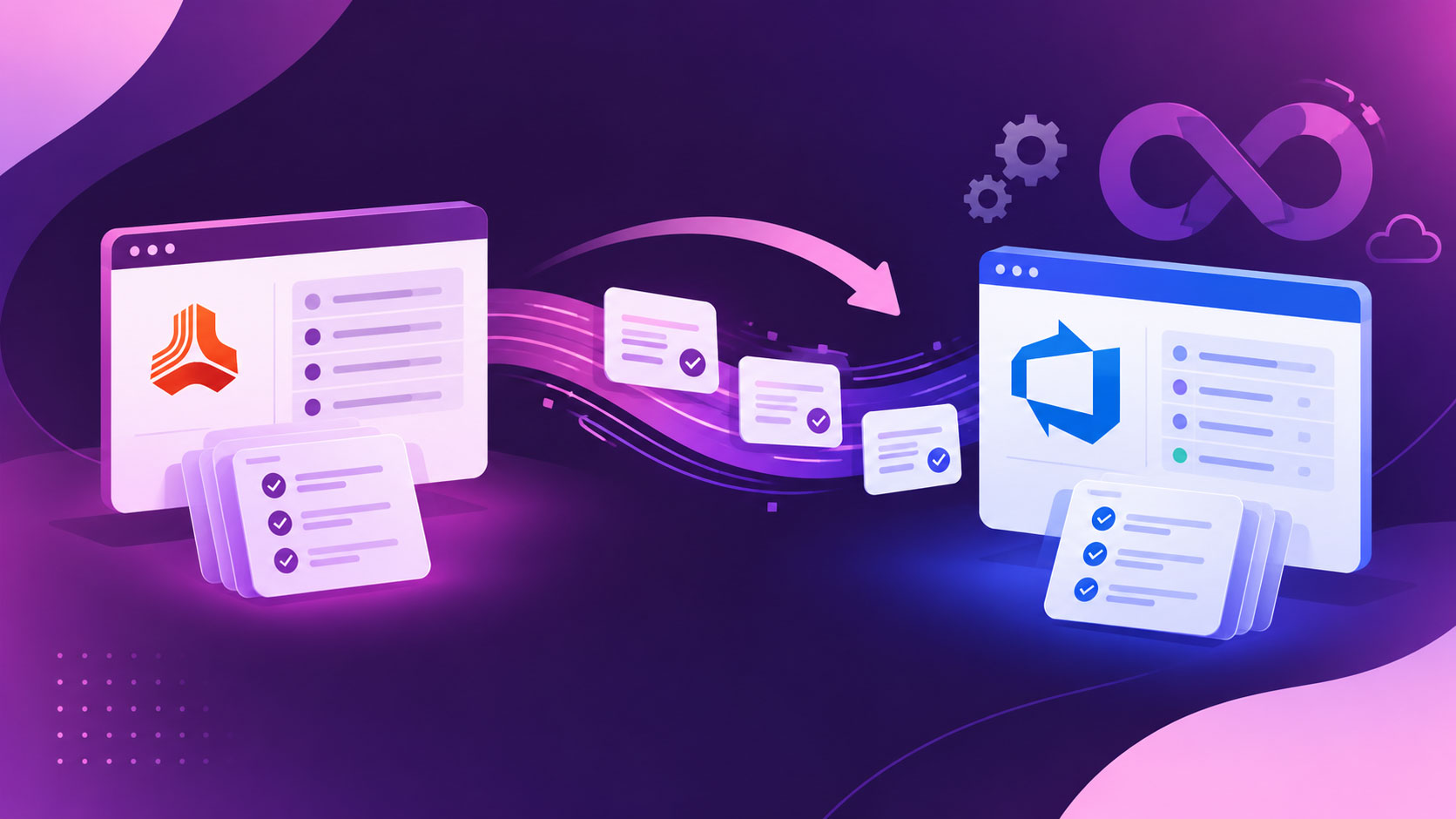
Modern Requirements4DevOps, a requirements management tool built specifically for the insurance industry, works natively inside Azure DevOps, an ALM (application lifecycle management) tool. This means insurance product development teams can manage change where delivery already happens.
Modern Requirements4DevOps provides features like 360-degree impact analysis that show how a change affects related requirements, systems, and downstream work items. This is critical for compliance-driven changes, where insurers must understand regulatory impact before approval. Teams can identify which policies, rules, and reports are affected early, reducing the risk of gaps during regulatory reviews.
Copilot4DevOps, an AI assistant, comes with Modern Requirements that allows teams to perform AI impact analysis. It highlights gaps and supports informed decisions without replacing human judgment.
In addition, traceability matrices link change requests to requirements, tests, and approvals. Furthermore, version history shows exactly what was approved and when. This gives teams clear evidence to support compliance reviews and regulator questions.
In short, Modern requirements4DevOps simplifies change management for insurance product development teams by offering relevant features.