Why Migrate from Polarion to Modern Requirements
Considering a Polarion migration? See why teams move requirements into...
The NIST Cybersecurity Framework (CSF) 2.0, which was released in February 2024, is a voluntary risk management framework for cybersecurity. It organizes security into six different functions: Govern, Identify, Protect, Detect, Respond, and Recover. The subcategories in the NIST CSF describe the outcome statements, and viewing the outcome statements as traceable requirements enables an organization to create a proven cybersecurity program.
Most of the blogs written on CSF 2.0 just explain its six functions. However, the real challenge arises when the organisation has to establish ownership, implementation, link evidence, and show results.
In this blog, we will cover what NIST CSF 2.0 is, its six functions, why it matters, and how to stay adherent to CSF by using a requirements management tool.
What NIST CSF 2.0 is and how its six functions, 22 Categories, and 106 Subcategories organize cybersecurity outcomes
What Govern changed in the framework and why it sits at the heart of the other five functions
Why NIST CSF 2.0 matters now for governance, supplier, and regulator conversations about cybersecurity risk
How CSF 2.0 differs from NIST RMF and how the two approaches work together
How to manage CSF outcomes as requirements in Azure DevOps with traceability, review, and baselines
NIST CSF 2.0, which is the latest update to the NIST Cybersecurity Framework and the first revision since it was published in 2014. It offers a voluntary, outcome-focused framework for organizations of all sizes, sectors, and maturities to understand, evaluate, prioritize, and communicate about cybersecurity risk.
CSF 2.0 expands the original framework’s scope beyond critical infrastructure to explicitly apply to all organizations and introduces a sixth function, Govern, alongside the original five: Identify, Protect, Detect, Respond, and Recover, to formalize how cybersecurity risk decisions are made, communicated, and overseen at the organizational level. Unlike the previous version, the scope of CSF 2.0 is not limited to critical infrastructure but applies to any organization irrespective of the size and sector of operation.
The CSF classifies cybersecurity results into six Functions, 22 Categories, and 106 Subcategories. The Subcategories do not represent the recommendations for technologies and/or processes. They specify cybersecurity outcomes that an organization may pursue on its own according to its threats and operational environment.
Furthermore, CSF 2.0’s organizational Profiles describe an organization’s cybersecurity outcomes: the Current Profile shows outcomes actually being achieved today, while the Target Profile shows the outcomes needed to meet business goals, risk tolerance, and threat landscape. The gap between the two drives a prioritized action plan (and CSF 2.0 also allows shared “Community Profiles” for sector-wide baselines).
On the other hand, implementation tiers (partial, risk-informed, repeatable, and adaptive) describe the rigor and sophistication of an organization’s cybersecurity risk governance and management practices, applied to both governance decisions and operational execution.
| CSF 2.0 Function | Focus | Requirements Management Role |
|---|---|---|
| Govern | Sets cybersecurity strategy, policies, roles, and accountability. | Defines who owns each cybersecurity requirement. |
| Identify | Asset identification, business needs, and cybersecurity risks. | Connects risks and assets to relevant requirements. |
| Protect | Establishes safeguards to reduce cybersecurity risks. | Tracks security requirements and their implementation. |
| Detect | Finds and analyzes potential cybersecurity events. | Manages requirements for monitoring and detection. |
| Respond | Coordinates actions during cybersecurity incidents. | Links response activities to owners and evidence. |
| Recover | Restores systems and improves resilience after incidents. | Tracks recovery requirements, validation, and improvements. |
The six functions run concurrently and not sequentially. NIST designed these functions to create a holistic perspective of cybersecurity risk management.
The Govern function represents the biggest addition in CSF 2.0. It includes the organization context, risk management approach, roles and responsibilities, policies, oversight, and cybersecurity supply chain risk management. NIST considers the Govern function to be at the heart of the other five functions because governance determines them.
It makes it easier for organizations to link cybersecurity accountability with enterprise risk management.
A modern cybersecurity program requires more than mere demonstration of the existence of a policy document. The regulator, supplier, and internal management of the organization may ask for an explanation of the governance approach with respect to cybersecurity risks and which particular outcomes are considered.
CSF 2.0 provides a universal language for such discussion. But the framework itself does not imply a requirements management system.
The organization may have 106 Subcategories, policies, controls, procedures, owners, assessments, and evidence stored on different sheets in various tools. A static sheet can tell you whether there is an item, but it gets complicated when requirements, ownership, and evidence changes occur.
This is where the concept of CSF 2.0 requirements traceability may prove its utility. The consideration of selected Subcategories as managed requirements enables tying each cybersecurity outcome to its owner, implementation, control, and evidence.
The outcome is a dynamic interaction of the need and its demonstration.
| Aspect | NIST CSF 2.0 | NIST RMF (SP 800-37) |
|---|---|---|
| Primary purpose | Assess, prioritize, and communicate cybersecurity risk at an organizational/enterprise level | Manage security and privacy risk for individual information systems |
| Nature | Voluntary, flexible, outcome-oriented | Structured, procedural, step-based process |
| Level of focus | Strategic / enterprise-wide | Operational / system-level |
| Core structure | Functions (Govern, Identify, Protect, Detect, Respond, Recover), Categories, Subcategories | Seven-step process: Prepare, Categorize, Select, Implement, Assess, Authorize, Monitor |
| Key artifacts | Current Profile, Target Profile, Implementation Tiers | System Security Plan (SSP), Security Categorization, Authorization to Operate (ATO) |
| Applicability | Any organization, any sector, any size | Primarily federal information systems (also widely adopted by contractors and private sector) |
| Output | Prioritized roadmap based on gap between Current and Target Profile | Formal Authorization decision (ATO) for a system to operate |
| Audience/use | Executives, risk managers — communicating risk posture and priorities | System owners, ISSOs, assessors — implementing and certifying controls |
| Relationship to controls | References control catalogues (e.g., NIST SP 800-53) at a high level via outcomes | Directly selects, tailors, and implements specific controls from SP 800-53 |
| Monitoring approach | General expectation of continuous improvement | Formal Continuous Monitoring step with defined cadence and reporting |
| How they combine | Sets the "why" and "what" — risk priorities and desired outcomes | Delivers the "how" — implementing and authorizing controls to meet those outcomes |
CSF 2.0 defines cybersecurity outcomes, but organizations still need a practical way to translate these outcomes into actionable requirements, assign ownership, monitor implementation, and maintain supporting evidence. A structured requirements management approach can help organizations establish this connection within Azure DevOps.
For teams working inside Azure DevOps, Modern Requirements4DevOps offers a built-in requirements management solution that helps in maintaining traceability, requirement review, baselines, etc., in one place and creates a single source of truth. Here is how it helps:
The traceability module of Modern Requirements4DevOps allows teams to visualize how each CSF outcome is connected with requirements, controls, user stories, etc., so teams can see how an outcome is being addressed and what supports it. Furthermore, it auto-updates when requirements are updated inside Azure DevOps, so the traceability matrix never becomes outdated.
With the Review Management module, teams can route CSF-related requirements for review and approval to different teams working within Azure DevOps, helping security, compliance, and engineering teams confirm that requirements are accurate before they are implemented.
Once review of CSF requirements is done, teams can capture an approved state of CSF requirements at a given point in time using the Baseline module, which makes it easier to compare later changes against the agreed cybersecurity position.
With all of these, teams can also use Copilot4DevOps, which allows creating requirements directly from NIST CSF clauses and inserting them into the ADO backlog and connecting them with relevant work items. Furthermore, it also allows analyzing requirements to identify gaps before any implementation starts and performing AI-driven impact assessment when any changes are introduced so that teams can quickly know how changes can affect NIST CSF outcomes and avoid future compliance issues.
Since CSF 2.0 is not a certification standard, requirements management does not certify an organization against the framework. Instead, it provides a structured way to establish traceability between cybersecurity outcomes, requirements, ownership, implementation activities, and evidence.
1. What changed from NIST CSF 1.1 to 2.0?
The framework now adds a new Function, Govern, extends the scope of the framework, places greater emphasis on Profiles, governance, supply chain risks, and guidance.
2. Is NIST CSF 2.0 the same as NIST RMF?
No, CSF 2.0 is an optional and outcome-focused set of best practices for cybersecurity risk management, whereas RMF is a systematic process of risk management and Authorization of information systems. Depends on the organizations that use them.
3. Can a requirements tool assist with NIST CSF 2.0 management?
CSF subcategories are defined outcomes with measurable and manageable indicators with supporting evidence. Requirements management tools like Modern Requirements4DevOps can provide a requirements platform to define, organize, and track these outcomes and the associated work in Azure DevOps.

✅ Define, manage, and trace requirements within Azure DevOps
✅ Collaborate seamlessly across regulated teams
✅ Get started for FREE—no credit card required
Considering a Polarion migration? See why teams move requirements into...
Considering a Jama Connect migration? See why teams move requirements...
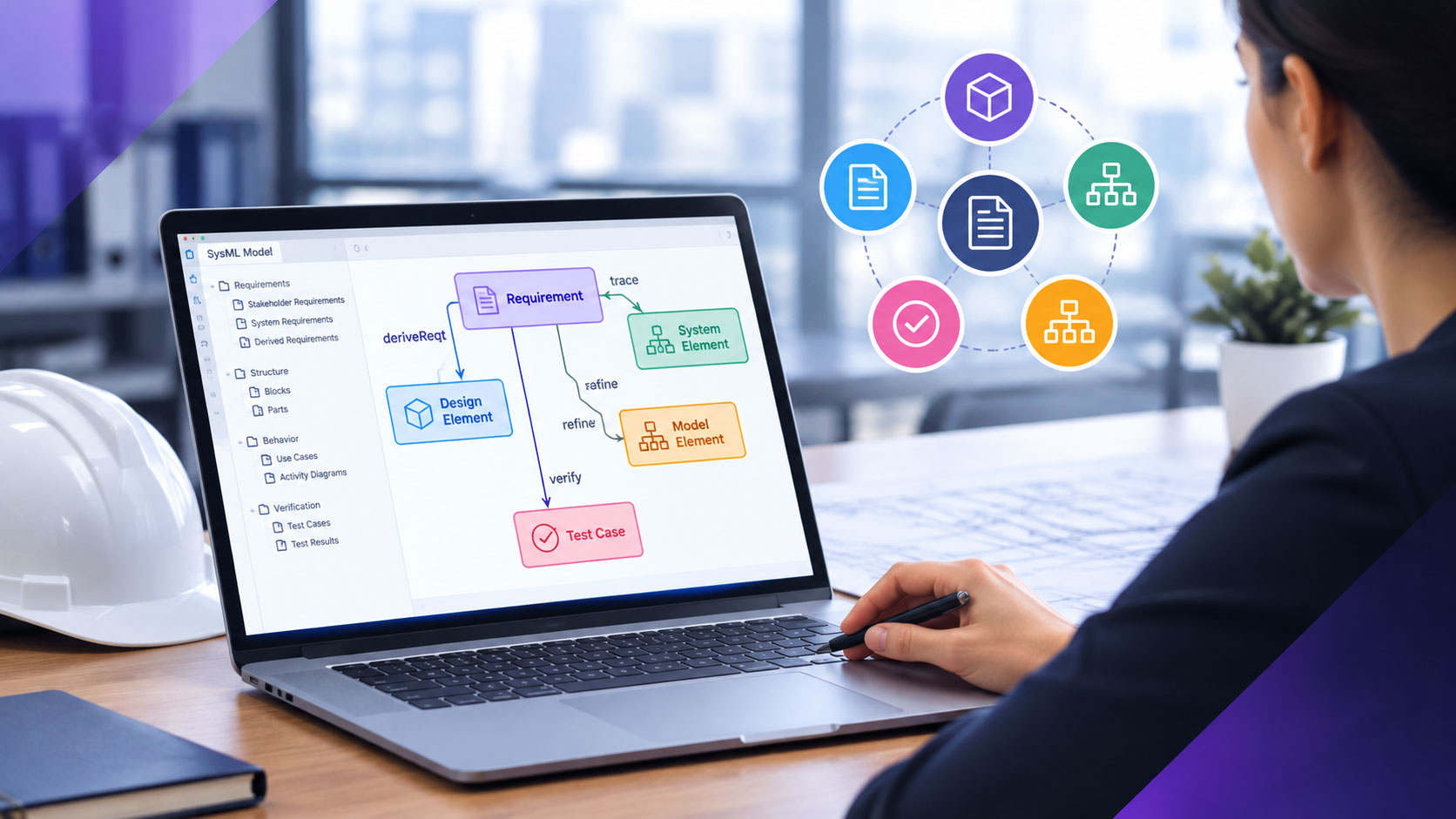
Learn how SysML links requirements to design and verification through...
End-to-end requirements management in Azure DevOps.
AI-powered assistance for DevOps workflows.
Autonomous AI agents for DevOps execution.
Compliance management, built into Azure DevOps.

Real-time data sync across tools and systems.