In the defense industry, even minor gaps can rapidly escalate into critical vulnerabilities. Teams deal with systems that interact across land, air, and digital layers, so the starting point matters the most.
When early requirements miss key details, the impact does not stay small. It shows up during integration, testing, field trials, and even during approval reviews. This is where many programs lose time and budget.
Furthermore, PMI reports that 47 percent of failed projects link back to weak requirement practices.
This is why requirements management for the defense industry carries so much weight. It sets alignment, reduces rework, and gives teams the clarity they need to build systems that stand up to real mission demands.
Now, let’s understand the importance and core elements of requirements management in defense programs and how to use requirements management software to avoid issues later.
Why Requirements Management Matters in the Defense Industry
It’s clear that defense programs move through long lifecycles, strict reviews, and multi-vendor coordination, and requirements management plays an important role in all of these. For that, we have covered a few reasons below why requirements management matters most in the defense industry:
- Clear alignment across systems: In defense, multiple teams work on multiple projects. A few teams work on software and hardware projects, and a few work on data links or preparing reports for regulatory submission. A unified requirements management system can align all teams by ensuring everyone can have access to the same data.
- Direct link to mission safety: In aerospace and defense, ensuring a system’s safety is very critical. For that, teams are required to ensure that each component of the system follows the compliance set by regulatory bodies, such as the Federal Aviation Administration (FAA), the European Union Aviation Safety Agency, the Defense Contract Audit Agency (DCAA), the Federal Acquisition Regulations (FAR), etc., and strong requirements management helps with this.
- Securing operations: Along with human safety, the security of defense systems is not optional, as the defense sector is a prime target for cyber-attackers. Proper requirements management can help to comply with all security requirements and find all risks early.
- Better control across requirements upgrade: In defense, requirements management helps in tracking different versions of particular requirements, variants of system requirements, etc. It even helps in tracking how requirements are updated and who has approved them, which helps during preparing audit reports.
- Automated verification and audit speed: Requirements management tools can automatically prepare traceability matrices, which helps in ensuring every requirement is covered without missing any. The tool also helps in quickly preparing audit reports, avoiding human errors.
- Lower rework and delay risk: Most late-stage issues point back to unclear early inputs. Good requirement practice prevents costly loops later in the program and reduces the time to launch the product.
So, you can clearly understand that requirements management in the defense program is a foundation and not optional.
The Cost of Poor Requirements Management in the Defense Industry
We’ve seen the importance of requirements management in the defense industry. When it’s not done right, teams face challenges like scope creep, increased budget, delayed product launch, certification and approval delays, operational risks, mission impact, and other risks.
Now, let’s understand the cost of poor requirements management in the defense industry with real-world case studies:
1. F-35 Joint Strike Fighter
The F-35 development program failure clearly shows how poor requirements management can cause financial losses and product launch delays. In the early phases of aircraft development, the project moved with a “build-while-designing” process, and everything was fine. Later, as design matured, the aircraft needed major retrofits and software changes. Due to this, procurement costs grew by around $46 billion for the whole project, and 2 years of project delay occurred. Also, the unit price increased by 62% from $69 million to $112 million. This all rework was required due to missing specs, and that turned into huge financial losses.
2. Expeditionary Combat Support System (ECSS)
The Expeditionary Combat Support System (ECSS) program was started to modernize logistics for the U.S. Air Force. A program started successfully, but unclear specs, integration gaps, and poor requirements alignment across multiple teams caused repeated program resets multiple times. Later, the program was stopped after spending $1.1 billion and declared a failure. This huge loss happened due to weak requirement definitions and a lack of traceability.
Core Elements of Strong Requirements Management in the Defense Industry
In the previous section, we clearly explained the impact of project failure in the defense industry. To avoid these types of project failures and huge financial losses, teams need to ensure project requirements are managed properly. For that, let’s understand the core elements of strong requirements management in the defense industry:
- Structured requirement gathering: Make sure to capture requirements from all sources. Include all stakeholders, such as operators, system engineers, safety teams, compliance teams, etc., in the requirements gathering process.
- Clear and testable statements: Each requirement should be defined properly with acceptance criteria, test cases, and no unclear specifications should be included. Also, write the requirements definition in such a way that every team member can understand it.
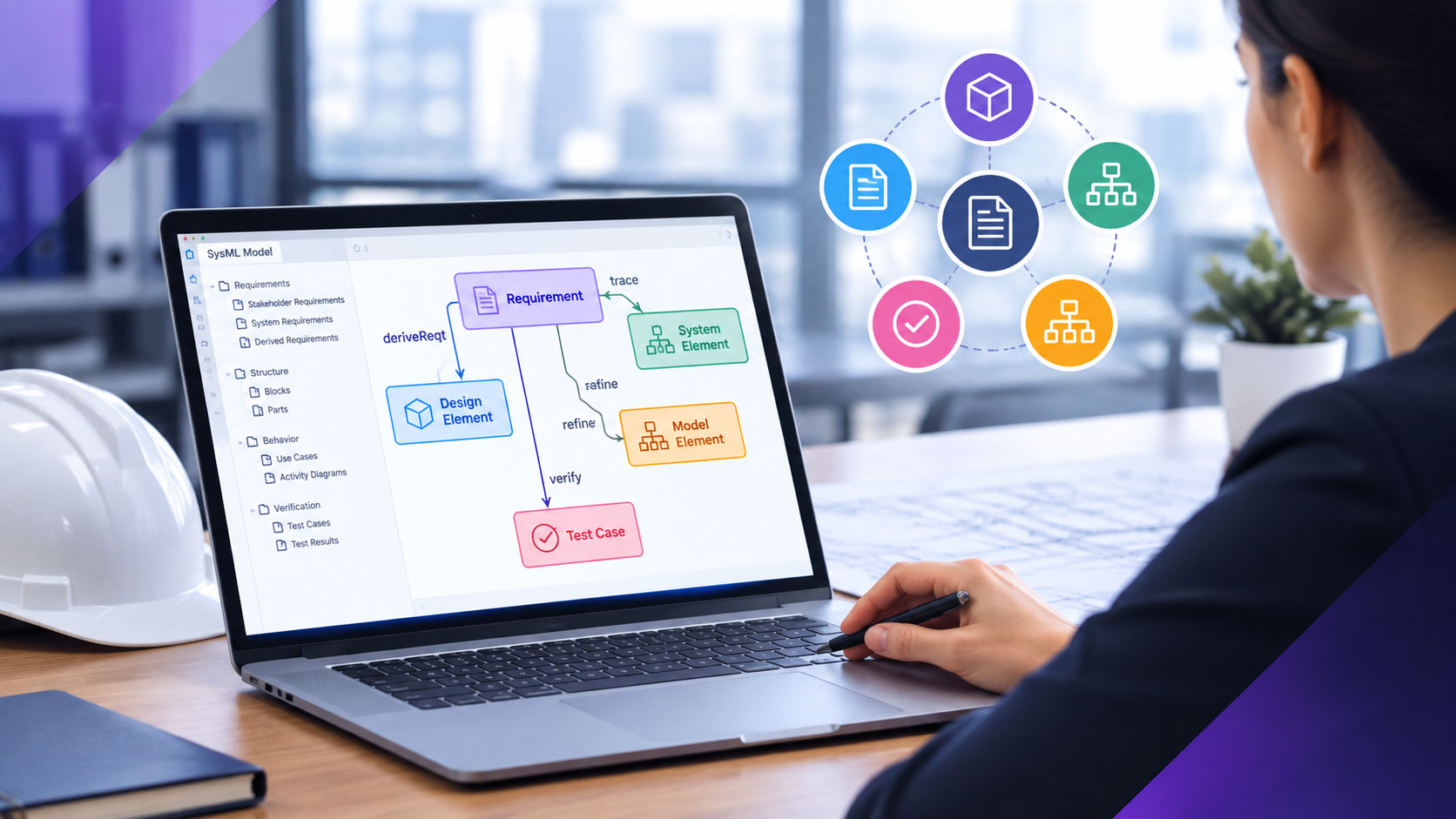
- End-to-end traceability: Link requirements to design notes, interface documents, hazard logs, test cases, and verification results. This creates a clean audit path and avoids missing dependencies.
- Interface and integration definition: Clearly define data formats, fallback rules, and system limits. This provides enough details to integration teams and helps in avoiding costly rework.
- Change impact evaluation: When a change request arrives, assess its impact on other requirements, cost, architecture, safety, supply chain, and fielded units. This keeps the program under control during long timelines.
- Lifecycle alignment and version management: Maintain a version of the requirements and baselines to ensure visibility of changes across the whole team.
Future of Defense Requirements Management
The future of defense requirements management is moving towards connected data, faster and more collaborative review cycles, and stronger requirements alignment across multiple teams.
Teams are moving towards using AI to analyze requirements, assess the impact of changes, identify traceability gaps, prepare dynamic audit or compliance reports, and identify requirements gaps. Whatever manual processes took days and weeks, now take just a few seconds. This reduces the delays caused by missing or unclear inputs.
Furthermore, rather than depending on static or scattered documents, teams are using live-in documents, which automatically update when any specific requirement changes.
Together, these improvements help teams move faster without losing accuracy or oversight.
Why Choose Modern Requirements4DevOps for the Defense Industry
Modern Requirements4DevOps is a requirements management tool specifically designed for highly regulated industries such as defense and mission-critical environments. It directly works within your existing Azure DevOps workspace as an extension. So, your Azure workspace remains a single source of truth to manage all of your project’s data, and you can directly access all requirements tools without switching between multiple platforms.
Furthermore, the Smart Docs feature of MR4DevOps helps defense teams to create live-in documents for aircraft or other defense systems that automatically update when any requirements change. This helps in keeping documents updated.
The trace analysis feature automatically creates traceability matrices that give a quick view of missing links across design, tests, hazards, and interface items, which is important when several contractors are working in parallel. This also helps defense teams in ensuring that the product aligns with compliance, such as DO-178C, DO-254, or MIL-STD.
The impact assessment feature shows how a change affects other parts of the system. For example, a new timing rule for a datalink can affect processing loads, thermal limits, or encryption settings. This helps teams control risk across long program timelines.
On the other hand, Baseline and version management give defense teams a clear history of every requirement. This is vital when auditors need proof of what changed and why. Review management keeps formal reviews structured, allowing teams to record comments and approvals cleanly.
Modern Requirements4DevOps comes with Copilot4DevOps, an AI assistant for requirements management, which helps draft requirements for modes, interface rules, and safety needs using an AI.
It can suggest edge cases for mission conditions, generate reports, prepare diagrams, analyze requirements, perform AI impact assessment, and support teams working across countries by translating requirement text when needed.
In short, Modern Requirements4DevOps helps defense teams to manage requirements collaboratively and keep teams aligned.