A detailed guide on Model-Based Development
Learn more about model-based development, how it works, and why...
If you work on software development projects, you would know most of them fail not due to poor code but due to a lack of understanding, missing requirements, and redundant back-and-forth. In fact, poor requirements gathering is the leading cause in 39.03% of software development project failures.
Successful software projects? A cake walk when complemented with well-defined functional requirements.
However, if not managed properly, projects often turn out to be versions that weren’t even aimed for initially. In a buoyant environment like DevOps, it’s unsurprising to see important requirements sidelined in the transition. This is exactly where the need for clear functional requirements comes into the picture. It acts as a common platform amongst all stakeholders – business, development, operations, etc.
No matter if you are a Business Analyst, Product Manager, or a part of the Engineering team, this guide will help you navigate your workflows better than usual. From managing sprints, writing stories, planning new features, to documenting feedback from stakeholders and getting systematic work done on it, this quick read will help you deliver not just the asks but results. By the end of this, you will know how to construct a bridge between business goals and technical execution.
Functional requirements are nothing but requirements that tell a system how to respond to inputs, perform operations, and deliver impactful results. These requirements are an amalgamation of behaviours and functions a system must possess to enable projects. They specify exact behaviours of functions and features under certain conditions when a user interacts with them.
Did you know that 50% of projects end with an exceeded budget & deadline without meeting all the requirements, and 19% of projects are canceled?
That’s how important functional requirements are in any given project.
This statistic becomes even more critical in a DevOps environment, where ambiguity can quickly lead to errors. This makes it a prerequisite to get the functional requirements right and sorted from the start! On the same note, let’s look at the key characteristics of good functional requirements with a few examples.
In agile environments like DevOps, where deployment cycles are standard, functional requirements act as the “North Star” of the project, guiding the team towards a world free of miscommunications and unnecessary rework. Regardless of the project’s type and speed, clearly stated functional requirements facilitate adherence to business goals throughout the project.
Clear and Unambiguous Statements: Stating right and clear requirements in a precise language on paper is the first step towards creating a direction and avoiding misinterpretations throughout the project.
Unclear statement: “All the users on the website should be verified.”
Clear statement: “The system should verify all users using their phone number upon logging in.”
Specific and Detailed: Think of it this way – your stakeholder/colleague should be able to work on the next steps of the project from where you left off, without reaching out to you. That’s how detailed your requirements should be to be able to aid developers and testers in implementation. Here is an example of the same.
Requirement: New user authentication feature in an e-commerce platform.
For this, your requirements should specifically state security protocols, API interactions, database schemas, and error handling scenarios. After you have detailed out each of these sections, that’s when developers/testers can sail the boat at a better pace.
Measurable & Testable: Think of a vague requirement like ‘The system should load quickly’ vs a measurable requirement ‘The system should load within 10 seconds of hitting the Submit button for 97% of users’. The latter one allows you to run tests and reach a measurable output. It also enables the team to build the right features, validate them, and ensure they stick to the overall business goals.
Feasible: Requirements are feasible when they are written after considering the team’s bandwidth, technical limitations, execution speed, time taken, available infrastructure, etc.
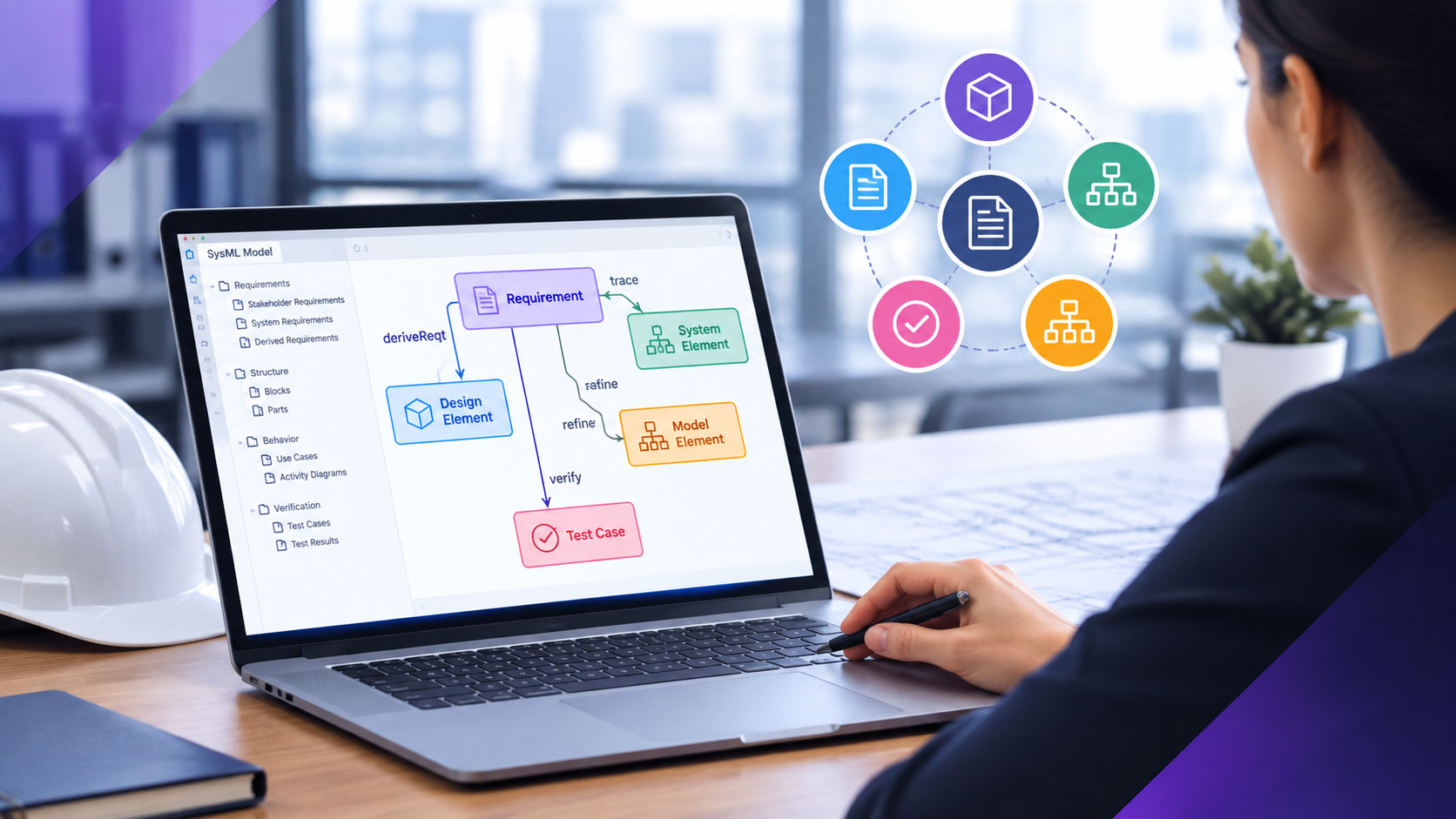
Traceable: Each requirement should be attributed to the business goals and objectives stated at the beginning. This helps in tracking development progress at each step and verifying it before sending it for execution. This is helpful when a QA files a bug or a test fails, as it can be quickly traced to the original requirement. Here is an example of a business goal and a functional requirement linked to it.
Business Goal: Prioritize verifications for new users.
Traceable Requirement: The system shall send a verification email with a security code valid for 30 seconds to enable user logins.
Now that you are well-versed with the importance of functional requirements, we’ll also take a quick look at what its different types are with examples of each.
If you start with writing functional requirements without thoroughly understanding their types and use cases, you might catch yourself like this mid-project.
Worry not, that’s what we are here for. You can quickly skim through the types and ensure your project has the applicable requirements listed for your team and stakeholders.
These define the objectives, functions, limitations, policies, etc that apply to your project from a business lens.
Example: Healthcare – ‘All patient records should be accessible only to the designated admin POC and to be hosted in an encrypted format on a compliant cloud server.’
The requirements to ensure that respective accesses are shared with the right people are authentication and authorization requirements.
Example: HR Management System – ‘All managers should only have access to salary information of their reportees and not anyone else’s.’
Requirements that focus on how the user will interact with the interface at each touchpoint, including design, product/web page, call-to-actions, and overall experience, are UI/UX requirements.
Example: Food Delivery App – ‘All restaurant menus should start with recommended food items, whereas the best-rated items will have maximum visibility on the first frame of the menu page.’
These requirements look after how the infrastructure is handling data, its storage, retrieval, processing, etc.
Example: E-commerce Platform – ‘As soon as an order is placed, the inventory should be notified within 2 minutes regarding the same with a shipping deadline of T+1 days.’
These requirements state the kind of alerts, reports, and notifications the system will generate for the users.
Example: Banking Platform – ‘The system should trigger an email and an SMS to the user for every transaction above $200 on their account.’
As the name suggests, these simply define how the system will integrate with external or third-party systems.
Example: Payment Gateway – ‘Upon successful credit/debit card payments, the system will generate a receipt within 7 seconds of completion.’
How well-versed is your system with data backups and recoveries during failures? That’s what this functional requirement ensures.
Example: Loan Application – ‘The system shall ensure transaction backups every 5 minutes, and in case of a server failure, the system will recover the last updated state before 5 minutes. Any transactions during those 5 minutes will have to be marked manually.’
While these can help you at the beginning of your project, if you are already halfway or more on your project, there can be more types of functional requirements depending on the type of project.
Thought of making your project flow a bit more precise and seamless?
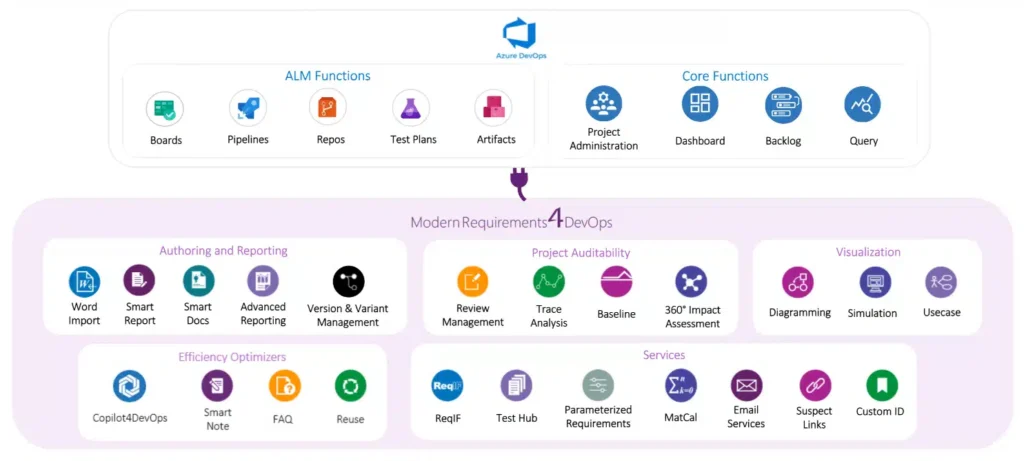
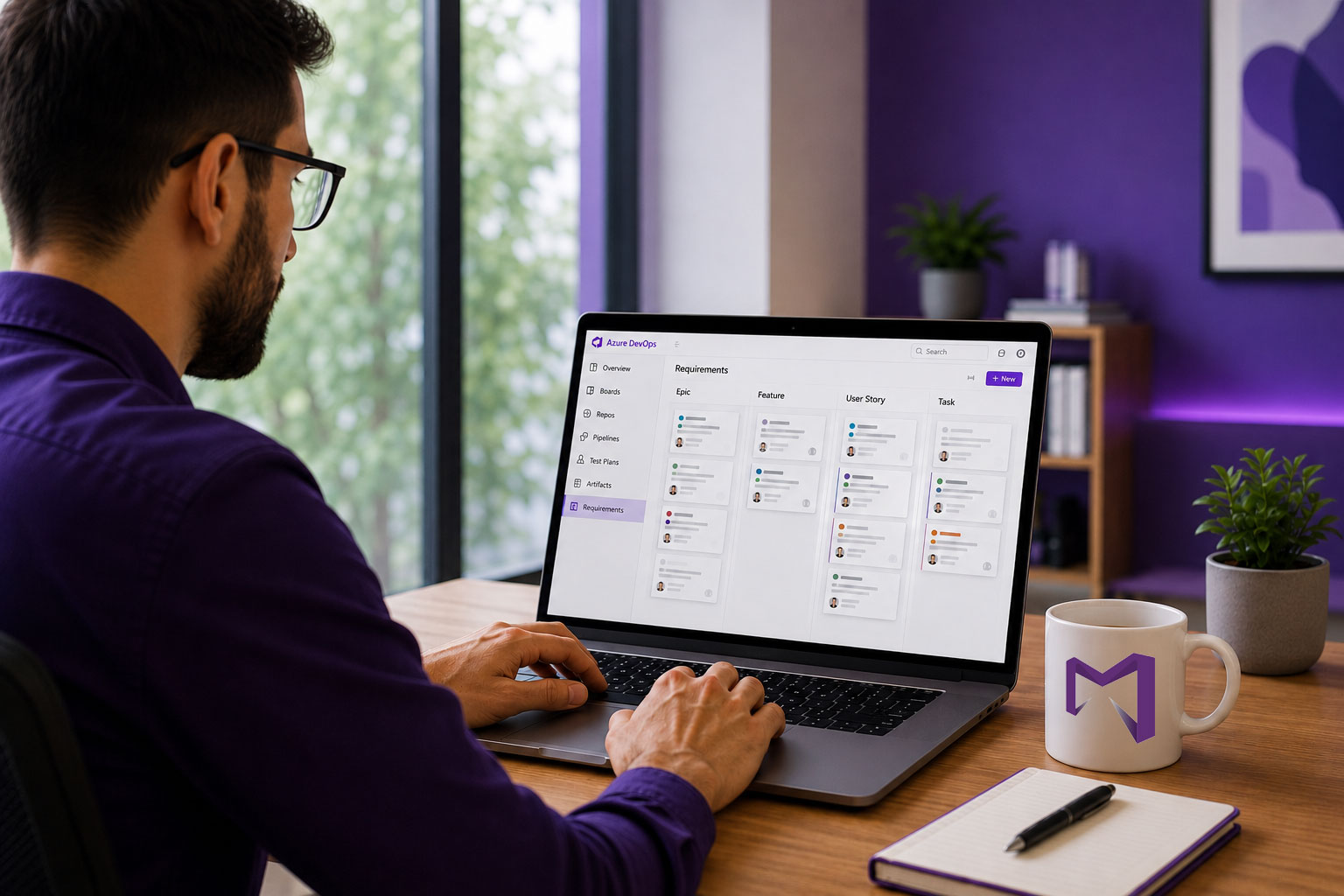
Brainstorming, mid-project, or final stage, no matter where you are in your project, the right set of features and requirements can help you smoothly slide your way through it with extreme precision at each step. Modern Requirements is known for streamlining functional requirements for your projects within Azure DevOps.
Ranging from Smart Docs, Diagrams, Case-specific requirements, Mockups, to Trace Analysis & FAQs, Modern Requirements holds the power to transform your project’s lifecycle with an efficient, collaborative workspace.
Imagine creating, managing, automating, analysing, and reporting across siloed teams, all in one place.
The blueprint of successful projects, you ask? Understanding and managing the project lifecycle at each stage with maximum precision. If you are still reading, you must know that the right set of functional requirements ensures that the back-end systems behave as intended when the user needs it.
Before you get too overwhelmed to begin, Modern Requirements will help streamline your process with its requirement management power. And if you are still reading, you are off to a great start with the right set of knowledge.
Ready to aim for successful projects with confidence?
✅ Define, manage, and trace requirements within Azure DevOps
✅ Collaborate seamlessly across regulated teams
✅ Get started for FREE—no credit card required
Learn more about model-based development, how it works, and why...
Learn more about the requirements review process, and how reviewing...
Learn more about how a requirements management tool can eliminate...