SysML and Requirements Traceability: Linking Model Elements to Managed Requirements
Learn how SysML links requirements to design and verification through...

Most people who study BABOK focus on the six knowledge areas. That is understandable. The knowledge areas are where the actionable tasks live. But underneath those tasks sits a more fundamental layer: the concepts and perspectives that shape how business analysts think about every problem they encounter.
BABOK v3 introduced two additions that significantly changed how the guide approaches business analysis at a foundational level. The first is the Business Analysis Core Concept Model, known as the BACCM. The second is a chapter on perspectives, which recognizes that business analysis looks different depending on the type of initiative and industry context in which it is applied. Both deserve more attention than they typically get.
The BACCM is the conceptual foundation of BABOK v3. It defines six core concepts that are present in every business analysis initiative, regardless of industry, methodology, or project type. These six concepts are not sequential steps or a process. They are interrelated ideas that the business analyst must understand simultaneously.
The six concepts are:

Business analysis is the practice of enabling change in an enterprise by defining needs and recommending solutions that deliver value to stakeholders. (IIBA, BABOK v3)
The BACCM is useful precisely because it shows that these six concepts are mutually dependent. A change without a clear need has no direction. A solution without a clear context for stakeholders will likely miss the mark. Value is meaningless without understanding who receives it. The BA who keeps all six concepts in mind during every task will ask better questions, identify more complete requirements, and make more defensible recommendations.
BABOK v3 also simplified the definition of a requirement itself. Up until version 2, the IIBA used a complex multi-part definition borrowed from IEEE standards. Version 3 replaced it with something much more practical: a requirement is a usable representation of a need. That definition is intentionally broad. A use case, a user story, a business rule, a wireframe, a process model – all of these can be valid requirements if they usably represent a need.
Business analysis is a broad discipline applied in widely different environments. A BA working in an agile software startup has a very different experience than one working on an enterprise data warehouse or a government defense contract. BABOK v3 acknowledged this by adding a perspectives chapter that describes five common lenses through which business analysis work is viewed.
The IIBA is clear that this is not an exhaustive list. Most real initiatives will involve multiple perspectives simultaneously. The value of the perspectives chapter is not to create rigid categories but to surface the unique drivers, mindsets, and techniques that each context demands.
Agile has been one of the most discussed and most misunderstood developments in product development. It is perhaps better described as a mindset than a technique. There are many agile methodologies, from Scrum to XP to DSDM, but they share a common philosophical foundation: the expectation of change is built into the process.
This is a fundamental departure from traditional waterfall thinking. In a waterfall approach, the assumption is that requirements can be determined upfront and that changes are unwelcome disruptions. In an agile approach, the assumption is that requirements will evolve as stakeholders learn more about what they actually need, and the process is designed to accommodate that evolution rather than resist it.
For a business analyst working in an agile context, this changes nearly everything about the role:
The IIBA classifies agile as a change-driven approach, contrasted with the plan-driven approach of waterfall. A change-driven approach assumes that product requirements will evolve throughout development and that stakeholder collaboration is more valuable than comprehensive documentation. For the BA, this means prioritizing face-to-face interaction, embracing short feedback cycles, and maintaining a product backlog rather than a static requirements document.
Business intelligence initiatives focus on transforming raw data into actionable insights. They are typically less concerned with building new transactional systems and more concerned with understanding what existing systems and business activities are producing, and what that data means for decision making.
For a BA working in the BI space, the primary outputs are reports, dashboards, data models, and analytical tools. Stakeholders in this context are not asking for new functionality in the traditional sense. They are asking questions: What are our sales trends? Where are we losing customers? Which products are most profitable by region?
The BI perspective requires the BA to have strong skills in data analysis, data modeling, and translating business questions into data requirements. The difference between a good BI requirement and a poor one is often the difference between a business question that can actually be answered with the available data and one that cannot. The BA in a BI context must understand the data landscape well enough to know what is possible.
This perspective also demands close attention to data quality. Stakeholders in BI environments are often making significant business decisions based on what the dashboards tell them. A requirement that is implemented correctly against bad or inconsistent data will produce misleading outputs, which can be more dangerous than no data at all.
The IT perspective is arguably the most common context in which business analysts work. IT initiatives range from small system enhancements to large-scale enterprise transformations. The BA in this context is the bridge between the business problem and the technical solution.
In the IT perspective, the BA must understand both the business domain and the technical environment. This does not mean the BA must be a developer. It does mean the BA must understand how systems work well enough to have credible conversations with architects and developers, and to recognize when a proposed technical solution does or does not actually meet the business need.
Key considerations in the IT perspective include:
Business architecture is concerned with understanding and documenting the enterprise as a whole, rather than a single project within it. A BA working from this perspective helps the organization understand its capabilities, its structure, its processes, and how all of these relate to its strategic goals.
The Zachman Framework is one of the most widely referenced models for enterprise architecture. It maps six dimensions of a business (what, how, where, who, when, and why) against five perspectives (planner, business model owner, designer, builder, and subcontractor). Each intersection in the framework identifies a specific artifact that captures a different aspect of the enterprise. For example, the why from the business model perspective is documented in the business plan, while the what from the system model perspective is captured in the logical data model.
The business architecture perspective is particularly important in strategy analysis. Before a project can be properly scoped, the BA must understand the broader enterprise context in which it sits. What are the business goals it must support? What existing capabilities does it build on? What organizational boundaries does it cross? Without this understanding, it is easy to deliver a solution that is technically correct but organizationally disconnected.
Business architects also work extensively with business rules, policies, procedures, and competencies. These are not requirements themselves, but they are the constraints and context within which requirements must be gathered. A business rule like ‘all prescriptions must be verified against the FDA recall database’ does not tell the developer what to build, but it does raise a set of questions that drive requirement definition.
Business process management (BPM) focuses on understanding, modeling, and improving the processes through which an organization delivers value. A BA working in a BPM context is concerned with how work flows through the organization, where bottlenecks and inefficiencies exist, and how processes can be redesigned to produce better outcomes.
Process modeling is central to this perspective. Activity diagrams, also called swim lane diagrams or workflow diagrams, are among the most effective tools for communicating process requirements to stakeholders. They show who does what, in what sequence, and what information moves between steps. A well-drawn activity diagram is often the most enlightening and understandable communication tool available to a BA.
The BPM perspective also introduces process-oriented requirements analysis. Rather than starting with a list of features, the BA starts with the current-state process, identifies where it breaks down, and defines the future-state process that the solution must support. Requirements emerge from the gaps between the two.
BPM initiatives often involve more than just IT systems. They may require changes to organizational structure, job roles, reporting relationships, or business policies. The BA in this context must be comfortable working at the intersection of people, process, and technology.
Most real projects involve multiple perspectives at once. A healthcare software implementation might draw on IT, BPM, and business architecture perspectives simultaneously. An analytics modernization project might blend BI and agile perspectives. The value of the perspectives framework is not to force projects into neat categories but to ensure the BA has asked all the right questions.
When starting a new initiative, it is worth explicitly asking: which of these perspectives are most relevant here? The answer will guide which elicitation techniques to prioritize, which stakeholders to engage first, and which types of models will be most useful for communicating requirements.
The business analyst who always uses the same approach and the same techniques will become ineffective. What worked the last time may not work on the next project.
This principle applies not just to elicitation techniques but to the entire orientation of the BA role. An analyst who approaches every project from a pure IT perspective will miss the organizational dynamics that a BPM lens would surface. One who applies only agile thinking to a complex regulated environment will produce requirements that satisfy neither the business nor the auditors.
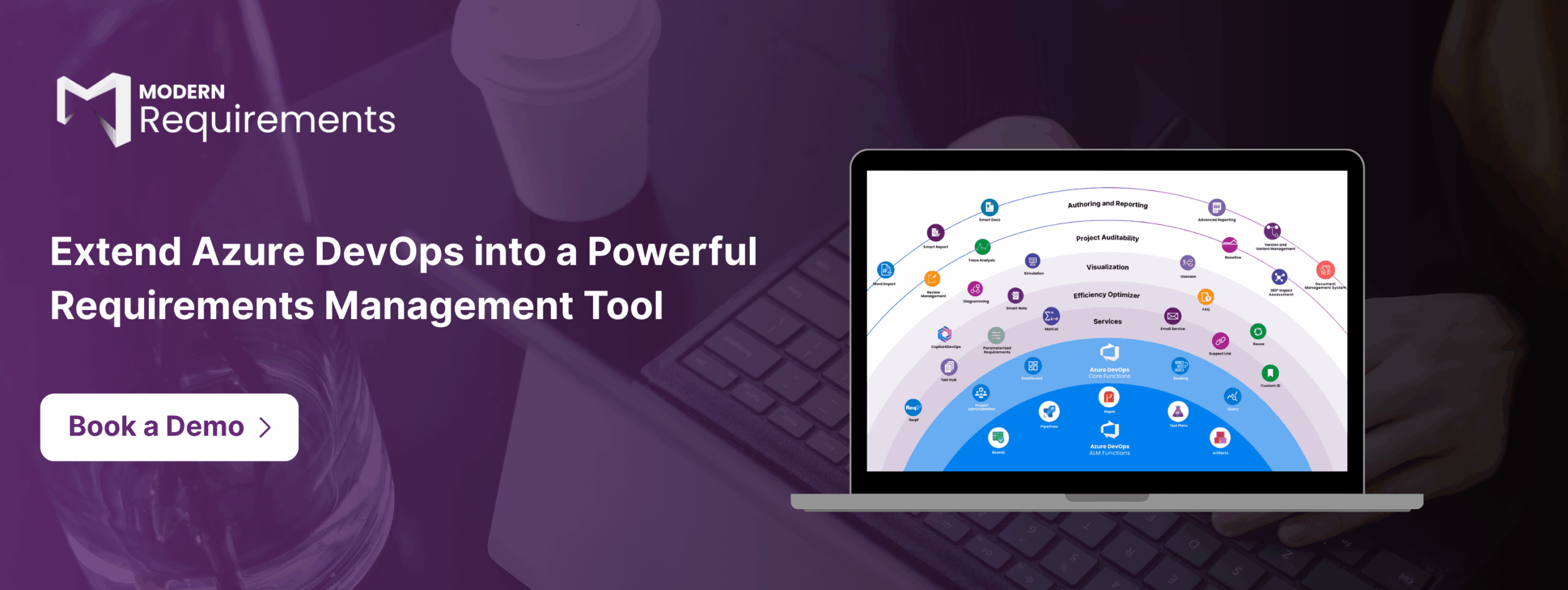
Modern Requirements supports the full range of BABOK perspectives within Azure DevOps. For agile teams, it provides backlog management with full traceability from business goals through requirements to test cases. For BI and data-intensive projects, Smart Reports provide live visibility into requirement status, coverage gaps, and change history. For organizations working from a business architecture perspective, the traceability matrix ensures that every system requirement can be traced back to a business objective, maintaining the organizational connection that enterprise initiatives demand. For BPM-focused initiatives, the diagramming and use case tools help BAs model current and future state processes in a format that stakeholders can review and approve directly within the same environment where requirements are managed.
✅ Define, manage, and trace requirements within Azure DevOps
✅ Collaborate seamlessly across regulated teams
✅ Get started for FREE—no credit card required
Learn how SysML links requirements to design and verification through...
Manage and organize software requirements efficiently with Azure DevOps and...
ISO 24089 governs automotive software update engineering and supports UNECE...

End-to-end requirements management in Azure DevOps.

AI-powered assistance for DevOps workflows.

Autonomous AI agents for DevOps execution.

Compliance management, built into Azure DevOps.

Real-time data sync across tools and systems.