ISO 29148 Explained: What It Requires and How Modern Requirements Helps
What ISO/IEC/IEEE 29148 requires, its documents and quality criteria, and...
✅ Define, manage, and trace requirements within Azure DevOps
✅ Collaborate seamlessly across regulated teams
✅ Get started for FREE—no credit card required
Until the 1980s, organizations relied on tools such as Microsoft Word for requirements management. As product development processes became more complex, organizations realized the need for a requirements management tool that could track, manage, and maintain traceability across complex projects.
To solve this problem, QSS Ltd. launched the DOORS (Dynamic Object-Oriented Requirements System) software in the early 1990s. In 2008, IBM acquired this software and renamed it IBM DOORS.
However, the requirements management field is evolving at a fast pace. Traditional tools like IBM DOORS struggle to keep pace with modern software development practices.
In this blog, we will understand why IBM DOORS is not enough for requirements management, the security risks associated with the tool, and offer a full guide on selecting the right alternative.
IBM DOORS is a requirements management platform that helps organizations collect, track, analyze, and manage requirements. It is commonly used in regulatory industries, such as aerospace, finance, healthcare, etc., where traceability requirements are essential.
Key features of IBM DOORS are:
IBM DOORS has been a popular requirements management tool for three decades, but as project needs evolve, teams are struggling with its limitations.
Here are the main pain points identified through extensive user feedback and real-world experiences:
The installation of the IBM DOORS is not straightforward. It requires a desktop-based installation, along with server configuration for multi-user access. Organizations are required to get expert assistance for the setup and to monitor for issues in the future. This becomes a major hurdle for teams expecting a quick start or working in distributed environments.
One IBM user has raised a concern below about the complex installation process on G2.com.
The outdated user interface of IBM DOORS is hard to navigate, which can reduce teams’ efficiency. For new users, it can be challenging to adopt the outdated UI.
Here is what Christian Wilmers says about the outdated IBM DOORS interface:
As the project scales and the database size or the number of team members increases, the performance of the tool slows down, or the system crashes.
One frustrated IBM DOORS user said, “A tool is slow, inconsistent, and breaks when you perform any simple act.”
Teams are often required to use the project management and requirements management tools together. IBM DOORS lacks built-in support to integrate with other tools. Due to this, teams can’t manage all project and requirements data in a single place.
IBM DOORS is costly. First, organizations are required to pay fixed fees for the licensing and then continuous maintenance fees. Furthermore, teams are also required to hire professionals who can manage IBM DOORS, which adds an additional cost.
Here are a few responses from IBM DOORS users on PeerSpot.com sharing their experiences with the tool’s pricing and overall value.
The IBM DOORS NG is not a direct update of IBM DOORS. So, teams are required to perform data migration from IBM DOORS to DOORS NG and set all requirements configurations from scratch.
We came across an honest piece of feedback from an IBM DOORS user on Reddit:
Users often complain that adopting a new requirements management tool and leaving behind IBM DOORS is complex. Migrating data from IBM DOORS to other platforms is a headache due to its proprietary data structures, often leading to vendor lock-in.
Even migrating data from IBM DOORS to DOORS NG is very complex.
Here is what the user has reported about the data migration issue:
IBM DOORS users have also expressed concerns about security gaps and vulnerabilities. These issues can pose risks for organizations handling sensitive or regulated data, especially when relying on legacy architectures.
A user on G2 reported:
“The software is not secure. There are vulnerabilities that can be exploited, and updates are too slow to patch them.”
These concerns are particularly important for teams working in industries like aerospace, healthcare, or defense, where security and compliance are non-negotiable.
The lack of real-time collaborative features in IBM DOORS forces teams to rely on external tools for collaboration, causing fragmented communications and delays.
Outdated compliance tracking can make it hard to stay updated with regulatory standards, leading to legal consequences.
DOORS NG offers only basic functionalities to create requirements documents and prepare reports. It might be challenging to create and manage documents for complex projects.
Selecting the right requirements management software can depend on your organization’s needs. Teams can consider the following factors while choosing the right alternative to the IBM DOORS:
IBM DOORS no longer meets the needs of today’s fast-moving, complex product development environments. Its outdated structure makes it difficult for teams to stay efficient and aligned.
The good news? There’s a much better option available.
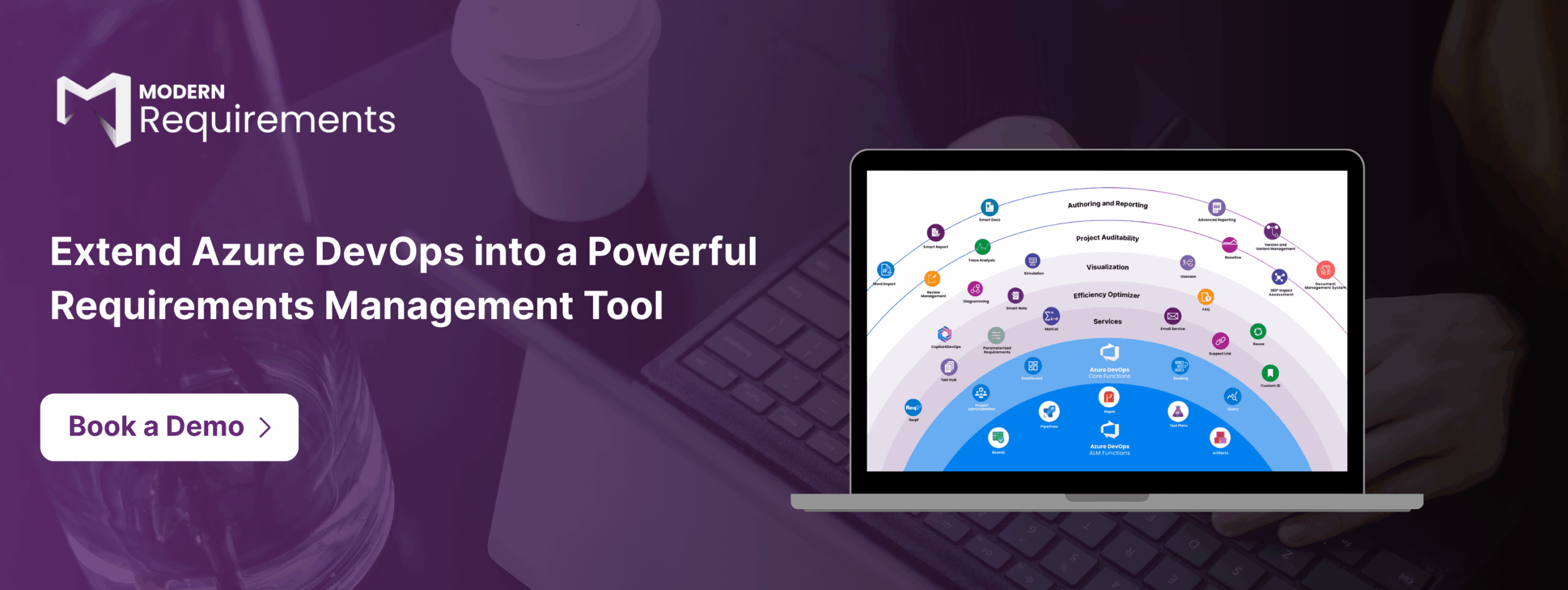
Modern Requirements4DevOps (MR4DevOps) is the most comprehensive requirements management solution built directly into Azure DevOps. MR4DevOps allows teams to manage requirements collaboratively, streamlining the overall requirements management workflow.
Copilot4DevOps is an AI assistant for requirements management that is part of MR4DevOps.
Here are a few features of Copilot4DevOps:
IBM DOORS has been offering requirements management solutions for the last 30+ years. However, due to its outdated UI, complex data management, and high maintenance cost, teams often struggle with requirements management. While DOORS NG brings improvements, it still falls short when working on complex projects.
Teams should look for alternatives to IBM DOORS to overcome its challenges. Tools like Modern Requirements offer capabilities to manage requirements efficiently within the Azure workspace. It inherits security features from Azure DevOps that ensure an organization’s data is safe.
Now is the time to move beyond legacy systems and adopt a smarter, more efficient requirements management tool. Transition now!
IBM DOORS is used for requirements management. It allows teams to document and trace requirements and perform impact analysis. However, organizations are moving away due to limited functionalities and outdated UI.
The price of the IBM DOORS is not publicly available, as it depends on the licensing, number of users, and types of support required. However, organizations complain that it is expensive.
MR4DevOps offers advanced features like “Smart Docs”, “Smart Reporting”, version control, a diagramming tool, easy integration with Azure DevOps, etc., making it the organization’s go-to choice.
We offer dynamic pricing. You can contact our sales team to get quotes that match your needs.
What ISO/IEC/IEEE 29148 requires, its documents and quality criteria, and...
A live tour of the NextGen release. See the rebuilt...
Understand the distinct roles of a BRD, SRS, and PRD....
End-to-end requirements management in Azure DevOps.

AI-powered assistance for DevOps workflows.

Autonomous AI agents for DevOps execution.

Real-time data sync across tools and systems.