Aller au contenu

Audit-Ready DevSecOps for Financial Services: Building Compliance Into Every Release

Audit-Ready DevSecOps for Financial Services Building Compliance Into Every Release
Listen to this blog

Financial firms have already started adopting DevSecOps. It helps them effectively manage security controls in the development pipeline. 

On the other hand, financial firms operate under constant regulatory pressure. However, many teams manage compliance outside the DevSecOps workflow, which introduces risk, delays, and confusion during audits.

The impact of compliance gaps is real, and financial firms need to pay heavy penalties. According to Fenergo’s report, banks in the USA paid a $3.52 billion fine in 2024 only due to gaps in transaction monitoring, change management, and audit reports. 

To avoid this, compliance must be integrated within the DevSecOps environment. It should be enforced as a requirement and tracked across the whole pipeline. That’s why we’ve written this blog for financial firms to explain why compliance management should not be a separate activity and how to integrate it into the DevSecOps.

Why DevSecOps in Financial Services Carries Greater Compliance Responsibility

First, let’s understand what types of compliance financial firms need to follow while developing systems:

  • DORA (EU, effective January 17, 2025): Requires tracking and managing every information communication technology (ICT) change through valid records and logs for a financial entity operating in the EU. now requires ongoing monitoring and logging, not just periodic checks.
  • SOX Section 404: Requires documented IT General Controls over change management for publicly listed US financial firms.
  • PCI DSS v4.0: It demands that all system component changes should be authorized with documentation.

So, if you notice, regulators expect continuous evidence of implementation instead of one-time validation. Now, it’s not about shipping features in DevSecOps environments, but financial firms must answer:

  • What changed and why
  • Which requirement or control does it relate to
  • Who approved the change
  • How it was tested and validated

In short, every release in fintech systems must include a reviewable record of changes and approvals and be traceable. If not done, the regulatory findings are imminent.

In this context, DevSecOps is not just about integrating security into the development pipeline, but it is also responsible for generating compliance evidence as product development progresses, instead of doing that manually just before regulatory submission. 

The Four DevSecOps Audit Failures That Regulators Find Most Often

Here are some common challenges that financial firms face while integrating compliance into DevSecOps:

  • Manual traceability: PCI DSS or DORA expects to connect security and regulatory requirements with test cases to generate continuous evidence. However, in many finance firms, teams use multiple tools, for example, Jira for requirement tracking, GitHub for code management, a separate tool for deployments, and any third-party tool for compliance management. When there is no single unified view of everything, teams can’t trace how requirements are connected with compliance obligations, evidence, and all. If they do it manually, it takes hours, and the risk of missing compliance arises.
  • No unified, traceable change record across systems: Under DORA change tracking expectations, auditors need a full chain of evidence. When impact assessment isn’t done with end-to-end traceability, even if the change is handled properly, it is treated as uncontrolled. For finance teams, manually handling logs and impact assessment is very challenging.
  • Gaps in logging and segregation of duties: PCI DSS and SOX both require clear records of who did what and independent approvals. In practice, logs are incomplete or not linked to changes, and approvals happen informally. This weakens audit trails and makes it hard to prove control enforcement.
  • Manual documentation: In a DevSecOps environment, teams do multiple releases in a single day, but if compliance documentation and audit reports are assembled monthly or quarterly, then the documentation always remains outdated. To solve this, teams need to create living documents that also update with every change and release.

These failures all occur when teams treat compliance as a separate activity from DevSecOps delivery.

What Audit-Ready DevSecOps Actually Requires in Financial Services

Audit-ready DevSecOps is not built at the end of delivery, but it actually starts in the planning stage. Here is what audit-ready DevSecOps looks like:

Compliance Starts at Requirements, Not After Development

First of all, there should be a single source of truth for compliance, requirements, test cases, and evidence. Each compliance obligation should be converted into actionable security requirements. Furthermore, each drafted requirement should be analyzed to find missing compliances. This way, the developer follows regulatory standards as a normal part of delivery. This way, developers follow compliance such as PCI DSS or SOX as a normal part of delivery.

End-to-End Traceability Across the Pipeline

End-to-end traceability must be integrated into the DevSecOps pipeline. Regulatory obligations, such as PCI DSS, must be linked to actionable work items. This helps in generating a proof of what obligations are implemented, who implemented them, and when across the entire lifecycle system, so DevSecOps remains audit-ready every time. 

Embedded Change Control and Approvals

SOX IT change control must be a part of the DevSecOps pipeline. Each change request must record its impact, associated risks, and approval logs, and follow all rules mentioned in regulatory standards. Also, each change log must be immutable. 

These ready-to-use and automated change control records help financial firms to be audit-ready at any time without manually collecting evidence for a particular change. 

Baseline Management at Every Release

Each release must have a defined baseline, which provides a snapshot of approved requirements. It also manages the version history of the changes. This allows teams to answer audit questions like “What change in this release?” and “Which controls were affected?” Without this baseline, audit review turns into manual reconstruction. 

Continuous Evidence Generation, Not Manual Collection

DevSecOps tools must generate evidence continuously. For example, when anything fails, it should instantly log that. Similarly, when someone from the team approves requirements, it should automatically log all approvals and changes. This way, the system automatically generates evidence without any manual dependencies. During regulatory submission, this evidence can be extracted as audit reports.

So, audit-ready DevSecOps is not about tools or pipelines, but it is about managing everything in one place and continuously generating evidence for compliance submission without much manual effort.

How Modern Requirements4DevOps Support Audit-Ready DevSecOps for Financial Services

Financial teams don’t need to use separate tools to make their DevSecOps audit-ready if you’re using the right tools, like Modern Requirements4DevOps, which works directly within Azure DevOps. Here is how it can make your DevSecOps audit-ready:

  • Turns Azure DevOps into a single audit-ready system: Azure DevOps allows teams to manage compliance obligations, requirements, and test cases in one place within Azure DevOps. Within that, teams can use Modern Requirements4DevOps to manage change control, traceability, and baseline.
  • Converts regulations into actionable work items: Copilot4DevOps, an AI assistant, allows drafting development user stories based on compliance obligations and inserts them directly into Azure DevOps. So, compliances like DORA, SOX, and PCI DSS can be integrated into the delivery and not managed separately.
  • Ensures end-to-end traceability by default: It allows creating a horizontal and intersectional traceability matrix with a single click. This allows teams to visualize how different compliance items, such as DORA and SOX items, are connected with actual requirements and flag missing requirements.
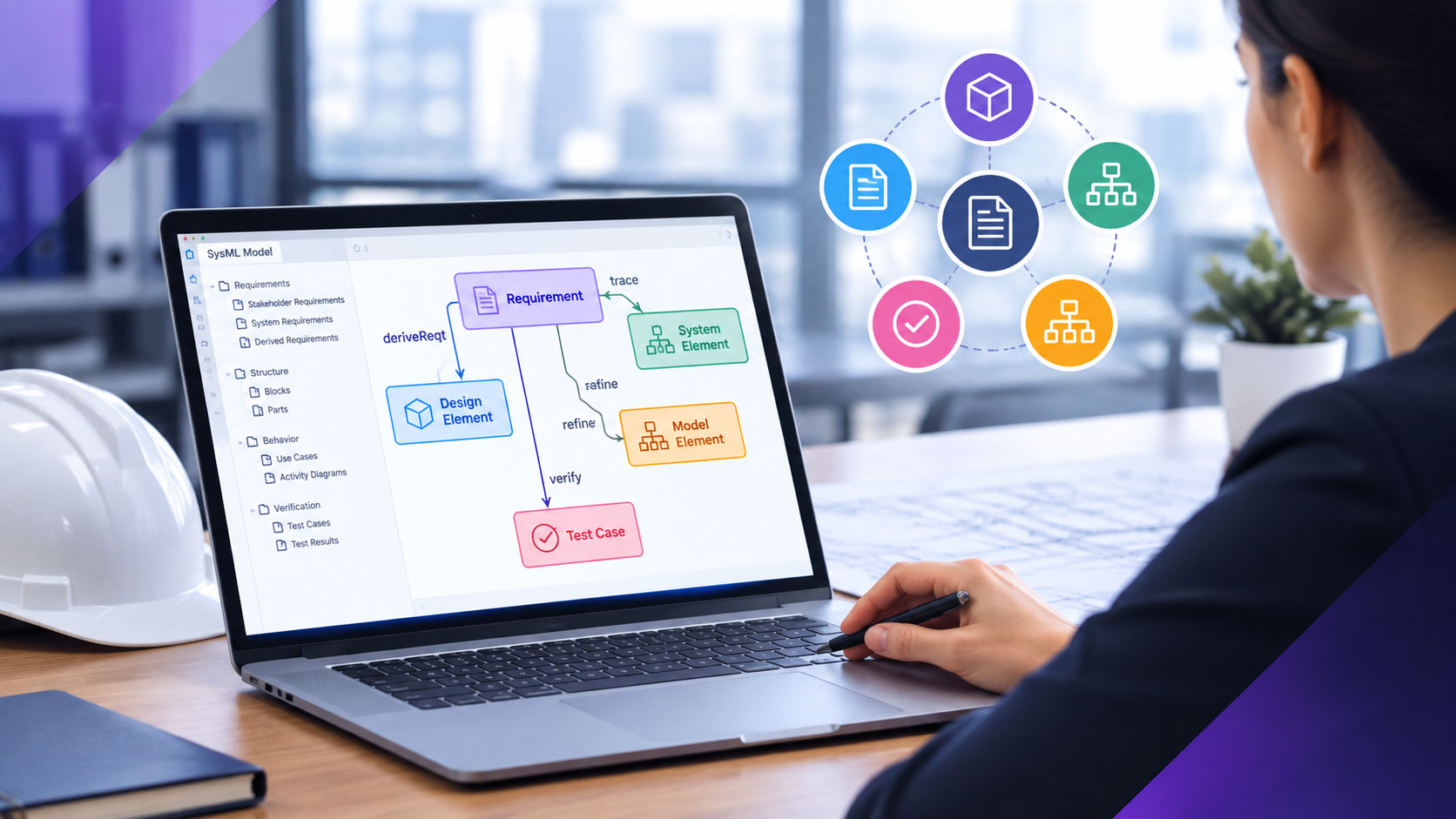
  • Build change control into the workflow: It helps to manage changes according to the SOX ITGC expectations and directly within the DevSecOps environment. So, whenever any review or approval occurs, it automatically creates immutable logs, which can be used while preparing audit reports.
  • Generates audit evidence automatically: Generates live audit reports showing a PCI DSS requirement linked to test runs, execution results, approvals, and release history, without manual evidence collection or separate documentation.
Table des matières

Commencez dès aujourd'hui à utiliser Modern Requirements

✅ Définissez, gérez et suivez les exigences dans Azure DevOps
✅ Collaborez en toute fluidité entre équipes soumises à des réglementations
✅ Commencez GRATUITEMENT — aucune carte de crédit requise

Articles récents

New MR Logo cropped
Products
New MR Logo cropped

Exigences actuelles pour le DevOps

End-to-end requirements management in Azure DevOps.

Copilot4DevOps

AI-powered assistance for DevOps workflows.

Agents4DevOps

Autonomous AI agents for DevOps execution.

AI Sync Bridge

Real-time data sync across tools and systems.

Pourquoi des exigences modernes ?

Designed to work natively within Azure DevOps, Modern Requirements extends the platform with powerful capabilities that help teams capture, manage, and validate requirements more effectively.