Skip to content

Copilot4DevOps Lite (within Modern Requirements4DevOps): Your AI Assistant for All Things Requirements Management Within ADO

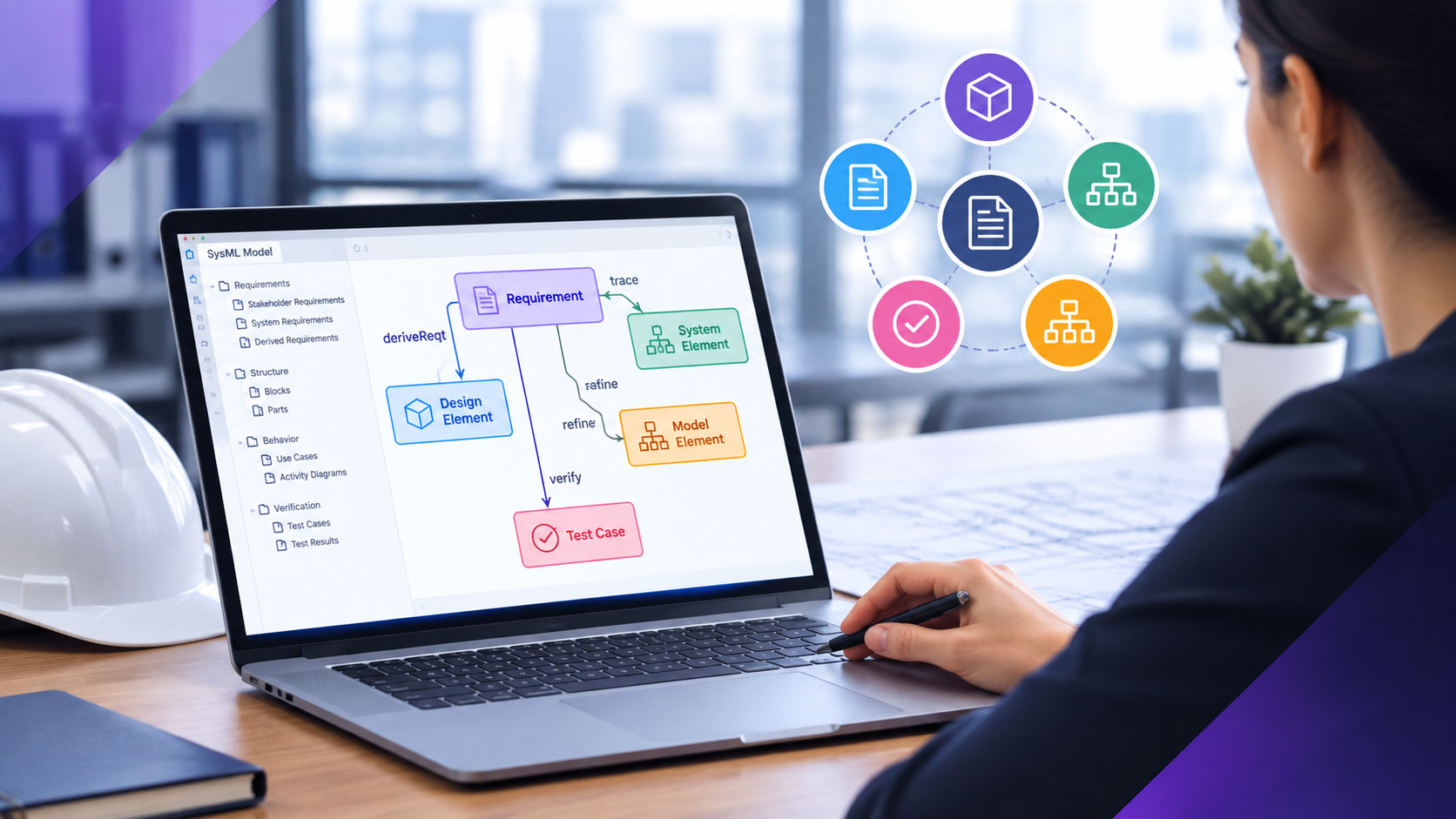
Copilot4DevOps Lite Feature Image

AI is already shaping how requirements are written, refined, and reviewed. The real concern now is: Are you keeping up with the trend?

Teams that still rely on traditional requirements management methods often find themselves lagging behind, not because their process is broken, but because it’s too slow to respond to change.

AI isn’t replacing the process. But it helps teams move faster by stepping in where things get stuck, for example, in preparing early drafts, analyzing requirements, and formatting them. This allows teams to focus on making decisions and stakeholder alignment.

This guide will help you understand how teams working in different industries can use AI to enhance requirements management without reinventing their current workflow.

How Is AI Helping With Requirements Management?

First, let’s discuss how AI helps to streamline the overall requirements management process. From preparing early drafts of work items and analyzing them to documenting, AI is being used in every stage of requirements engineering.

Here are some of the most common ways AI is adding value:

  • Requirements authoring: Generative AI tools can help teams extract well-structured requirements from unstructured documents. AI can also be used to improve or edit requirements. In fact, 80% of business analysts who use AI tools have reported a 30 to 50% reduction in time for drafting user stories.
  • Prepare requirements documents: Manually writing requirements documents can be time-consuming, and if any one step is missed, it can lead to compliance issues or rework. Nowadays, you can feed requirements to an AI tool, and it can provide a ready-to-use document draft. One of the leading IT companies has mentioned that they reduced document preparation time by 40% and accelerated the project start date by 2 weeks by introducing AI in the requirements documentation process.
  • Perform requirements analysis: By using AI tools for requirements analysis, teams can get instant feedback and ensure requirements are complete, consistent, and ready for development.
  • Requirements modelling: Sometimes, teams need to prepare requirements diagrams like use case diagrams, ERDs, etc., and manually creating them can be time-consuming. AI can automatically create them by using the raw description of the requirement.

Furthermore, AI also helps development and QA teams to write pseudocode and test scripts. Business analysts can use AI tools to convert requirements into different formats, for example, from a feature to a user story.

These aren’t future use cases. Teams across industries are already applying them in production. Here is how:

  • Healthcare: In regulated industries like healthcare, even a small oversight in requirement language can raise red flags during audits. Healthcare teams use AI to draft documents and requirements to comply with ISO standards and FDA guidelines. This not only reduces the manual workload for compliance teams but also prevents late-stage rework during documentation audits.
  • Aerospace: Of course, aerospace teams also use AI to draft compliance-ready requirements and documents. Other than that, they might use AI to assess requirement quality using structured methods like INVEST and MoSCoW. It helps catch vague wording, missing constraints, and priority mismatches early, before they impact system integration or certification timelines.

Spotting the trends is one thing. Putting them into practice requires a tool that works within your team’s existing operations.

In the next section, we’ll show how Copilot4DevOps brings these AI capabilities directly into Azure DevOps.

Also read: Top AI trends in DevOps

Copilot4DevOps (A Part of MR): Your AI Partner for All Things Requirements Management Within ADO

Copilot4DevOps is an AI assistant for requirements management that directly works within your Azure DevOps project, where your teams are already managing work items. To get started, you just need to install the extension in Azure DevOps.

Furthermore, Modern Requirements4DevOps, a requirements management tool within Azure DevOps, offers Copilot4DevOps Lite as a complementary benefit. So, if you are an active user of Modern Requirements4DevOps, you can start using Copilot4DevOps right away.

The following features are included in the Copilot4DevOps Lite:

Elicit

For Business Analysts, Product Owners, Project Managers, or requirements & planning team members, writing requirements from scratch is often time-consuming when information is scattered across chats, meeting notes, documents, or client emails.

The Elicit feature solves this problem by turning raw, unstructured content into clear, structured work items directly within Azure DevOps. Whether you want to create high-level epics, features, actionable user stories, or test cases, it suggests lists of work items with title, description, and acceptance criteria within seconds. Then, you can select requirements you like and add them directly within Azure DevOps.

Copilot4DevOps Lite - Elicit

Here is a real-world use case of the Elicit function:

  • Extracting requirements from discovery call transcript: Let’s assume that the client wants to develop a custom Shopify store for their e-commerce brand. The sales representative has completed the discovery call and forwarded the meeting recordings to the business analyst. In this case, business analysts can feed call transcripts to the Elicit feature and just click the generate button. They will receive high-level requirements, such as epics and features, from which they can dig down into the features and generate user stories based on the feature descriptions. At the end, the team will have ready-to-implement work items in no time.

Furthermore, Copilot4DevOps also works directly with “Smart Docs” and the “Version Package” feature of Modern Requirements4DevOps.

Copilot4DevOps Lite - Elicit 2

For example, while reviewing a document inside Smart Docs, you may come across a requirement that lacks compliance coverage, such as a missing safety constraint for an aerospace control system. Instead of leaving the document to manually create new work items and add them to the document, you can open Copilot4DevOps directly from Smart Docs, use the Elicit feature to generate missing requirements, and directly add them to the document without leaving it.

The same process works inside the Version Package feature. You can elicit fresh requirements and instantly associate them with the current version.

By using the Elicit feature, teams can reduce the chances of errors in requirements and ensure comprehensive coverage of requirements.

Transform

The Transform feature helps teams clean up unclear or incomplete work items without rewriting everything manually. Whether you’re reviewing a brief requirement, a long technical note, or preparing content for a multilingual team, Transform gives options to make the content easier to understand and act on.

What Can You Do with Transform?

Copilot4DevOps Lite - Transform
  1. Paraphrase vague requirements to remove ambiguity
  2. Elaborate short descriptions into fully detailed work items
  3. Summarize long technical notes for stakeholders or review
  4. Translate work items into different languages to support global teams

Furthermore, similar to the Elicit feature, teams can also use the Transform feature directly from the Smart Docs or Version Package feature of Modern Requirements4DevOps.

For example, imagine you’re preparing a version package for an upcoming release, and while reviewing work items, you find that one of the work items lacks proper detail, making it hard to align with traceability or test planning. Instead of switching screens or rewriting manually, you open Copilot4DevOps directly from that work item inside the version package. Using the Transform feature, you elaborate the requirement based on compliance needs or internal writing standards. The updated content is saved directly into the version package.

Analyze

This feature can analyze Azure work items against different frameworks, like:

Copilot4DevOps Lite - Analyze
  1. INVEST: To ensure work items are Independent, Negotiable, Valuable, Estimable, Small, and Testable
  2. MoSCoW: To classify work items by priorities like Must have, Should have, Could have, Won’t have
  3. 6Cs Method: To check work items for Clarity, Completeness, Consistency, Context, Conciseness, and Correctness
  4. SWOT: To identify Strengths, Weaknesses, Opportunities, and Threats in critical change requests
  5. PABLO: To assess whether requirements are Precise, Achievable, Bounded, Legitimate, and Observable

This is useful for analyzing requirements quickly and identifying vague requirements before actual development starts.

Convert

This feature helps teams convert requirements into a user story, use case, or Gherkin format using an AI. You just provide an unstructured work item or raw description as a reference, and it converts into the needed format.

Copilot4DevOps Lite - Convert

Use case: A tester reviewing a feature can open the work item, launch Copilot4DevOps, and convert the description into a Gherkin scenario for automation. The original content stays intact, and the converted version can be saved as a related or child item. This avoids duplication and keeps everyone aligned without writing the same thing twice.

These features are built to support tasks your team already handles daily, but with less manual effort and more consistency across the board.

If you’re using Modern Requirements4DevOps, there’s no need to wait or evaluate a new platform. You already have access to Copilot4DevOps Lite inside Azure DevOps.

Start using it as your built-in requirements assistant to stay ahead with requirements management trends and see how much time your team can save each week.

Unleash Your Productivity Within Azure DevOps

Copilot4DevOps Lite offers basic features, but if your organization is handling complex projects or compliance-heavy work streams, you should explore the CP Plus and Ultimate plans to take advantage of the advanced features of CP.

With Copilot4DevOps Plus, you unlock:

  • QA Assistant to auto-generate questions for requirement gathering.
  • Impact Assessment to assess how the proposed change will impact other work items.
  • Dynamic Prompts to perform custom actions or analysis on selected work items and save reusable prompts
  • Codeless App Creation to develop applications without writing a single line of code.

And if you want even more control and automation, Copilot4DevOps Ultimate adds:

  • Pseudocode Generator to write pseudocode in programming languages like Java, C, Python, etc., and test scripts in Selenium, Playwright, etc.
  • SOP/Document Generator to build ready-to-share documents using your work items
  • Diagramming to auto-create flows and visuals from requirements
  • AI Chat to create, update, and query work items through natural language
  • Mockup Tool to turn rough text into interactive UI/UX wireframes

All of these work inside Azure DevOps, connected to your existing backlog, boards, and repos. You don’t need a separate tool, but you need a better way to get more from the one you already use.

To explore what’s new, check the latest updates in Copilot4DevOps v6.

Curious about which plan is right for your team? View the full Copilot4DevOps pricing plans here.

Table of Contents

Start using Modern Requirements today

✅ Define, manage, and trace requirements within Azure DevOps
✅ Collaborate seamlessly across regulated teams
✅ Get started for FREE—no credit card required

Recent Articles