A single control failure in a machine, whether it could be due to a jammed conveyor belt, an unresponsive emergency button, or a robotic arm, can lead to serious injury, production loss, and legal exposure. According to the International Labour Organization, nearly 3 million workers die each year due to work-related accidents and diseases globally.
This is why, in automated environments, safety is very important and must be addressed during the development of these control systems.
ISO 13489 standard comes into play here, helping companies to put in place safe and reliable machinery systems through the use of structured safety processes and documented requirements. Adoption of ISO 13489 is all about strengthening protection for workers and improving confidence among regulators and customers.
This blog covers everything you need to know about ISO 13849-1 and how to implement it during product development.
What is ISO 13849-1?
ISO 13849-1 is an international standard published by the ISO that outlines requirements for designing, integrating, and validating safety-related parts of control systems in machinery. It introduces measurable safety levels and architectural categories to ensure reliability under fault conditions.
ISO 13489-1 requirements address the core problem that machinery manufacturers face: ensuring that safety systems respond correctly under all foreseeable circumstances.
This standard applies across all industries, including electrical, food processing, aerospace, woodworking, hydraulic, pneumatic, and mechanical. However, organizations working in the manufacturing industry are the main beneficiaries of ISO 13849 requirements. Machinery builders across the globe use this standard as their primary functional safety framework.
By adhering to ISO 13849-1 requirements, manufacturers can improve the safety of their machines and, at the same time, protect operators from possible injuries, and they can ensure compliance with international regulations and industry standards.
Key Concepts in ISO 13849-1
Here is the quick overview of key concepts defined in the ISO 13849-1 standard:
Performance Levels (PL a-e)
ISO 13849 PL (Performance Level) measures how reliably a safety function performs when required. In ISO 13849-1, five levels are defined:
- PL a: Lowest risk reduction capability
- PL b
- PL c
- PL d
- PL e: Highest reliability against dangerous failure
Each level corresponds to a range of average dangerous failures per hour. The required Performance Level, known as PLr, is determined before system design begins.
Safety Functions and Categories
A safety function in machinery is a function whose failure can introduce a hazardous situation or increase the risk. Examples of safety functions can be emergency stop, guard interlocking, or safe torque off.
The standard also contains Categories that define the system’s structural architecture. It conveys how the system reacts to faults, not the risk level itself.
- Category B: System design with basic safety principles
- Category 1: Single-channel design with well-tried and reliable components
- Category 2: Single-channel with periodic testing
- Category 3: Dual channel design. In this single fault, don’t kill safety functions.
- Category 4: Dual channel with Fault-tolerant and high diagnostic capability
Risk Assessment
Risk assessment forms the starting point. It follows principles from ISO 12100.
Three factors are evaluated:
- Severity of possible injury
- Frequency or duration of exposure
- Possibility of avoiding harm
This process determines the required PLr for each safety function.
Diagnostic Coverage (DC)
Diagnostic Coverage measures how effectively the system detects dangerous faults.
It is expressed as a percentage:
- Low DC: Limited fault detection
- Medium DC: Detects a portion of failures
- High DC: Detects most dangerous faults
Higher DC improves the achieved Performance Level.
System Architecture Requirements
System architecture defines how components are arranged to achieve fault tolerance.
Key requirements include:
- Redundant channels where needed
- Protection against common cause failure
- Defined Mean Time to Dangerous Failure
- Proper validation of hardware and software
The architecture must support the required PLr under foreseeable operating conditions.
Why ISO 13849-1 Compliance Is Critical in Product Development
Ignoring the functional safety of any machine can affect the reputation of manufacturers, impact market access, and lead to legal issues. The ISO 13849-1 safety standard forces engineers to develop a product from day one that is safe and reliable.
It also helps in:
- Improved market access: Having an ISO 13849-1 certificate allows manufacturers to sell machinery in European and global markets. This helps in expanding the brand across the globe.
- Reduced recall risk: Designing safe products from day one reduces failures, which prevents legal notice or hefty penalties from regulatory bodies.
- Competitive advantages: Buyers always prefer to buy certified equipment over non-certified and illegal machinery. ISO 13849-1 compliance signals professional engineering and a commitment to worker safety, one of the influencing factors in procurement decisions.
- Reduced time to market: When the product is ISO 13849-1 compliant, it is very easy to get approvals from regulatory bodies. This reduces the overall time required to launch the product.
According to industry surveys, over 89% of machine builders understand the importance of ISO 13849-1 and consider it their go-to standard for control system safety.
How ISO 13849-1 Works: From Risk Assessment to Validation
Follow the below structured step-by-step workflow to develop ISO 13849-1 compliant products:
- Risk assessment and determination of safety functions: The first step is to start by identifying hazards and risk scenarios using ISO 12100 principles. Then, according to the exposure and possibility of avoidance, determine the required Performance Level (PLr). It is also important to clearly define and document all safety functions before starting the design work.
- Designing control systems and architecture: Next, engineers select sensors, logic solvers, and output elements that will implement the safety functions. Here, the system architecture must be defined using Categories B, 1, 2, 3, or 4.
- Assessing diagnostic measures: Diagnostic mechanisms are evaluated to determine how effectively dangerous faults can be detected. This includes calculating MTTFD, estimating diagnostic coverage, and addressing common cause failure. These parameters collectively determine whether the design can achieve the intended Performance Level.
- validation and verification: Once the system is designed, it should be tested against all safety requirements. Teams need to perform functional tests, fault simulations, and documentation reviews to ensure that the achieved performance meets expected safety requirements and performance levels.
- Documentation and evidence: This should not be the last step, but it should run through the first 4 steps. Teams are required to audit all assumptions, calculations, architecture decisions, and validation results. This helps in getting approvals from regulatory bodies.
How Modern Requirements4DevOps Helps with ISO 13849-1 Compliance
For developing an ISO 13849-1 compliant product, project management tools are not enough. But it demands specialized requirements management tools, like Modern Requirements4DevOps, that also offer features like end-to-end traceability and collaborative review management with e-signature.
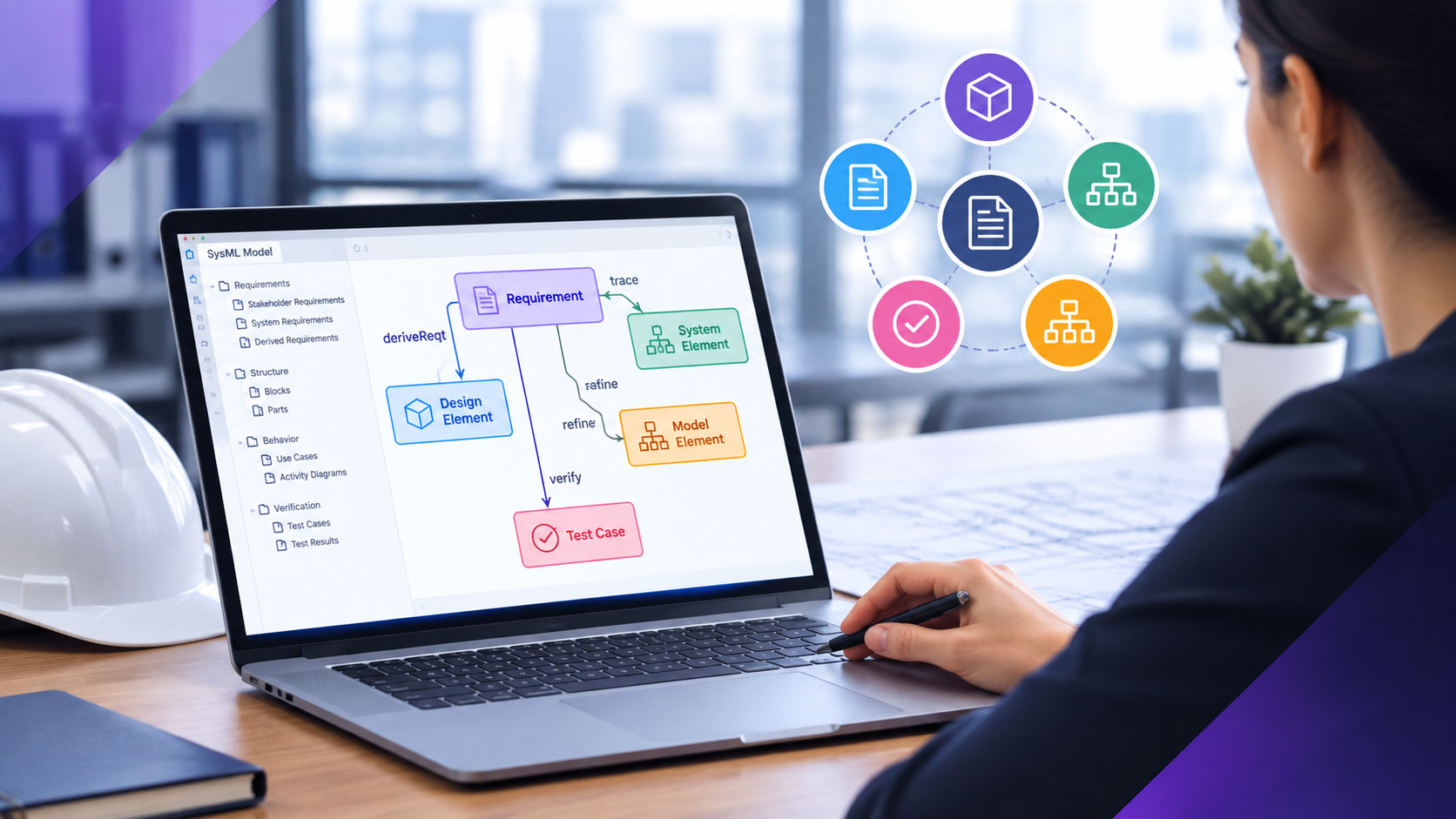
With Modern Requirements4DevOps, teams can define Safety Requirements Specifications with controlled templates and structured review workflows. Each safety function can be linked directly to its required Performance Level and supporting evidence. Using the Traceability module, teams can visualize how hazards and safety requirements, design elements, test cases, and validation records are connected. This reduces gaps between engineering intent and documented proof during audits.
Copilot4DevOps, an AI assistant for requirements management, comes with Modern Requirements4DevOps. It allows drafting safety requirements that align with ISO 3849 without missing anything. This reduces the risk of gaps. It also allows the preparation of SOPs and audit-ready documents using AI.
Modern Requirements4DevOps also supports impact assessment and version control within Azure DevOps. Also, the built-in review module helps in performing collaborative reviews, and Smart Docs allows for maintaining live-in documents. This is critical when maintaining compliance across design revisions.